
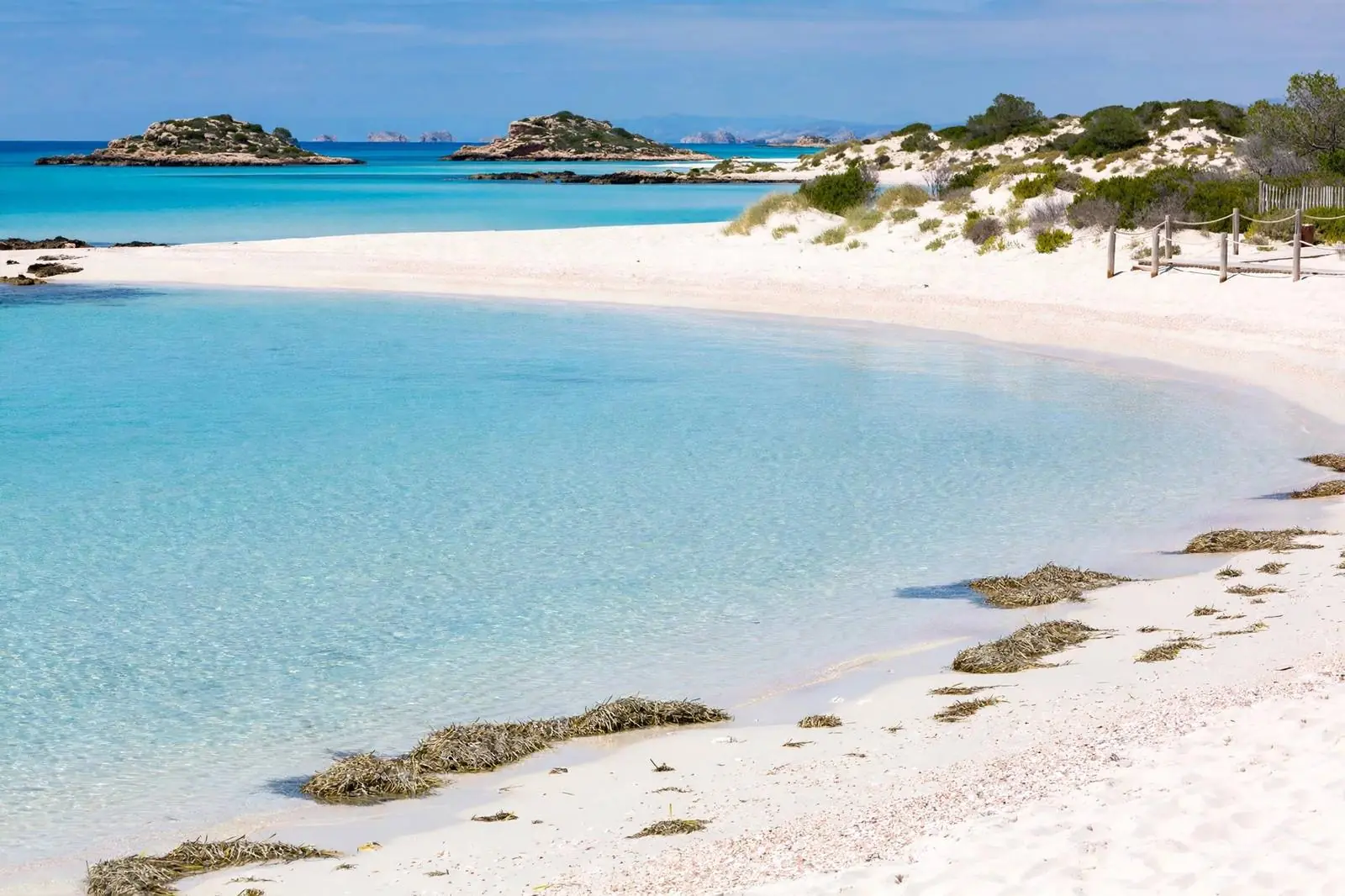
- Ses Illetes (Formentera) is my #1: Caribbean-grade water you can reach with a €30 ferry, not a transatlantic flight. Go before 10am.
- The 2026 awards back the list. Playa de Muro was Spain's top beach in Tripadvisor's 2026 Travellers' Choice, and Cala Macarella placed 2nd in Europe at European Best Destinations.
- Several Spanish beaches need a permit, a tide chart, or a boat. That paperwork is what keeps them empty.
- Sunbeds are cheap by Greek standards: €20–30 for a set on most beaches, and just €2.50 per lounger at Maspalomas.
- The Atlantic north is colder and wilder; the Mediterranean south is warmer and easier. Pick your coast by temperament.
Quick comparison: all 12 beaches at a glance
| Beach | Region | Coast | Best for | Access |
|---|---|---|---|---|
| Ses Illetes | Formentera | Balearic (Med) | Caribbean-grade swimming | €30 ferry + 2km walk / bus |
| Cala Macarella | Menorca | Balearic (Med) | Turquoise coves & hiking | Shuttle bus 69 or Camí hike |
| Las Catedrales | Galicia | Atlantic (Cantabrian) | Rock arches & photography | Free Xunta permit (low tide only) |
| Playa de Rodas | Cíes Islands | Atlantic | Untouched nature & lagoons | Free permit + seasonal ferry |
| Playa de Bolonia | Tarifa (Cadiz) | Atlantic | Dunes & Roman ruins | Free access; check Levante wind |
| Playa de Cofete | Fuerteventura | Atlantic (Canaries) | Wild drama & scenery | 20km dirt track / 4x4 bus (no swim) |
| La Concha | San Sebastián | Bay of Biscay | City swimming & pintxos | Direct promenade access |
| Maspalomas | Gran Canaria | Atlantic (Canaries) | Dunes & winter sun | Easy resort walk |
| Playa de Muro | Mallorca | Balearic (Med) | Families & shallow water | Easy parking & full facilities |
| Playa de Benijo | Tenerife | Atlantic (Canaries) | Black sand & sea stacks | Scenic mountain road (dangerous waves) |
| Playa del Silencio | Asturias | Bay of Biscay | Solitude & cliff scenery | Steep cliff path (water shoes needed) |
| Cala Agulla | Mallorca | Balearic (Med) | Pine forest & snorkeling | Arrive before 10am (strict parking) |
Spain has two coastlines with two personalities, and most visitors only meet one. The Mediterranean side gives you warm turquoise water and easy logistics. Cross to the Atlantic and everything gets colder, wilder, and more dramatic.
This ranking weights the swimming and lounging experience over fame. A beach that demands a permit and a tide chart but delivers an empty cove beats a famous one where you're fighting for towel space by 11am.
Methodology: how we ranked this list
The 2026 award shortlists (Tripadvisor Travellers' Choice, European Best Destinations) set the shortlist, and traveler reports from Tripadvisor, forums, and trip reports did the rest. Each beach is ranked on water quality, crowding patterns, access effort, and whether it delivers on its reputation. A demanding beach that stays special all day ranks above a famous one that fills by 11am.
1. Ses Illetes, Formentera
Few beaches in the Mediterranean justify the word "Caribbean." Ses Illetes does: a long spit of white sand inside the Ses Salines natural park, with water that shifts from turquoise to deep blue in steps.
What seals it for me is the value. The ferry from Ibiza runs around €30, the L3 bus from Formentera's port costs about €8 return, and then it's a 2km walk to the sand. A full beach day's transport costs less than lunch at a beach club in Ibiza town.
The honest tradeoffs: parking is genuinely hard in July and August (the park charges a €5 vehicle toll), and the beach restaurants are priced for the Ibiza crowd. Recent reviewers paid €30 for an umbrella plus two sunbeds and flagged the food as overpriced. Bring your own.
Arrive before 10am and it's nearly empty; the far end of the spit stays quieter even in peak season.
2. Cala Macarella, Menorca
European Best Destinations ranked it the 2nd best beach in Europe for 2026. Stand in the water and you'll see why: white sand, shallow turquoise, pine-covered cliffs.
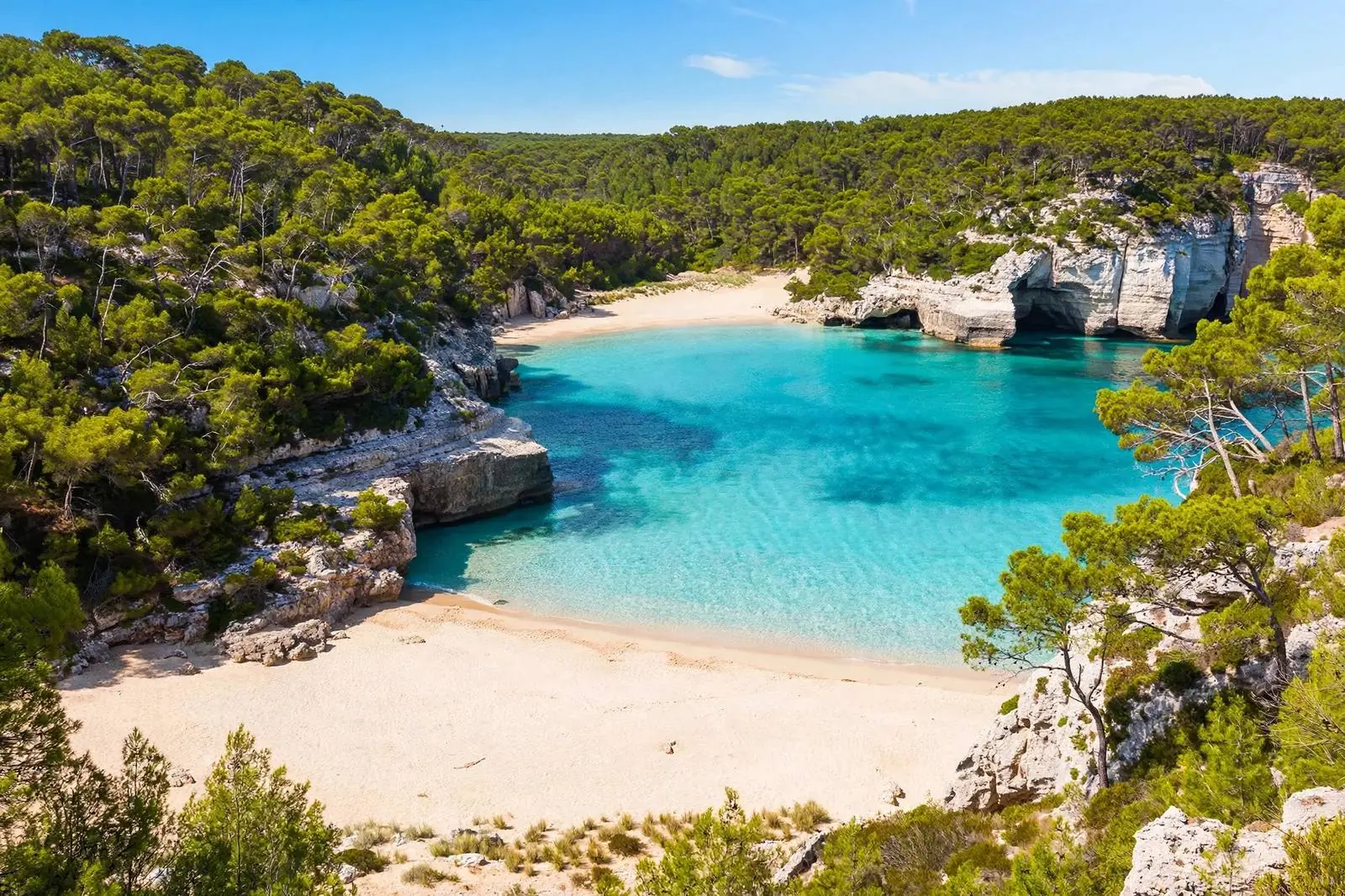
Reaching it is a filter by design. From June to September, cars are banned and you take the shuttle bus (line 69) from Ciutadella, then walk 15 minutes through woodland.
The better option is parking at Cala Galdana and hiking 30–40 minutes along the Camí de Cavalls: you arrive warmed up, the path is beautiful, and you've earned the swim. Details and current bus schedules are on Descobreix Menorca.
Once there, walk 15 minutes along the cliff path to Cala Macarelleta, the smaller sister cove with even softer sand. There's a beach bar on the main beach and natural shade under the pines if you arrive early. After windy days you may find algae patches; they clear, but don't expect postcard perfection every single visit.
3. Playa de las Catedrales, Galicia
This is not a beach so much as a cathedral built by erosion. Near Ribadeo, the cliffs expose a walkway of 30-meter stone arches at low tide, with sea caves and grottos between them. At high tide it all vanishes.
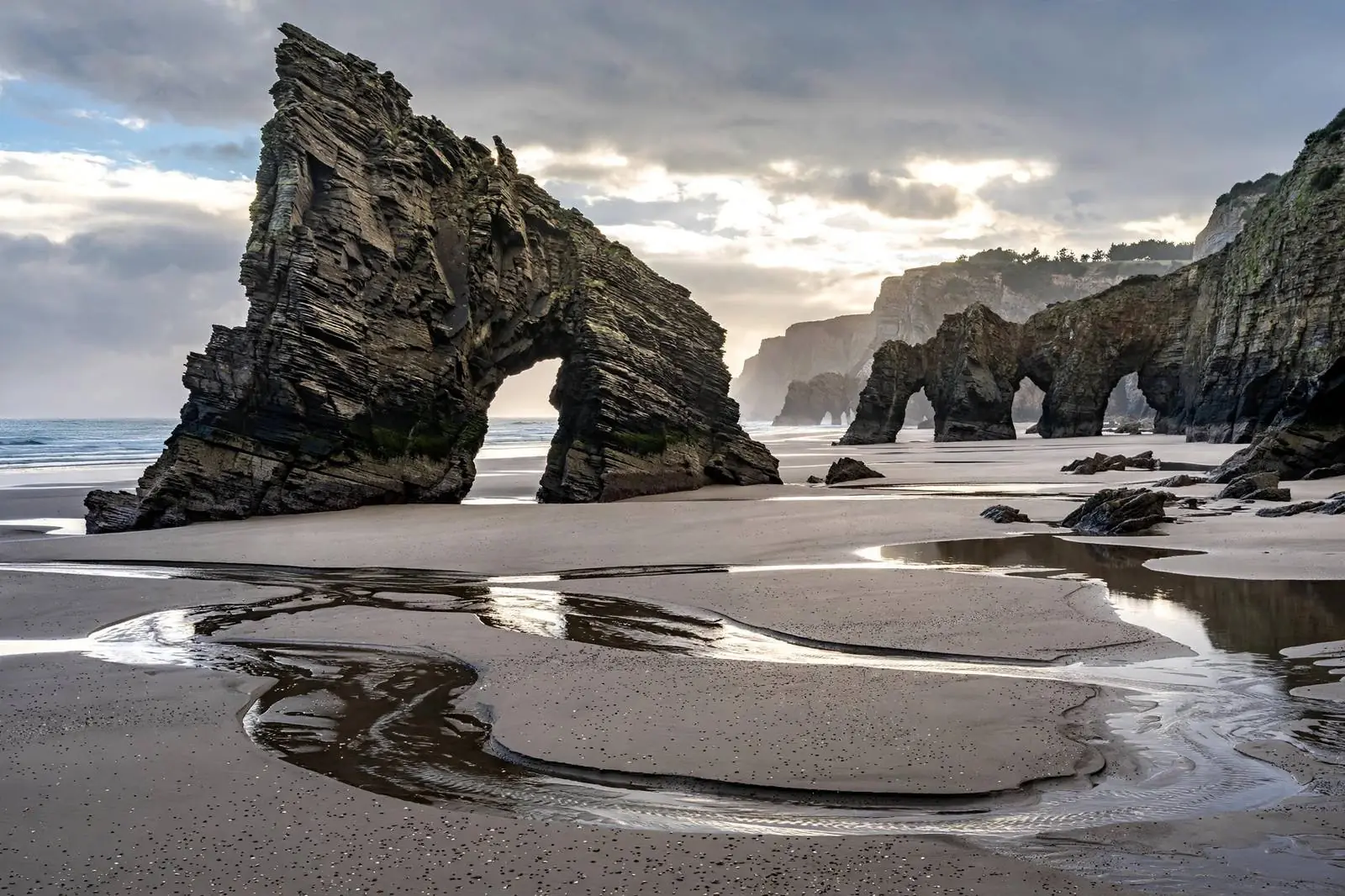
Manage your expectations: it's a sightseeing beach, not a swimming one. Expect cold water, a real current, and only a few hundred meters of walkable beach. People who timed low tide and walked the arches loved it; people who expected a full beach day were disappointed.
The logistics are free but mandatory. From Easter through summer you need a permit from the Xunta de Galicia website, which also shows the day's tide times.
Aim for two hours before low tide, when the arches are fully exposed and the crowds haven't built. There's also a €1.50 bus from the Ribadeo tourist office whose ticket doubles as your entry permit. Morning light is the best of the day; Tripadvisor's reviews are full of tide-timing advice.
4. Playa de Rodas, Cíes Islands, Galicia
The Guardian once called it the best beach in the world, and Galicia treats it like a national treasure: the Cíes Islands cap visitors at roughly 1,800 a day, so even in August the long curve of white sand never feels packed.
Rodas connects two islands with a lagoon on one side and open Atlantic on the other, eucalyptus and pine forest behind the dunes. Water this clear usually isn't this cold, but here it is: 17–18°C even in summer (official tourism data puts the north coast in the high teens). Fine for a bracing swim once the shock passes; not for long lounging.
You need two bookings: a free authorization from the Xunta de Galicia, then the ferry from Vigo, Baiona, or Cangas (about 40 minutes, roughly €25 round trip). Book both early for July and August.
Ferries run seasonally only, so this is a May-to-September beach. Pack everything you need; traveler reports consistently say the island's few restaurants aren't enough to rely on.
5. Playa de Bolonia, Tarifa
A beach with a Roman city attached. Bolonia stretches for kilometers of undeveloped golden sand, backed by a 30-meter moving dune you can climb for Atlantic views. At its edge sits Baelo Claudia, a remarkably preserved 2nd-century-BC city with a garum fish-sauce factory you can still walk through.
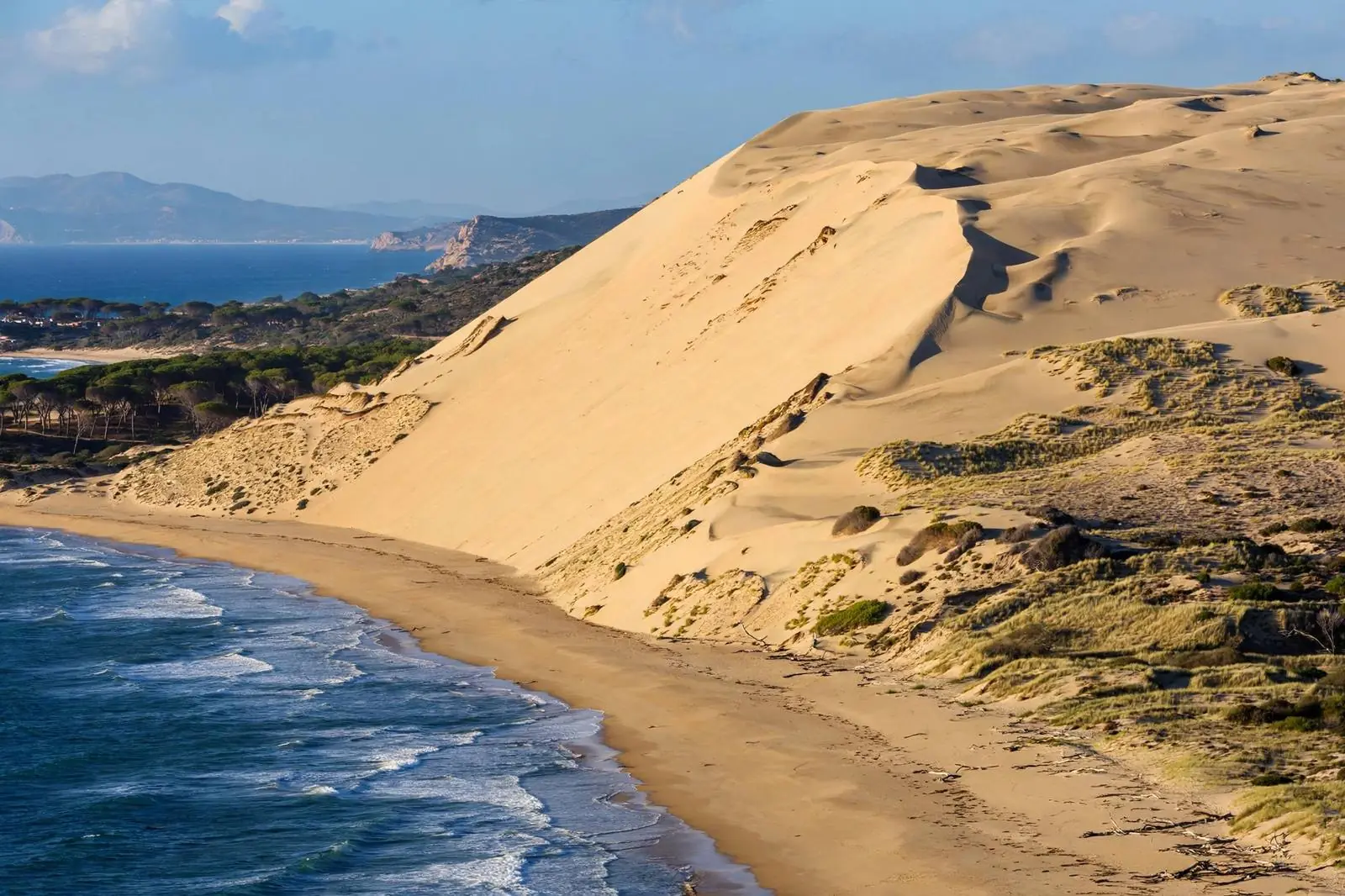
Few places on earth give you a swim, a dune hike, and a Roman forum in one afternoon. Entry to the ruins is free for EU citizens (€1.50 otherwise), per Andalucía 365's Bolonia guide.
The decider here is wind. The Levante (easterly) can sandblast you off the beach when it blows hard; the Poniente (westerly) brings calm, clear water. Check Windguru before committing: over 30 km/h of Levante means picking a sheltered Tarifa beach instead.
May, June, September, and October are the sweet spot. Winter is for hikers and photographers, with most village services closed.
6. Playa de Cofete, Fuerteventura
Fourteen kilometers of raw Atlantic beach under the Jandía mountains. You get golden sand, peaks that look like they're pouring into the sea, and waves that are genuinely huge. This is the most end-of-the-world feeling in Spain.
Do not swim here. Currents here are dangerous, and the official advice says so plainly. Experienced surfers use Cofete; casual bathers should stick to walking and watching the surf from the sand.
Getting there is half the story: around 20km of narrow dirt road from Morro Jable, with steep drops in places. A normal rental car can handle it if you go slowly; if dirt tracks make you nervous, take the 4x4 bus from Morro Jable instead.
There's almost nothing at the end (Fuerteventura Playas has the full rundown): a small village, a bar, and the mysterious Villa Winter. Bring water, food, and sun protection. Spring and autumn are ideal.
7. Playa de la Concha, San Sebastián
The best city beach in Spain, and a contender for Europe. A shell-shaped bay of fine golden sand between Mounts Urgull and Igueldo, with Santa Clara island sitting in the middle. Swim in the morning, eat pintxos in the old town by lunch.
Here's the honest caveat: the water. This is the Bay of Biscay: it peaks around 21–22°C in August and sits near 18°C in June and October, per World Beach Guide's temperature data. Swimmable in summer, bracing outside it. The tide also swings wide and shrinks the beach dramatically at high tide, so check before planning a full day.
What you get in return is effortlessness: a 1.3km promenade, showers, cheap lockers, sunbed rentals, and a sheltered bay that's genuinely safe for kids. Early June and September are the play: warm enough, thinner crowds. In August the whole city seems to show up at once.
8. Playa de Maspalomas, Gran Canaria
Ranked 20th in the world in Tripadvisor's 2026 awards, and the most surreal beach in Spain. The Maspalomas dunes are a pocket Sahara meeting the Atlantic: golden ridges, a palm oasis, a lagoon, even camel rides, beside a 3.5km Blue Flag beach.
The beach works on a gradient. Near the lighthouse: families, calm water, bars on the sand, lifeguards. Walk east into the dunes and it gets quieter and wilder; the middle section where dunes meet sea is clothing-optional, so families should stay near the signed family zones.
Sunbeds are cheap here: around €2.50 per lounger plus €2.50 for a parasol, per Gran Canaria Info's Maspalomas guide, some of the lowest prices on this list.
Two practical notes: wear trainers for the dune walk (the sand gets fiercely hot and the sea is further than it looks), and afternoon wind can pick up, especially in winter. Mornings are reliably calm. As The Traveler's Canaries guide notes, this is the best winter beach on the list.
9. Playa de Muro, Mallorca
Ranked 12th in the world in Tripadvisor's 2026 Travellers' Choice: the highest-placed Spanish beach on the global list. Sometimes the consensus is right.
Muro is what a Mediterranean family beach is supposed to be. Six kilometers of shallow turquoise water over fine sand, backed by protected dunes and pine forest, Blue Flag, every facility. The water stays ankle-deep for a long way out, which is why families with small children rate it so highly.
The tradeoff: no drama. This is a big, beautiful, well-served beach, and it feels like one. Its sheer size absorbs August crowds better than the small calas do.
If you want the classic easy beach holiday with the least friction, this is the pick. If you want the feeling of discovery, head to Cala Agulla further north.
10. Playa de Benijo, Tenerife
Black sand, basalt sea stacks, and waves that make the Atlantic feel personal. Benijo sits at the edge of the Anaga mountains, the most photographed wild beach in Tenerife, and one of the few on this list where swimming can genuinely hurt you.
Take the danger seriously. Red Cross lifeguards are stationed here for a reason: travelers report being dragged far offshore within seconds even in ankle-deep water. Obey the flags, don't snorkel here, and accept that some days are for looking, not swimming.
The drive is part of the experience: a winding mountain road through the Anaga laurel forest, about 90 minutes from the island's south. Parking is limited roadside slots, so arrive early. And ignore any sunset advice you see online: the sun sets on the wrong side here. Come in the morning at low tide, when the sand area is largest.
11. Playa del Silencio, Asturias
Five hundred meters of pebbles under towering cliffs, with no bar or sunbed rental, and not even toilets. That's exactly why it's here: "Silencio" is the name and the product.
Know what you're signing up for. There's no sand, so water shoes are essential. The descent from the clifftop parking is a steep stepped path: manageable for most, not an option for anyone with mobility issues. The sea is cold (17–18°C in summer) and can pull strongly even when it looks calm; swim only when it's flat.
Parking near the top costs around €3 for cars, with free roadside spots further up the road. Come early morning or late afternoon for the light, bring everything you need, and take it all back out. It's a two-hour visit, not a full day, and that's its charm.
12. Cala Agulla, Mallorca
A 500-meter curve of fine white sand inside a protected natural park, pine forest behind, not a building in sight. On paper one of Mallorca's finest beaches; in practice a logistics puzzle that rewards early risers.
Parking is the main event here. The dedicated car park has been closed by the municipality, and nearby street parking can end in a €200 fine. Your realistic options: arrive before 10am to compete for the limited legal spots, stay within walking distance in Cala Ratjada, or take the local bus.
Is it worth the hassle? Swimming is excellent here: clear turquoise water and good snorkeling around the rocky edges. But be honest about your tolerance. If parking stress ruins a beach day for you, Playa de Muro (40 minutes away) delivers 90% of the beauty with none of the friction. Recent reviews are split on exactly that question.
When to go
June and September are the sweet spots for the mainland and the Balearics. The water is warm and the crowds are manageable, with the seasonal ferries (Cíes, Formentera) running.
July–August is peak: the warmest water, the biggest crowds, the highest prices. The permit beaches (Las Catedrales, Rodas) need booking weeks ahead. Build your days around early mornings and low-tide windows.
The Canaries work year-round. Maspalomas, Cofete, and Benijo are at their best in spring and autumn. Winter is mild and a genuine escape from mainland cold, though the wind picks up.
The north coast (Galicia, Asturias, Basque Country) is a June-to-September proposition for swimming. Outside that it's dramatic and empty: great for walking, cold for bathing.
What to bring
- Water shoes. Half this list is pebbles, rocks, or rough volcanic sand (Silencio, Benijo, Macarella's edges, Catedrales).
- A wind-check habit. Bolonia, Cofete, and the Galician coast live and die by the forecast. Check Windguru the night before.
- Cash. Beach bars, parking machines, and rural buses in the north and the islands are often cash-only.
- Snorkel mask. Macarella, Rodas, and Cala Agulla reward it. Benijo and Cofete punish it.
- Your own food and water for the wild beaches (Cofete, Silencio, Rodas). There are no shops once you're there.
Frequently Asked Questions
What is the best beach in Spain?
Ses Illetes in Formentera is my pick: Caribbean-grade water reachable by a €30 ferry. For drama, Playa de las Catedrales (Galicia) or Playa de Cofete (Fuerteventura). For the easiest great beach day, Playa de Muro (Mallorca), Spain's highest entry in Tripadvisor's 2026 awards.
Which part of Spain has the best beaches?
The Balearics have the most consistently excellent beaches (Ses Illetes, Macarella, Muro). The Atlantic north (Galicia, Asturias) has the most dramatic ones. For winter sun, the Canaries win. Andalusia's Costa de la Luz (Bolonia, Tarifa) is the best blend of wild beauty and warm weather.
Do I need permits to visit Spanish beaches?
Two on this list do. Playa de las Catedrales requires a free permit from the Xunta de Galicia in summer, and the Cíes Islands (Playa de Rodas) need a free Xunta authorization plus a ferry booking. Both are free and bookable online, but they sell out in August, so sort them weeks ahead.
When is the sea warm enough to swim in Spain?
The Mediterranean hits 24–27°C from July to September. The Atlantic north peaks around 21–22°C (La Concha, Rodas) and the Canaries sit at 20–24°C year-round. If warm water is non-negotiable, stick to the Med and the Balearics in summer, or the Canaries in winter.
Are Spanish beaches good for families?
Playa de Muro and Playa de la Concha are the standouts: shallow water, lifeguards, full facilities. Ses Illetes and Cala Macarella are also family-friendly thanks to shallow entries. Skip Benijo and Cofete with small children (dangerous currents), and know that much of Maspalomas' dune section is clothing-optional.
The bottom line
If you only have time for three: Ses Illetes for the water, Las Catedrales for the drama, and one wild Atlantic beach (Cofete or Benijo) for the story. Check the tide chart, check the wind, bring water shoes. Don't skip the ones that need a permit: the paperwork is the filter that keeps them special.
Building a wider trip around these beaches? Start with our Spain travel hub. And if you're torn between Spain and Greece, our ranking of Greece's best beaches uses the same honest methodology.