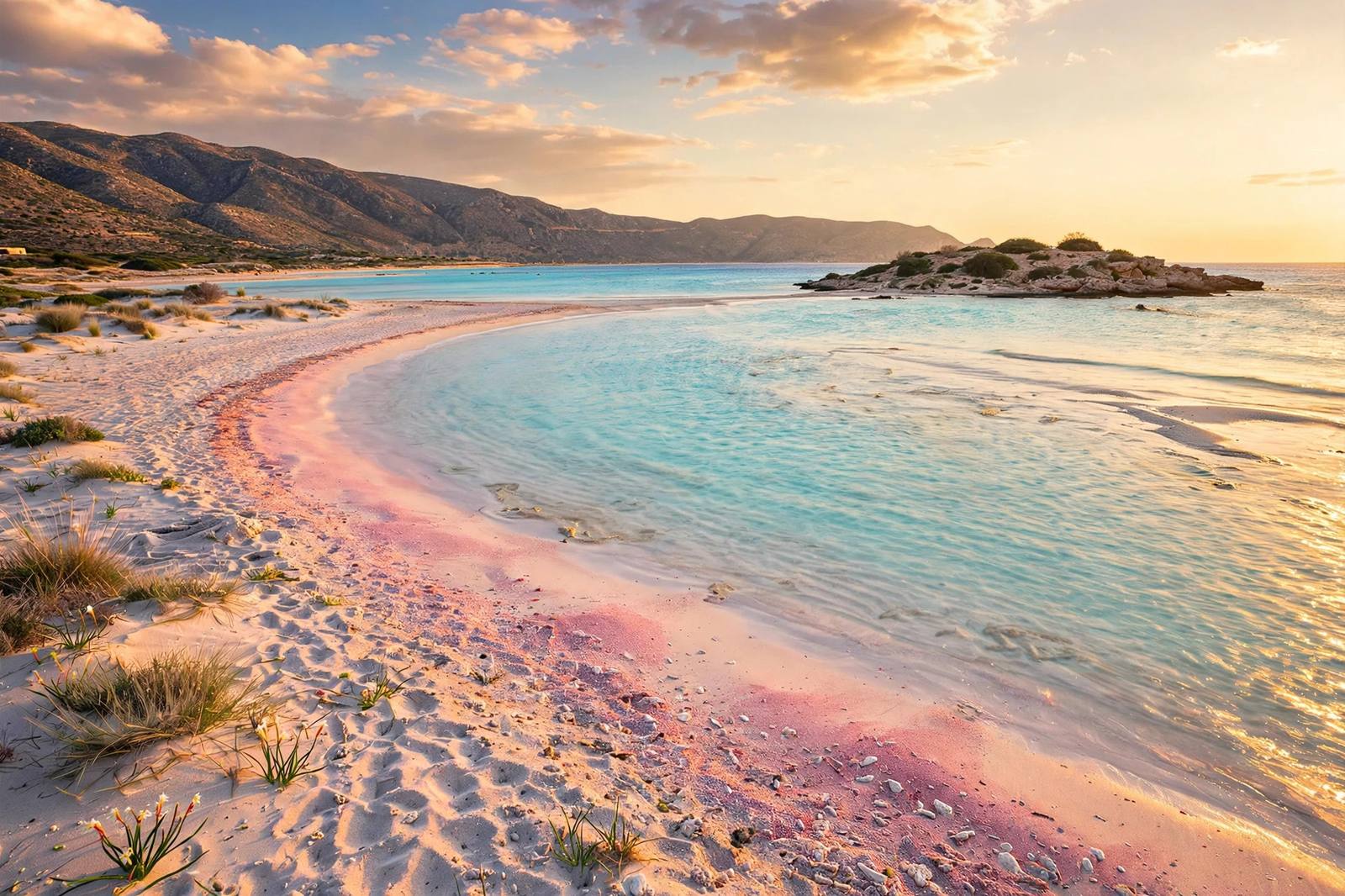
- Elafonissi (Crete) is the consensus #1 — pink sand, ranked 2nd best beach in the world for 2026. Go early or go in September.
- The Ionian islands (Lefkada, Kefalonia, Corfu) have the most dramatic beaches; the Cyclades have the most variety.
- Many of Greece's best beaches need effort: stairs, boats, or dirt roads. The easy ones tend to be the crowded ones.
- Bring water shoes. Half the great beaches are pebbles, not sand.
- Sunbeds run €15–40 for a set; bringing your own towel is always allowed and always cheaper.
---
Greece has more coastline than any other country in Europe — roughly 13,600 kilometers of it — and an absurd percentage of that coastline is genuinely beautiful. The problem isn't finding a good beach in Greece. It's knowing which ones are worth restructuring your trip around.
This list is ranked by the experience, not just the postcard. I weighted swimmability and atmosphere over fame — a beach that takes effort to reach but empties by afternoon beats a famous one where you're fighting for towel space.
Award rankings (Tripadvisor, European Best Destinations 2026) informed the shortlist; the ordering is my call. A beach that takes a boat and a hike to reach but empties out by 4pm beats a famous one where you're fighting for towel space.
Methodology: how we ranked this list
I started with the 2026 award shortlists (Tripadvisor Travellers' Choice, European Best Destinations) and cross-checked against what travelers actually report on Reddit, forums, and trip reports. The ranking weights the swimming and lounging experience over fame — accessibility, water quality, crowding patterns, and whether a beach delivers on its reputation. A famous beach that's packed by 11am ranks below a harder-to-reach one that stays magical all day.
1. Elafonissi, Crete
The pink sand beach. Ranked the 2nd best beach in the world and #1 in Europe in Tripadvisor's 2026 awards, and for once the hype is proportional.
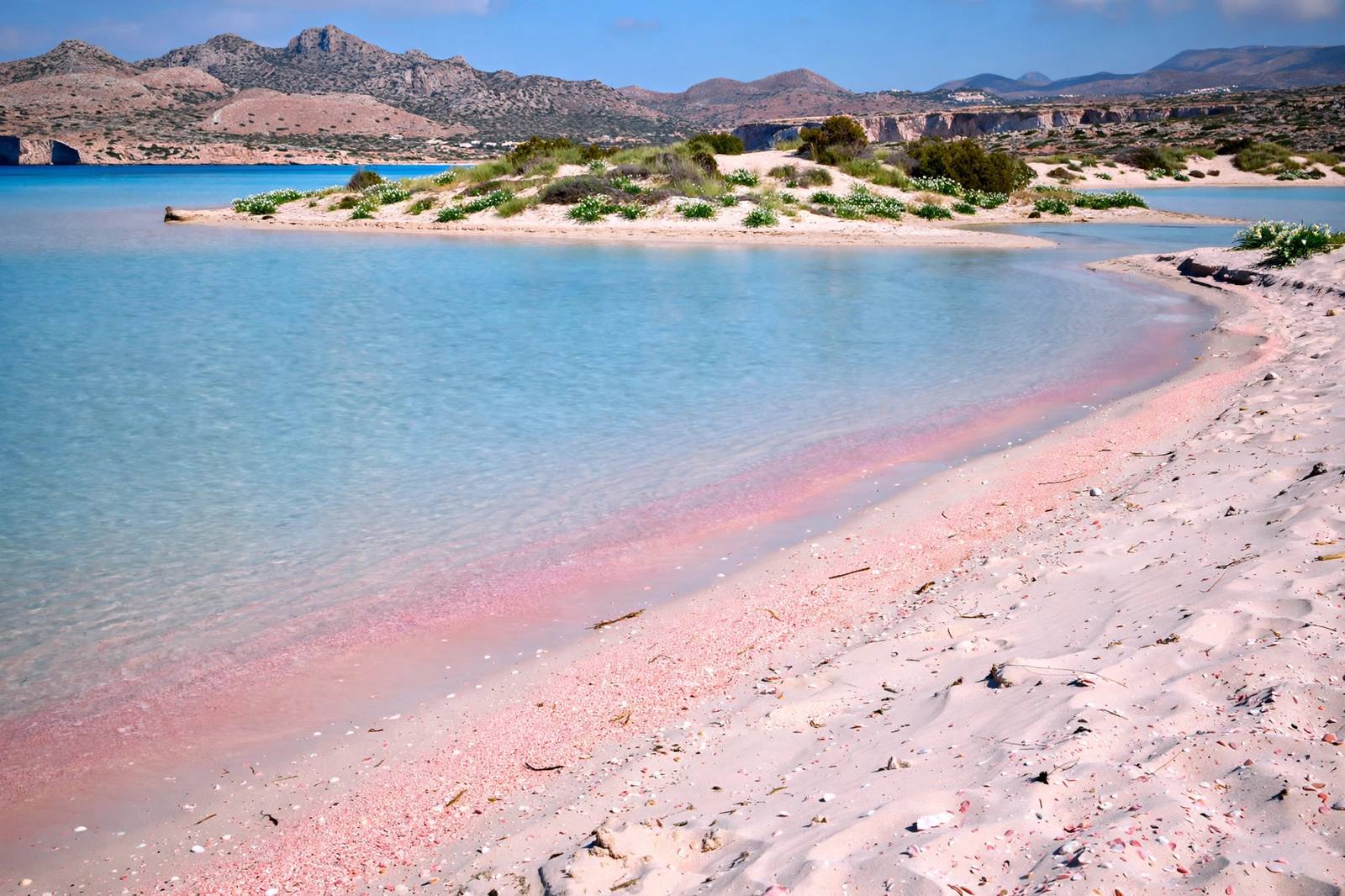
That pink tint comes from crushed shells mixed into the white sand — it's subtle, not bubblegum, and it shows best in the late afternoon light. The water is absurdly shallow for a long way out, which makes it ideal if you're traveling with kids, and the small island just offshore is worth the wade.
The downside is the obvious one: everyone knows. Arrive before 10am or come in September, when the water is still warm and the day-trippers are gone. There's a protected nature reserve behind the beach with cedar trees — worth a walk when you need shade. (Shade is the real scarcity here; the beach itself has almost none at midday.)
2. Balos Lagoon, Crete
A former pirate cove turned protected lagoon, ranked 3rd in the world for 2026. Out here the water shifts between turquoise and deep blue depending on where you stand, and the sandbar connecting the small island to the mainland is the classic photo.
Getting here is half the adventure. You can drive the rough dirt road from Kissamos (about 8km of bone-rattling track — a normal rental car can do it, slowly) then hike 20 minutes down, or take the ferry from Kissamos port, which is the relaxed option. Taking the ferry is genuinely pleasant and saves your suspension.
Check the wind before you go. Balos is exposed, and on windy days the experience drops significantly. Early morning is the move — by noon the lagoon fills up.
Honestly, if the dirt road sounds miserable, just take the ferry. You'll arrive relaxed instead of rattled, and the approach from the water is arguably the better view anyway.
3. Myrtos, Kefalonia
The postcard beach — you've seen it even if you don't know the name. A long curve of white pebbles between towering cliffs, with water that goes from turquoise to deep blue in about ten meters.
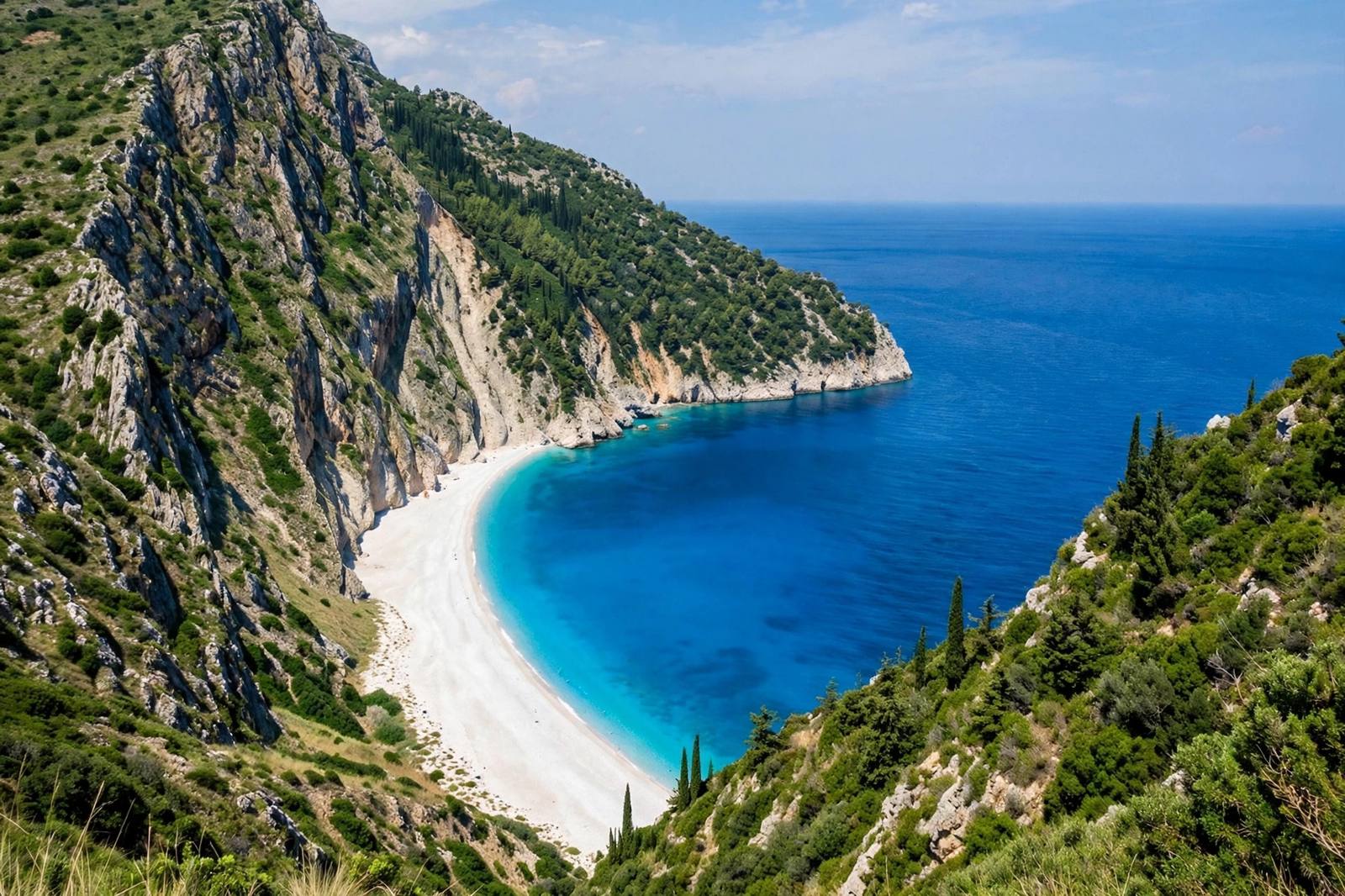
It's pebbles, not sand, which means water shoes aren't optional unless you enjoy the hot-coal walk. The beach is big enough that it rarely feels packed even in August, and the sunsets here are legitimately spectacular — the cliffs face west and the whole bay goes gold.
Antisamos is the prettier cove nearby (it was in Captain Corelli's Mandolin), but Myrtos is the grander statement. Do both; they're 20 minutes apart. Just check the sea conditions first — when it's wavy, Myrtos gets rough fast.
4. Porto Katsiki, Lefkada
If you're beach-hopping Lefkada's west coast — and you should — Porto Katsiki is the headline act. White cliffs, impossibly blue water, and a setting that looks rendered.
Those stairs are real — it's a proper descent, and the climb back up in afternoon heat is a workout. Arrive before 10am for parking and a good spot; by midday the small beach fills and the experience changes. It can get wavy, so it's less ideal for small children than the east coast beaches.
Lefkada is connected to the mainland by a bridge, which means no ferry logistics — a genuine advantage over the islands. Base yourself anywhere on the west coast and beach-hop: Egremni and Kathisma are both worth a day.
One thing nobody tells you: the stairs down are only half the problem. It's the climb back up, in full afternoon sun, after swimming — bring water, wear real shoes, and don't attempt it in flip-flops unless you enjoy suffering.
5. Navagio (Shipwreck Beach), Zakynthos
The one with the rusting shipwreck in the middle of a white-sand cove surrounded by cliffs. It's been on a thousand Instagram posts, and the reality still lands.
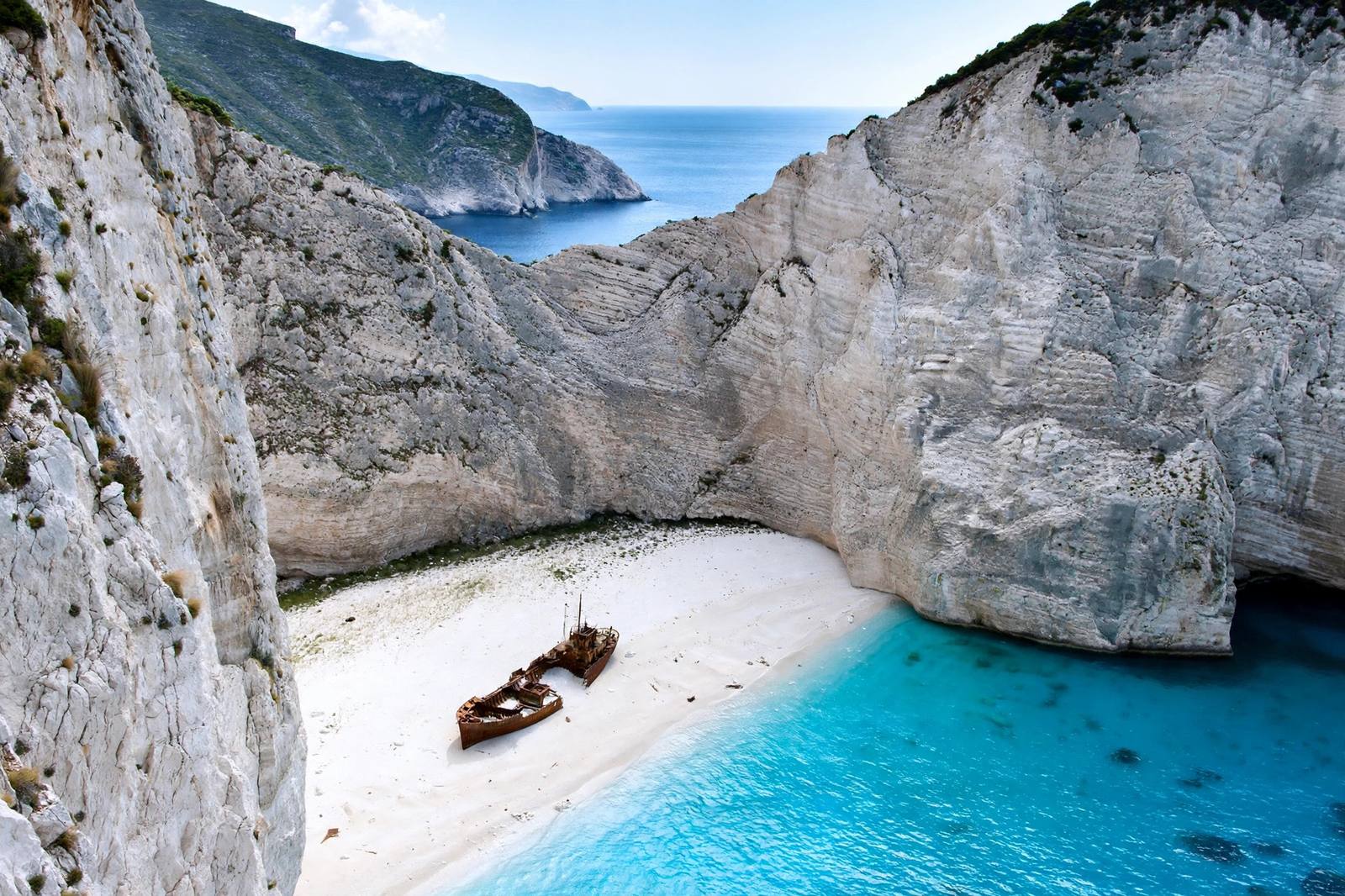
Important update: you can't land on the beach itself anymore — access has been restricted for safety (falling rocks from the cliffs). You visit by boat tour, which circles the cove and stops for swimming nearby. Book the viewpoint at the top of the cliffs separately; it's the actual money shot and it's free.
Go on a small boat, not the giant tour boats. The cove is better with 12 people than 120.
Is it worth it given you can't actually land? I'd say yes, once — the cliffs and the water color are unreal from a boat, and the viewpoint alone justifies the trip. Just don't build your whole Zakynthos itinerary around it.
6. Sarakiniko, Milos
Not a beach in the conventional sense — a lunar landscape of white volcanic rock carved into smooth curves and caves, with the Aegean pouring through channels between the formations. It looks like another planet.
You can swim here, and people do, but the real draw is the landscape itself. Come for the light — early morning or late afternoon, when the white rock glows. Midday in summer it's blinding and hot, with nowhere to hide.
Milos in general is underrated. If you're doing the Cyclades and want something beyond Santorini and Mykonos, this island rewards the detour.
Fair warning: this isn't a loung-all-day beach. There's almost no shade, the rock gets blinding at midday, and you'll want proper footwear for scrambling. Come for the landscape, swim if you feel like it, leave before the sun gets punishing.
7. Voutoumi, Antipaxos
Ranked the 2nd best beach in Europe for 2026, and most travelers have never heard of Antipaxos. That's the appeal.
It's a small crescent of white sand and unreal turquoise water, reachable mainly by boat from Paxos or Corfu. There's nothing here but water and sand — bring everything you need.
Antipaxos is tiny. Most people visit on a day trip, which means the beach empties when the last boat leaves. If you can stay overnight on Paxos and catch an early boat, you'll have it nearly to yourself.
The tradeoff for all this perfection: zero facilities. No sunbeds, no taverna, barely any shade. Pack like you're going to a desert island, because functionally, you are.
8. Paleokastritsa, Corfu
Six small coves wrapped around a headland, with some of the clearest water in Greece. Ranked 14th in the world for 2026. The main beach is organized (sunbeds, tavernas), but walk 10 minutes in either direction and the coves get wilder and quieter.
This is one of the best snorkeling spots on the list — the rocky coves hold clear water and marine life that sandy beaches don't. Bring a mask.
Corfu's north coast in general is worth exploring if you're based here. Rovinia, also on Corfu, made Europe's top 10 for 2026 and is reachable by a short hike.
Skip the main beach if it's packed — the whole point of Paleokastritsa is the coves, and the good ones are a 10-minute walk in either direction.
9. Falassarna, Crete
Crete's west coast answer to Elafonissi, without quite the same crowds. A huge expanse of sand — one of the longest beaches on the island — with famous sunsets and consistently clear water. Ranked 11th in the world for 2026.
Its size is the feature. Even in August you can walk five minutes from the main entrance and find space. There are beach bars and tavernas if you want them, and nothing if you don't.
If Elafonissi's crowds put you off but you still want a big sandy Crete beach, this is the answer. Same island, fraction of the stress. It can get windy though — bring a layer for the evening even in summer.
10. Lalaria, Skiathos
Boat-access only, which keeps it pristine. White pebbles, dramatic cliffs, and water so clear it looks shallow even where it's deep. Everyone photographs the rock arch at one end.
Book a boat from Skiathos harbor — the Mamma Mia tours pass through, but the dedicated beach trips give you more time in the water. There's nothing here but pebbles and water. Pack shade, food, and everything else accordingly.
This is the castaway fantasy made real, but go in with open eyes: no facilities means no facilities. Zero shade, nothing to eat, nothing to drink. It's glorious for a few hours and then you really want that boat back.
11. Tsampika, Rhodes
The family pick. A long, gently sloping sandy beach with shallow water, easy parking, and tavernas within walking distance. Ranked among Europe's best for 2026 specifically for its accessibility and family-friendliness.
It's not the most dramatic beach on this list, and that's the point. If you're traveling with kids or just want an easy, beautiful beach day without logistics, Tsampika delivers.
The monastery on the hill above is worth the climb for the view.
Look, nobody's going to call Tsampika the most beautiful beach in Greece. But if you're traveling with kids and you want a day where everything just works — parking, swimming, lunch, no drama — this is the one.
12. Fteri, Kefalonia
Ranked 3rd best beach in Europe for 2026, and you can only get here by boat or a demanding hike from the village of Zola. White pebbles, turquoise water, dramatic white cliffs, zero development.
This is the connoisseur's pick — the beach for people who've done Myrtos and want what's next. That hike is genuinely demanding (steep, exposed, no shade), so most people take a water taxi from Zola. Either way, the effort filters the crowds.
Between this and Myrtos: Myrtos is the postcard, Fteri is the experience. If you only do one Kefalonia beach and you want the story to tell afterward, it's this one.
---
When to go
June and September are the sweet spots for Greek beaches. The water is warm, the crowds are manageable, and prices haven't peaked (June) or have dropped (September).
July–August is peak: hottest water, most crowds, highest prices. The famous beaches are packed by 11am. If this is when you can go, base your strategy around arriving early and seeking the harder-to-reach spots.
May and October are for the brave — the water is cool but swimmable, and you'll have famous beaches nearly to yourself. Some facilities and boat services shut down by mid-October.
What to bring
- Water shoes. Half the best beaches are pebbles. This is the single most useful item.
- Your own towel/umbrella. Sunbed sets run €15–40 depending on the beach. You're always allowed to lay your own towel — it's the law, though some organized beaches make it awkward.
- Cash. Many beach tavernas and water taxis are cash-only.
- Snorkel mask. The rocky coves (Paleokastritsa, Fteri, the Milos coast) reward it enormously.
Frequently Asked Questions
What is the best beach in Greece?
Elafonissi in Crete is the consensus pick — ranked 2nd in the world for 2026, with pink sand and shallow turquoise water. For drama, Myrtos (Kefalonia) or Porto Katsiki (Lefkada). For seclusion, Voutoumi (Antipaxos) or Fteri (Kefalonia).
Which Greek island has the best beaches?
Crete has the most award-winners (Elafonissi, Balos, Falassarna). Kefalonia and Lefkada have the most dramatic Ionian beaches. For variety in a small area, Milos or Paros in the Cyclades.
Are Greek beaches sandy or pebbly?
Both. The famous Ionian beaches (Myrtos, Fteri, Lalaria) are white pebbles — bring water shoes. Crete, Rhodes, and Naxos have more sand. Always check before you go if it matters to you.
How much do sunbeds cost in Greece?
Typically €15–40 for a set (two beds + umbrella), depending on the beach and island. You're legally entitled to use your own towel instead — though front-row spots at organized beaches are reserved for sunbeds.
When is the sea warm enough to swim in Greece?
Late June through September is reliably warm (24–27°C). May and October are swimmable but brisk (20–22°C). August is the warmest.
Do I need to book anything in advance for Greek beaches?
Not usually, but boat trips to Navagio, Lalaria, and Voutoumi can sell out in August — book a day or two ahead. Water taxis to Fteri are best arranged the evening before.
The bottom line
If you only have time for three: Elafonissi for beauty, Myrtos for drama, and one boat-access beach (Voutoumi or Lalaria) for the feeling of discovery. Bring water shoes, arrive early, and don't skip the harder-to-reach ones — the effort is the filter that keeps them special.