
Everyone goes to the islands. That's fine — the islands are great. But mainland Greece has things the islands don't: the Acropolis, monasteries floating on rock pillars, the Oracle at Delphi, and a food city where Greeks outnumber tourists. Skip the mainland entirely and you've missed half the country.
Five places. All reachable without a ferry. Prices checked for 2026.
Quick comparison: mainland Greece at a glance
| Place | Why go | Know before you go |
|---|---|---|
| Athens | The Acropolis + two world-class museums | 2–3 days; Acropolis timed entry €30, book ahead; Apr–May or Oct |
| Meteora | 6 monasteries balanced on 400m rock pillars | €5 per monastery (cash), visit 2–3; overnight for the free sunset; ~4h from Athens |
| Delphi | The ancient world’s center; the best day trip from Athens | €12 (€6 reduced); go before the 10am tour buses; pair with lunch in Arachova |
| Thessaloniki | Greece’s food capital, cheaper than Athens | 2–3 days; White Tower €8; Vergina (€12) holds Philip II’s tomb |
| The Peloponnese | Nafplio + Epidaurus’ theater + Mycenae | 3–4 days; you need a car (€30–40/day); Athens–Nafplio is 2h |
Athens: non-negotiable
You can't skip the Acropolis. Standing on the rock where democracy was invented, the Parthenon against the Attic sky — it lands harder than you expect, even if you're not a history person.
But let's be honest about Athens: it's a two-to-three-day city, not a week. See the big sites, eat well, then move on. The Acropolis Museum (€20) is superb — glass floors over the excavation, the Parthenon marbles arranged as they stood. The National Archaeological Museum (€20) holds the Mask of Agamemnon and the Antikythera mechanism, the world's oldest computer.
Practical things worth knowing: the old €30 combo ticket covering seven sites was discontinued in April 2025. Now you buy the Acropolis timed-entry ticket (€30) separately and pay per site for the rest. Book the Acropolis slot ahead — they sell out. The metro from the airport costs €9 and takes 40 minutes.
For neighborhoods: Plaka is touristy but pretty, Psiri has the best dinner scene, Exarchia is edgy and cheap. Go in April–May or October. Summer heat on the Acropolis rock, which has no shade, is brutal. We've mapped it all out in our things to do in Athens.
Meteora: the one people skip (their loss)
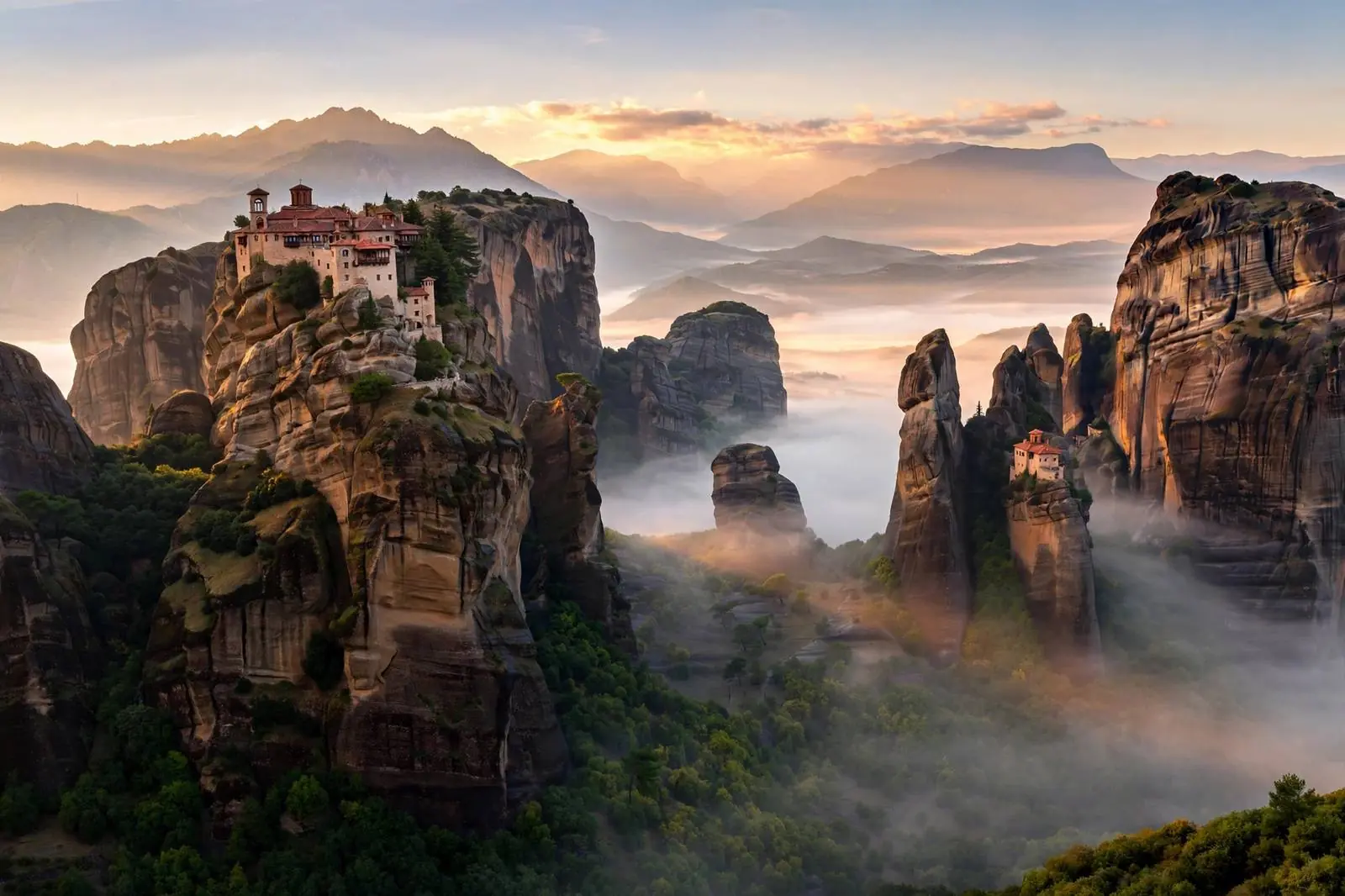
Six working monasteries balanced on rock pillars up to 400 meters high. Monks have lived up here since the 14th century, originally hauling themselves up in nets. It's the single most visually astonishing thing on the Greek mainland. UNESCO agrees — it's a World Heritage Site. And most first-time visitors skip it entirely.
Don't be most visitors.
Entry is €5 per monastery, cash only. Visit two or three; they're similar inside. Shoulders and knees must be covered — they lend wraps at the door. Overnight in Kalambaka or Kastraki so you catch the sunset from the viewpoint above town. It's free, and it rivals anything you pay for in Santorini.
Getting there takes effort: about four hours by train or bus from Athens, or two and a half from Thessaloniki. Worth every minute. Go April–June or September–October — winter brings snow and rotating monastery closures.
Delphi: the center of the ancient world
Three hours from Athens, on the slopes of Mount Parnassus, sits the place the ancient Greeks considered the center of the world. The Oracle spoke here. Kings sent offerings. And the setting — slopes dropping toward the Gulf of Corinth — is dramatic enough to make you understand why they chose this spot.
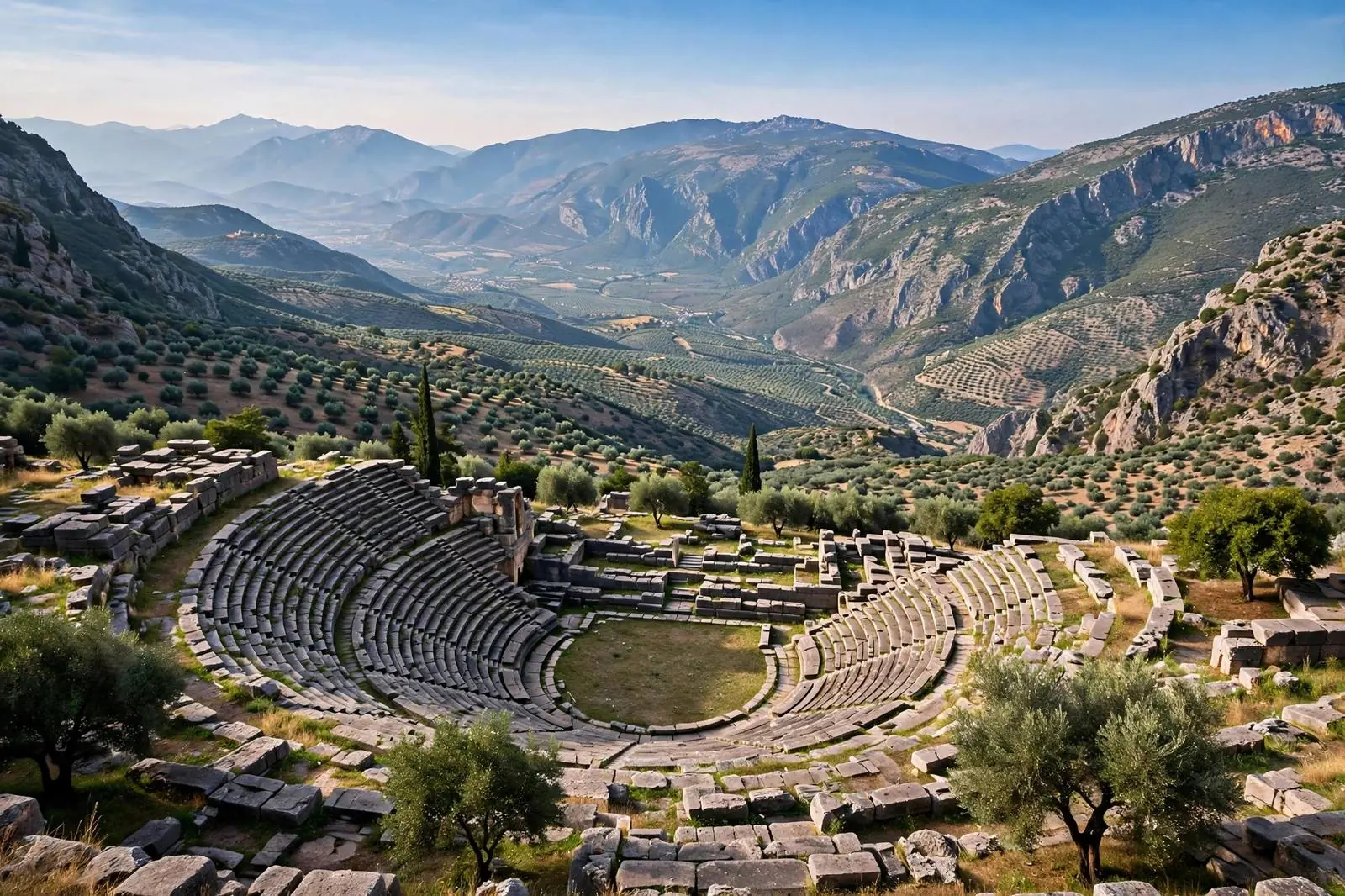
Best mainland day trip from Athens. Full stop.
Entry is €12 (€6 reduced). Go early; tour buses arrive by 10am and the site has little shade. The museum's Charioteer statue alone justifies the trip. Below the main site, the Sanctuary of Athena Pronaia has the iconic round tholos temple with half the crowds.
Combine it with Arachova, fifteen minutes away, for lunch. It's the closest thing Greece has to an alpine village — stone houses, mountain air, and formela cheese you won't find anywhere else. April–May or October for the site itself.
Thessaloniki: Greece's food capital
Forget second-city syndrome. Thessaloniki doesn't have Athens' ancient monuments or an island's beaches, which is exactly why it works. It's a living city where Greeks outnumber tourists, and the food scene is the best in the country. Bougatsa for breakfast. Trigona panoramatos for dessert. This is the best-eating city in Greece, and it's cheaper than Athens.
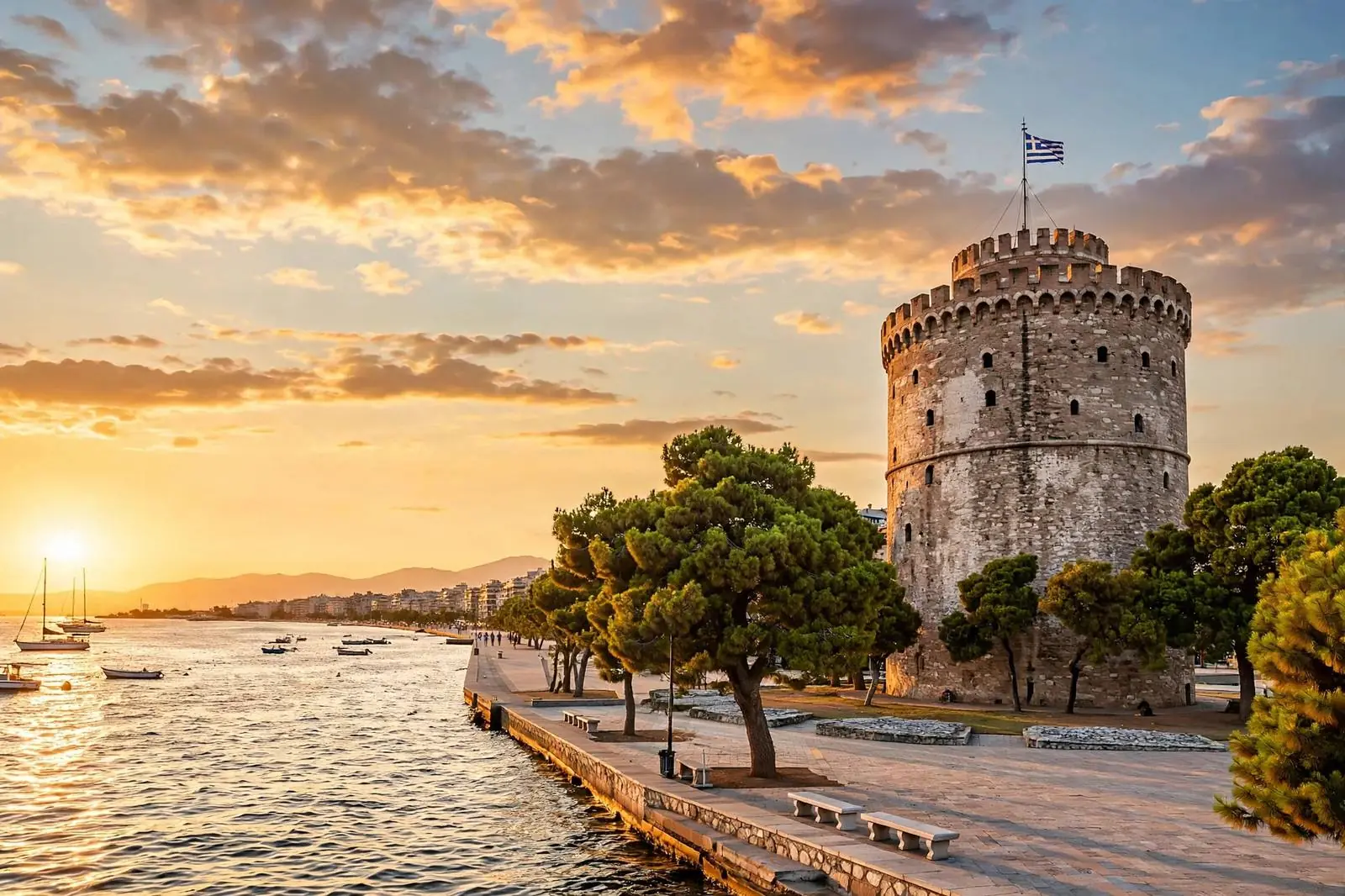
Two to three days. Spring or autumn, when the waterfront promenade is made for evening walks.
The White Tower (€8) is the landmark everyone photographs. The Museum of Byzantine Culture (€8) is the one that surprises people — Byzantine art sounds dull until you're standing in front of it. If you have a spare day, Vergina (€12) holds the tomb of Philip II, Alexander the Great's father, and the gold inside is staggering.
Otherwise just wander. Ladadika's tavernas, the renovated Modiano market, the Ano Poli (upper town) with Ottoman walls and views over the Thermaic Gulf. Thessaloniki rewards going without a plan.
The Peloponnese: Nafplio and beyond
Nobody talks about the Peloponnese, which is exactly why you should go. Nafplio — Greece's first capital — is a Venetian-era town with a fortress on a rock (Palamidi, 999 steps, free to climb), bougainvillea-draped lanes, and a waterfront built for long lunches.
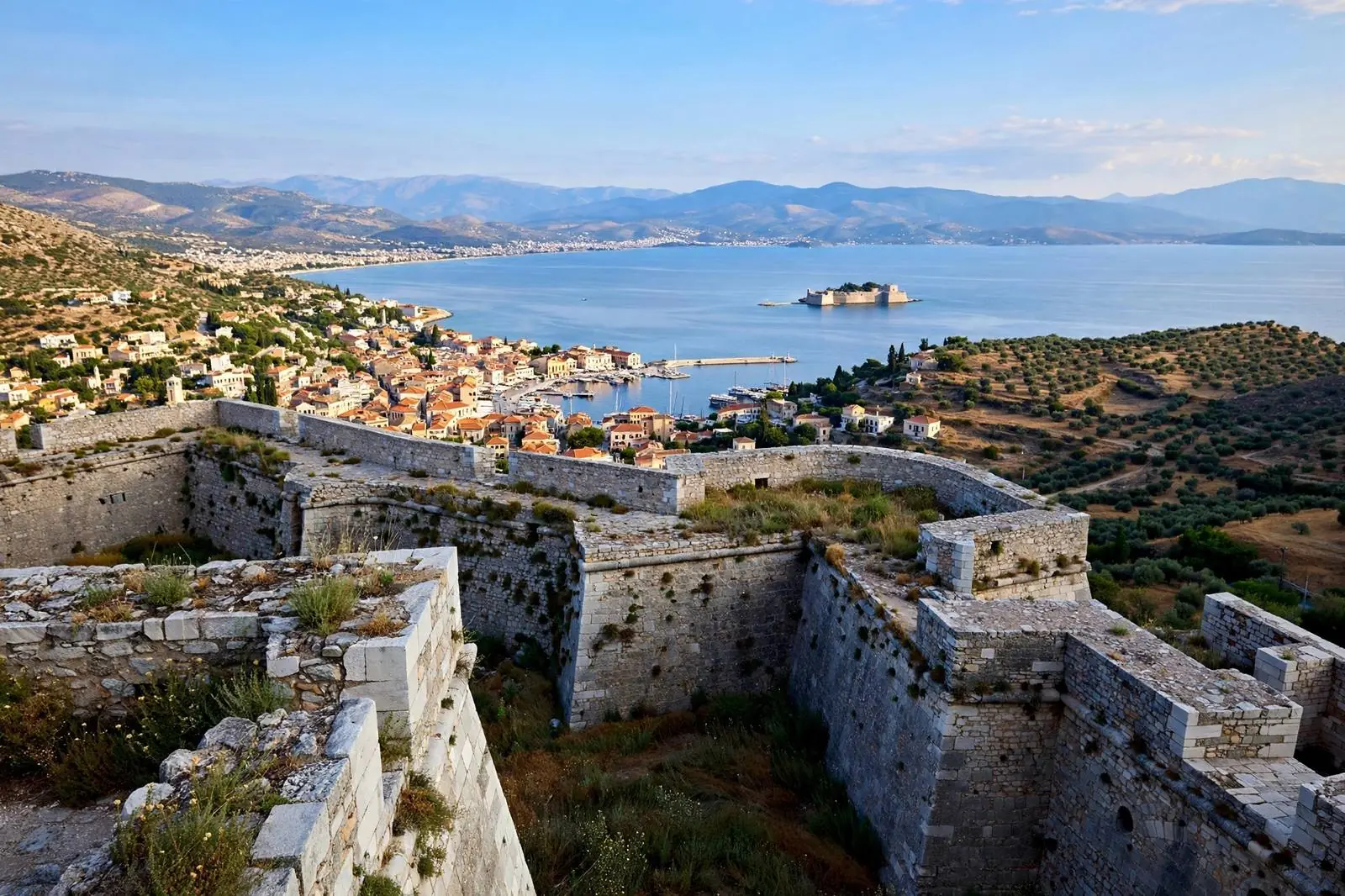
And it's the base for the best history-per-hour in Greece. Within an hour's drive: Epidaurus, home to the best-preserved ancient theater in the world (€12) — still used for summer performances, where you can hear a whisper from the stage in the top row. Mycenae, Agamemnon's citadel (€12). Some of the emptiest beaches in the country.
Three to four days based in Nafplio. April–June or September–October. You need a car — KTEL buses exist, but the region's best sites and beaches need wheels. Athens to Nafplio is two hours by car.
For a second trip: the Mani peninsula (tower houses, wild coastline) and Monemvasia (a medieval town on a rock island, reached by causeway). The Peloponnese could fill two holidays on its own.
Getting around the mainland
No ferries needed, which simplifies everything. KTEL buses cover the mainland well — Athens to Delphi is about €15, Athens to Nafplio around €13. Comfortable, punctual, cheap.
Trains are limited but the Athens–Thessaloniki line works fine. For Meteora and the Peloponnese, a rental car (€30–40/day in shoulder season) gives you freedom the buses don't. The roads are good; mountain passes are dramatic but safe.
Same note as the islands: Greece charges a climate resilience fee of €2–15 per room per night (April–October, by star rating), collected at check-in.
Frequently Asked Questions
How many days for mainland Greece?
A week covers Athens (2–3 days), Delphi (day trip), and Meteora (1–2 days). Add three to four days for the Peloponnese and two to three for Thessaloniki if you have two weeks.
Can you do Meteora as a day trip from Athens?
Technically yes, practically no. It's four hours each way. You'd spend eight hours in transit for three hours of sightseeing, and you'd miss the sunset — which is half the point. Overnight in Kalambaka.
Is Thessaloniki worth visiting over the islands?
Different trip, not a substitute. If this is your first time in Greece and you have ten days, do Athens plus islands. If you've done the islands, or you care more about food and city life than beaches, Thessaloniki is excellent.
What's the best base for the Peloponnese?
Nafplio. Central, beautiful in its own right, and within an hour of Epidaurus, Mycenae, and good beaches. You need a car — don't try this region by bus.
The bottom line
The islands get the postcards, but the mainland has the depth. Athens for the history you can't skip. Meteora for the sight you'll describe with hand gestures for years. Delphi for the day trip that punches above its weight. Thessaloniki for the food. The Peloponnese for the Greece most tourists never see.
Do both, if you can. But if someone tells you mainland Greece is just the place you land before the ferry — they've got it backwards.