
- Visa on arrival: US, UK, EU, Canadian, and Australian passport holders buy a $25 tourist visa at the airport bank kiosk before passport control. An e-visa portal exists if you'd rather sort it in advance.
- Go October–April. November to February is the sweet spot (19–25°C days); summer hits 38°C+ and makes the Giza plateau genuinely miserable at midday.
- The Grand Egyptian Museum is fully open (opened November 2025): roughly EGP 1,450 (~$28–30) for foreign adults, 2 km from the pyramids. Pair it with Giza on the same day.
- Budget roughly $90–160 per day for a comfortable mid-range trip: decent hotel, restaurant meals, Uber everywhere, and site entries.
- The hassle is real but manageable. Touts at Giza and Khan el-Khalili are persistent, not dangerous. A firm "la, shukran" (no, thank you) and keeping walking ends most encounters.
Cairo is the largest city in the Arab world, home to around 20 million people, and it makes no effort to ease you in. The traffic is legendary, the noise is constant, and within your first hour someone will try to sell you something, guide you somewhere, or "help" you for a tip.
None of this is personal. It's just Cairo's operating system, and once you learn the basic commands, the city opens up into one of the most rewarding destinations on the planet.
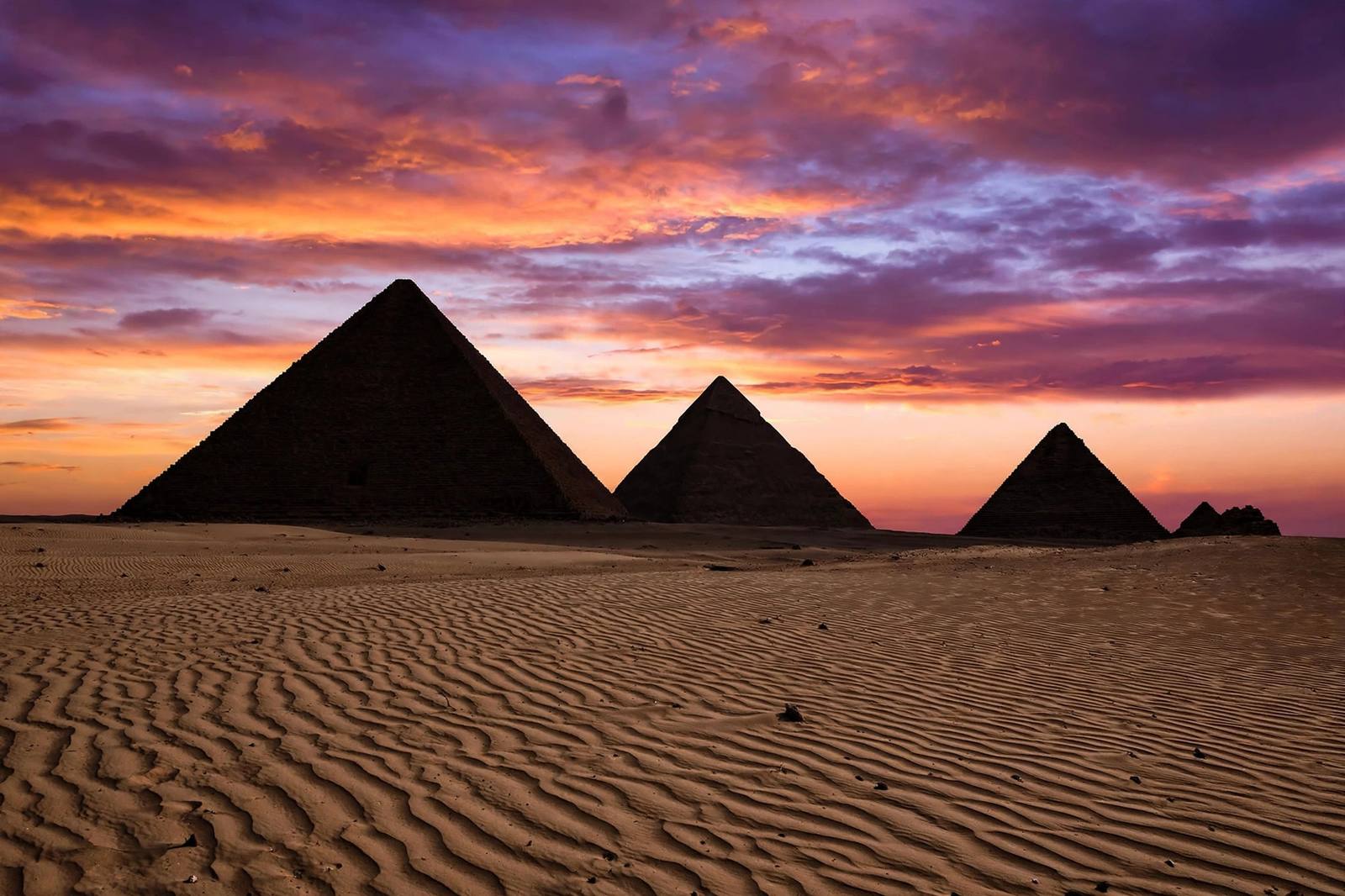
Because the pyramids are real. Not a postcard, but actual 4,500-year-old mountains of stone at the edge of a modern city, and they will genuinely stop you in your tracks.
The Grand Egyptian Museum, now fully open after years of delays, is arguably the best new museum in the world. Islamic Cairo holds some of the finest medieval architecture anywhere. And the food (koshary, ful, taameya) costs almost nothing and is excellent.
This guide is the honest version: what's worth your time, what's overrated, how the scams work, and how to handle the intensity without letting it ruin your trip.
Do You Need a Visa to Visit Egypt?
For most Western visitors, it's simple. Citizens of the US, UK, EU member states, Canada, Australia, New Zealand, and Japan can get a tourist visa on arrival at Cairo International Airport for $25 USD, valid for 30 days.
The process: before you reach passport control, stop at one of the bank kiosks in the arrivals hall, pay $25 (cash in USD, EUR, or GBP works), get a sticker in your passport, then join the immigration queue. The whole thing takes a few minutes.
Egypt also runs an e-visa portal where you can apply before departure for the same $25 and 30 days. There's no real advantage to doing it in advance unless you prefer having paperwork sorted. Both work equally well.
A few practical notes:
- Your passport should have at least six months of validity left.
- Keep a hotel booking and return flight saved on your phone. Officers rarely ask, but it costs nothing to have them ready.
- If you're only visiting the Red Sea resorts (Sharm El Sheikh, Dahab), a separate free 15-day Sinai stamp exists, but it does not cover Cairo. For the pyramids, you need the full visa.
When Is the Best Time to Visit Cairo?
October to April. This is the window when Cairo is actually pleasant: clear skies, warm days, cool evenings. Within that, November to February is the pick: daytime highs around 19–25°C, which is the only stretch when a full day walking the Giza plateau is genuinely comfortable.
| Season | What it's like | Verdict |
|---|---|---|
| Oct–Nov | 26–32°C, cooling down, clear | Excellent: great weather, manageable crowds |
| Dec–Feb | 19–25°C days, 9–12°C nights | Best sightseeing weather; peak season, book ahead |
| Mar–Apr | 25–30°C, warming up | Good, but watch for the khamsin |
| May–Sep | 35–39°C+, dry and relentless | Cheapest, but brutal for outdoor sites |
The khamsin deserves its own warning. From March to May, hot desert winds can blow dust through the city for days, hiding the pyramids in haze and pushing temperatures past 40°C. If you visit in spring, keep your Giza day flexible.
Rain is essentially not a factor. Cairo gets about 25mm in an entire year.
One more timing note: Ramadan moves every year, so check the dates for your trip on Experience Egypt, the country's official tourism portal. During Ramadan, sites may close earlier and restaurants open late. It's a fascinating time to visit, but plan daytime meals and site visits accordingly.
Where to Stay in Cairo
Cairo is enormous and traffic is punishing, so your neighborhood choice genuinely shapes the trip. Most first-timers should pick one of three areas:
Zamalek: the calm choice. An island in the Nile, leafy, relatively quiet, full of embassies, art galleries, and good restaurants. Excellent for couples and anyone who wants a peaceful base. The tradeoff: you're not walking distance to the major sights; you'll Uber everywhere.
Downtown: the central choice. Around Tahrir Square: historic, gritty, buzzing, and walking distance to the old Egyptian Museum. This is where the classic grand hotels sit, plus the best budget and mid-range options. Louder and more chaotic than Zamalek, but you're in the middle of everything. Abou Tarek, the most famous koshary restaurant in Egypt, is here.
Giza: the pyramid-view choice. Hotels near the plateau offer sunrise over the pyramids from your balcony. It's less built-up, with fewer restaurants, so you'll Uber into the city for evenings. Best for pyramid obsessives and anyone pairing Giza with the GEM and Saqqara (all nearby).
The honest recommendation: for a first trip of 3–4 days, stay in Downtown or Zamalek and do Giza as a day trip. The pyramids take half a day; the rest of Cairo's sights are on the east bank.
What to See and Do in Cairo
The Pyramids of Giza and the Sphinx
The only surviving Wonder of the Ancient World, and the one sight in Egypt that exceeds every expectation. No photo prepares you for the scale. The Great Pyramid was the tallest human-made structure on earth for nearly 4,000 years.
Practicalities for 2026 (the system changed recently, so ignore old blog posts):
- Tickets: General plateau entry is EGP 700 (~$14–15) for foreign adults. Going inside the Great Pyramid costs an extra EGP 1,500 (~$30); Khafre's interior is cheaper at around EGP 300.
- Payment is card-only at the main gate, so bring a Visa or Mastercard.
- New entrance: Everyone enters through the visitor center on the Cairo–Fayoum road. Private cars are banned from the plateau; free electric shuttles loop between the pyramids, the Panorama viewpoint, and the Sphinx.
- Hours: 7 AM–4 PM in winter (Oct–Mar), 7 AM–5 PM in summer. Go at opening. By 11 AM the tour buses arrive and the plateau becomes a different, worse place.
- The Panorama viewpoint above Menkaure's pyramid is where all three pyramids line up for the classic shot. The Sphinx sits far below at the end of Khafre's causeway; save it for last and let the shuttle carry you down.
Should you go inside the Great Pyramid? Honest answer: it's a low, hot, airless climb up a cramped passage to a bare granite room. It's an engineering marvel, not a decorated tomb. There are no hieroglyphs or paintings inside.
If claustrophobia, bad knees, or heat are issues, skip it without guilt. What matters is the exterior. Send half your group in if you're split.
The Sound and Light show (evenings): skippable. The narration feels dated, and your evening is better spent on a felucca or at dinner.
Touts are at their most intense at Giza. Camel and horse touts are relentless, especially near the Panorama. If you want a camel ride, agree the total price before mounting. The classic scam: a cheap ride out, then an extortionate demand to get off. "La, shukran" and keep walking handles the rest.
The Grand Egyptian Museum (GEM)
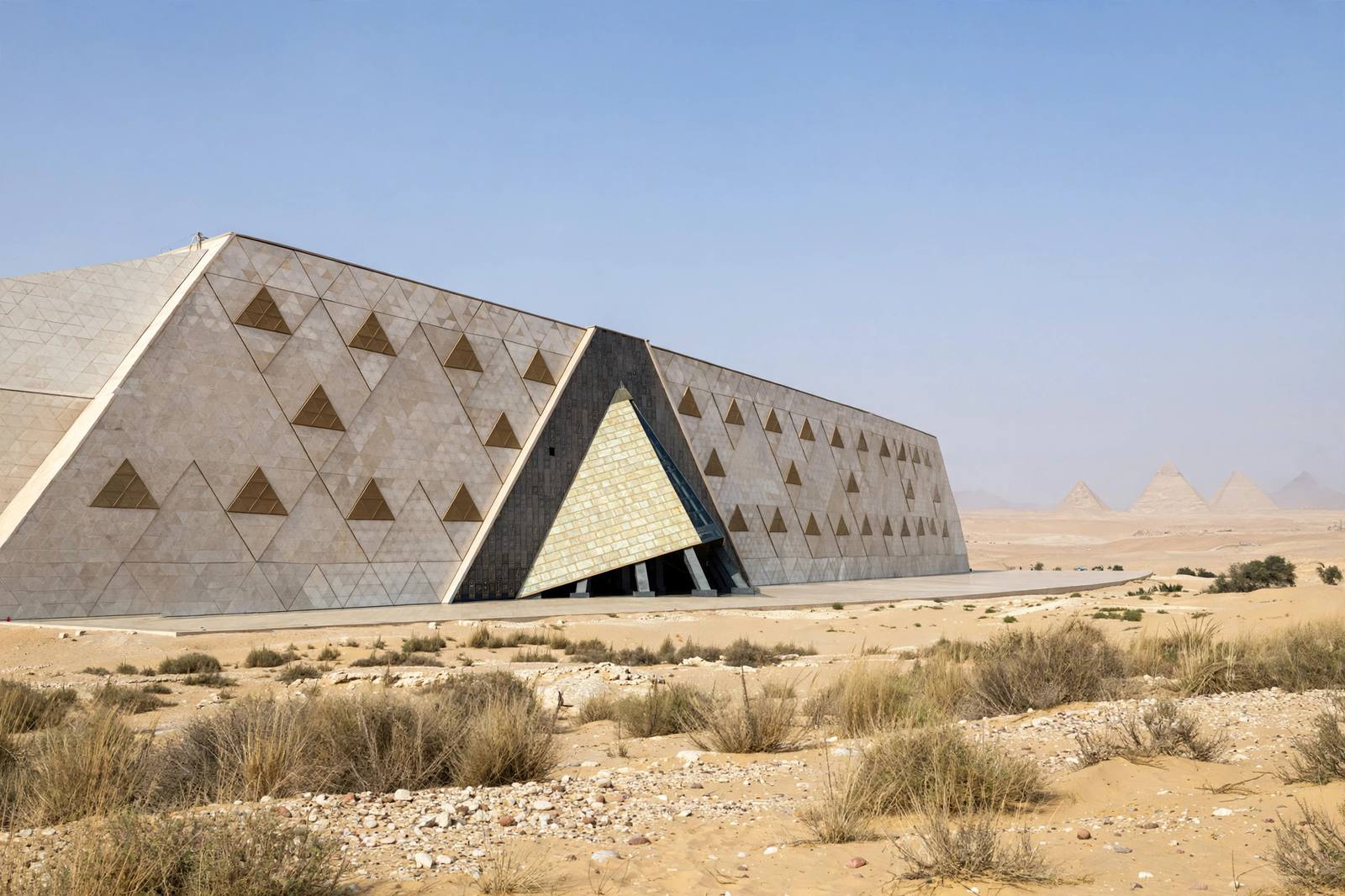
After roughly two decades of delays, the GEM fully opened in November 2025 and is now the single best museum experience in Egypt. Over 100,000 artifacts, the complete Tutankhamun collection (all 5,000+ pieces together for the first time), Khufu's reconstructed solar boat, and a grand staircase of colossal statues building to a window framing the pyramids themselves.
Practicalities:
- Tickets: Around EGP 1,450 (~$28–30) for foreign adults, all-inclusive. Book a timed-entry slot online in advance. Walk-in queues in peak season are long.
- Hours: 9 AM–6 PM daily, extended until 9 PM on Wednesdays and Saturdays.
- Location: 2 km from the pyramids. The ideal day pairs pyramids at opening (7–11 AM) with the GEM in the afternoon. It's air-conditioned, and the morning crowds have thinned.
- Allow 4–5 hours minimum. A licensed Egyptologist guide transforms the visit; the sheer volume of artifacts is overwhelming without context.
The Old Egyptian Museum (Tahrir)
The pink palace on Tahrir Square held the Tutankhamun collection for a century. Most of the famous pieces have moved to the GEM, but the old museum is still open and worth a couple of hours for its atmosphere: dim halls, century-old wooden cases, a museum that hasn't changed much since the 1900s.
Entry is a few dollars. Go in the morning before a Downtown lunch.
Khan el-Khalili
Cairo's great medieval bazaar, operating since the 14th century: part market, part theater, part obstacle course. Lantern sellers, spice pyramids, brass workshops, and the famous El Fishawy café (open 24 hours, tourists and locals side by side).
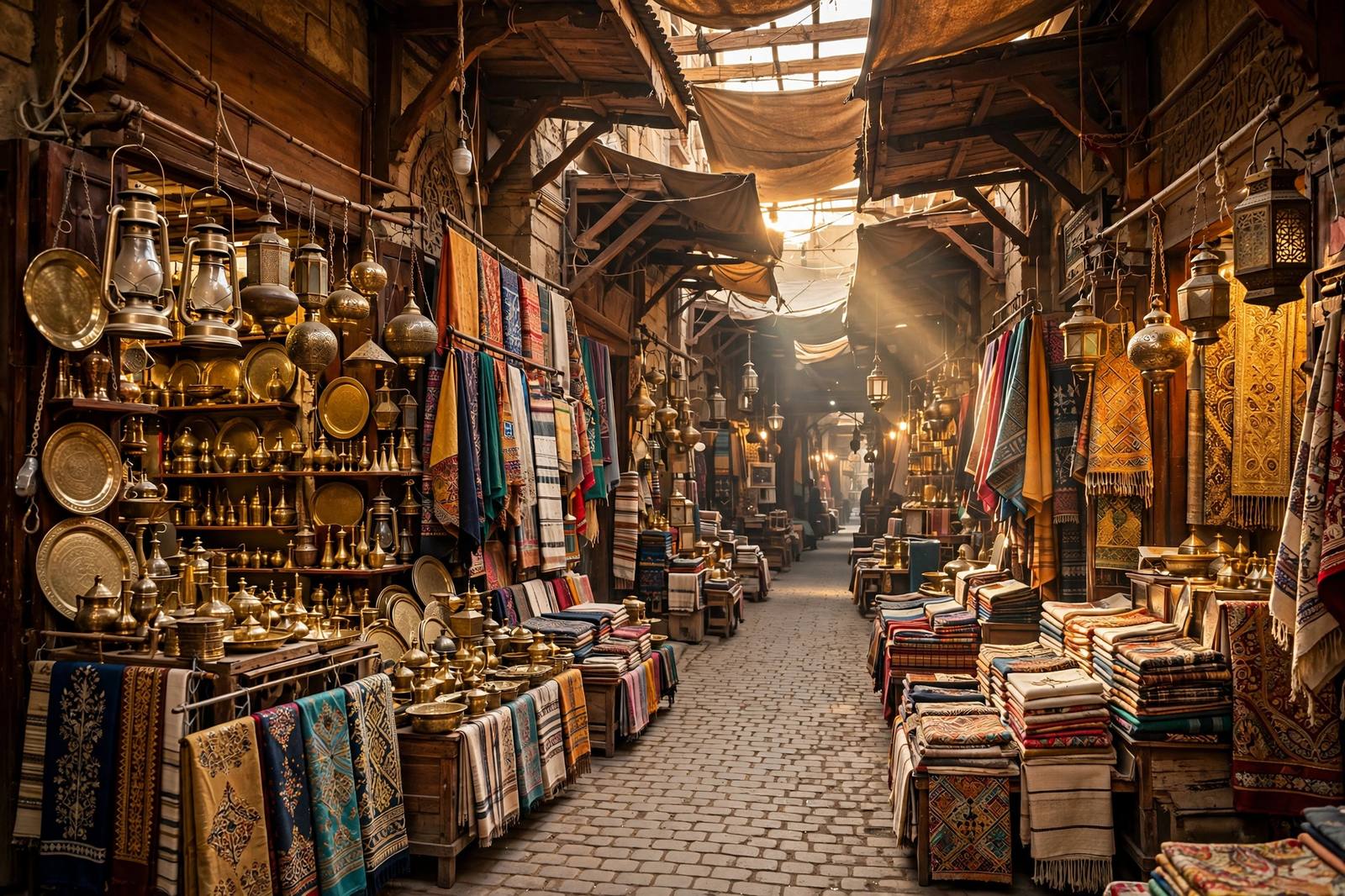
It's touristy. Go anyway. Treat it as entertainment first and shopping second, and treat the initial asking price on anything as fiction. Start at 40–50% and settle around 60–70%. If there's a price tag, pay it; if there isn't, haggle with a smile.
Decide what something is worth to you before negotiating, and be willing to walk away. The same item is sold in forty other stalls, and if you've haggled in Morocco's souks, the rhythm here will feel familiar.
Look beyond the bazaar to the surrounding Islamic Cairo district. The mosques of Sultan Hassan and Al-Rifa'i, Al-Azhar (one of the oldest universities in the world), and Bab Zuweila gate hold some of the finest medieval Islamic architecture on earth, with a fraction of Giza's crowds.
Coptic Cairo
One of the oldest parts of the city, built around the Roman fortress of Babylon. The Hanging Church, the Ben Ezra Synagogue, and the Coptic Museum cluster within a few minutes' walk. It's quiet, genuinely ancient, and a complete change of pace from the bazaar chaos. Take the metro to Mar Girgis station.
A Felucca on the Nile at Sunset
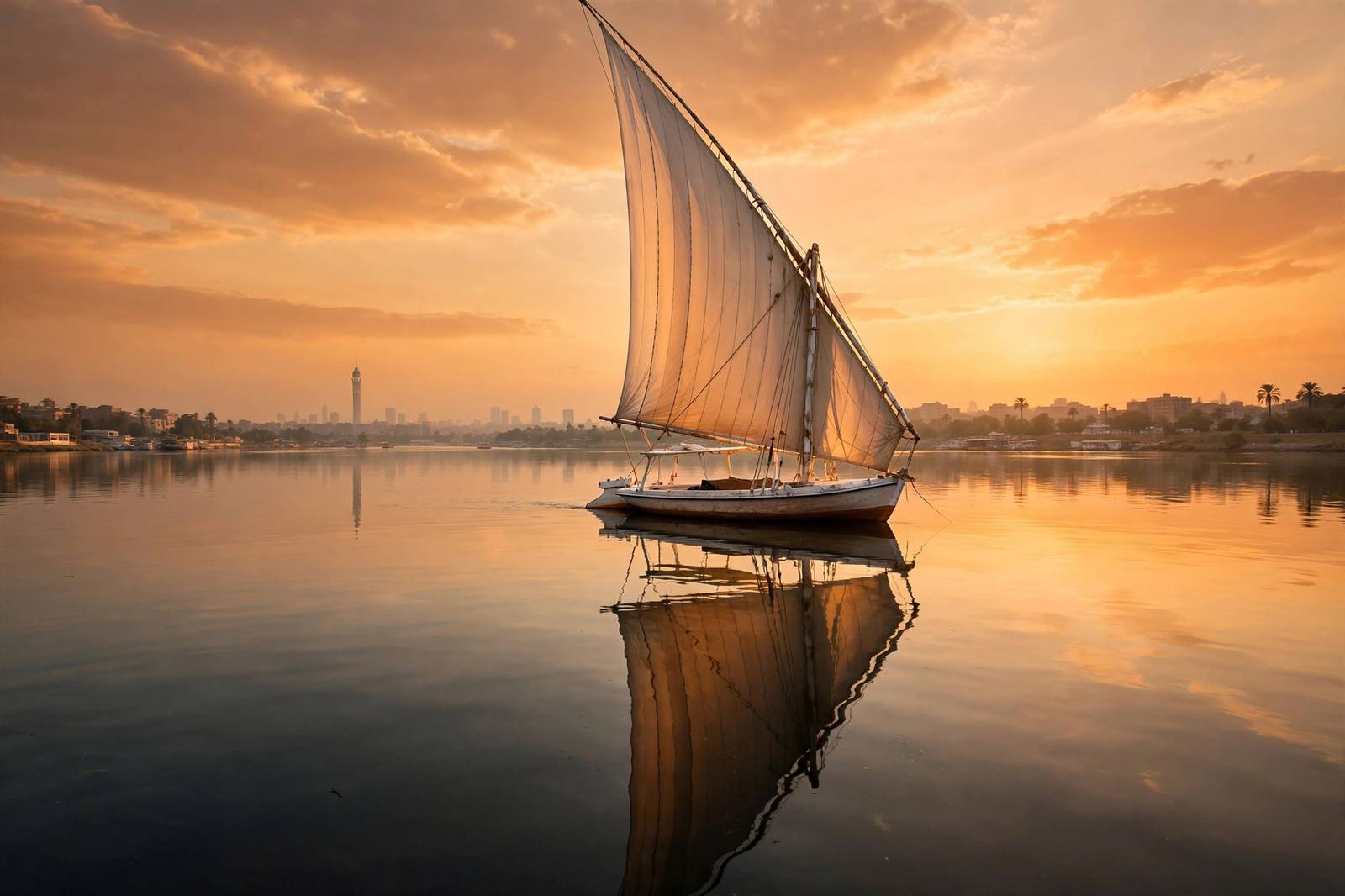
Cairo's best cheap pleasure is the traditional sailboat ride. Boats leave from docks near Zamalek; an hour on the water at golden hour is the perfect decompression after a day of intensity. Haggle before boarding: expect to negotiate down to a few hundred Egyptian pounds for a private hour. Sunset slots are the most popular; go on a weekday.
Day Trip: Saqqara and Dahshur
If Giza leaves you wanting more pyramids with fewer people, this is the day trip. Saqqara holds the Step Pyramid of Djoser (~2650 BC), the oldest monumental stone structure on earth and the prototype every later pyramid descends from. Dahshur has the Bent Pyramid and the Red Pyramid, where you can often walk inside with barely another visitor around.
Both sit inside the UNESCO-listed Memphis necropolis, the pyramid fields stretching from Giza to Dahshur.
Entry to Saqqara is roughly EGP 600 (~$12). The sites are 30–40 km south of Cairo; a private driver or organized tour runs around $60–75 per person including transport and a guide. It's a half to full day.
A 4-Day Cairo Itinerary
Day 1: Giza + GEM. Pyramids at the 7 AM opening; work the shuttle loop (Great Pyramid → Khafre → Panorama → Sphinx). Lunch, then the Grand Egyptian Museum for the afternoon. Sunset felucca.
Day 2: Islamic Cairo + Khan el-Khalili. Sultan Hassan and Al-Rifa'i mosques in the morning, Al-Azhar, then an afternoon in Khan el-Khalili. Tea at El Fishawy.
Day 3: Coptic Cairo + old museum + Downtown. Hanging Church and Coptic Museum in the morning (metro to Mar Girgis), the old Egyptian Museum after lunch, then Downtown: Abou Tarek for koshary, a walk down Talaat Harb.
Day 4: Saqqara + Dahshur day trip (or a slow day in Zamalek: galleries, cafés, souvenir shopping).
With only two days, do Day 1 and Day 2. They're the non-negotiables.
Budget: What It Actually Costs
Cairo is excellent value. A realistic mid-range budget is around $90–160 per person per day.
| Style | Accommodation | Food | Transport & sites | Daily total |
|---|---|---|---|---|
| Budget | Hostel or guesthouse ($15–30) | Street food, koshary shops ($10–20) | Metro, Uber, shared tours ($5–15) | $40–70 |
| Mid-range | 3–4★ hotel ($50–90) | Restaurants, cafés ($20–35) | Uber everywhere, site entries ($20–40) | $90–160 |
| Comfort | 5★ Nile-view ($150–250+) | Upscale restaurants ($40–70+) | Private driver/guide ($50–100) | $200–350+ |
Money specifics worth knowing:
- The Egyptian pound (EGP) floats, so check the rate before you go. Roughly EGP 48–50 to the dollar in 2026, but treat that as approximate.
- ATMs are everywhere and give fair rates. Airport ATMs work fine on arrival.
- Carry small bills constantly. Tipping (baksheesh) is woven into daily life: toilet attendants, "helpers" and hotel porters. Small EGP fives, tens and twenties disappear fast.
- Cards work at hotels, restaurants, and all archaeological sites (Giza is card-only). Street food, markets, feluccas, and small shops are cash-only.
Getting Around
Uber and Careem are the answer to 90% of Cairo transport. They're cheap, air-conditioned, and (crucially) the price is fixed before you get in, which eliminates the single most common tourist friction in the city. Download and set up the app before you arrive. A cross-city ride typically costs a few dollars.
The metro is cheap and reliable. Useful for specific hops like Tahrir to Coptic Cairo (Mar Girgis station).
Walking works well in Zamalek and Downtown. Islamic Cairo and Coptic Cairo are walkable too. Crossing major roads is an extreme sport; follow the locals, move steadily, and don't hesitate mid-crossing.
Traffic is the city's defining feature. A 5 km trip can take 40 minutes at rush hour. Build buffer time into every plan, and schedule Giza/Saqqara departures early.
Food: What to Eat
Egyptian food is hearty, vegetarian-friendly, and absurdly cheap. The essentials:
- Koshary: the national dish: rice, pasta, lentils, chickpeas, fried onions, tomato sauce. Abou Tarek in Downtown is the legendary spot; a bowl costs around a dollar.
- Ful medames: slow-cooked fava beans with olive oil, lemon, and cumin. The standard Egyptian breakfast.
- Taameya: Egypt's falafel, made with fava beans instead of chickpeas. Better than the chickpea version.
- Feteer: flaky layered pastry, sweet or savory.
- Fresh juices: mango, guava, sugarcane. Don't skip the juice shops.
Where the workers eat is the rule, as always. The busiest ful cart on the street will outperform a hotel restaurant at ten times the price. Stick to bottled water, cheap and everywhere. Not because the tap is dangerous, but because your stomach isn't calibrated for it.
Scams, Hassle, and Safety: the Honest Version
Cairo's reputation for hassle is earned, but it needs context. Violent crime against tourists is rare. The issues you'll actually face are touts, commission schemes, and relentless low-level salesmanship: tiring, not dangerous. The catalog:
- The "museum is closed" trick. A friendly stranger near a major site tells you it's closed and offers to guide you to a shop instead. It isn't closed. He's on commission. Keep walking.
- The papyrus/perfume shop detour. Your driver or a "helpful local" suggests a quick stop at a papyrus institute "on the way." Commission shops with inflated prices. Decline any stop that wasn't in your plan.
- The camel ride price game. At Giza, agree the total price before mounting, including the return. The classic move: a cheap ride out, then a demand for many times more to get off.
- The unsolicited helper. Someone "helps" you, then demands baksheesh. A preemptive "la, shukran" before the help starts is the simplest defense.
- Taxi overcharging. Solved entirely by using Uber/Careem.
- Restaurant bills. Check the bill before paying; a few tourist-area places pad it.
None of this is unique to Egypt. Istanbul runs its own versions of the commission-shop detour and the taxi overcharge.
For women travelers: Cairo gets mixed reviews. Many women travel here solo without incident; others find the street attention exhausting. Dressing modestly (covered shoulders and knees) measurably reduces hassle. The metro has women-only cars. Confidence and a firm "la" go further than politeness.
The most useful Arabic you'll pick up in Egypt? "La, shukran" (no, thank you), delivered with a smile, without stopping. It ends most tout encounters before they start.
Culture and Etiquette
- Dress modestly. Shoulders and knees covered. Mosques require covered arms/legs; women need a headscarf (often provided at the entrance).
- Shoes off in mosques. Socks are a good idea.
- The left hand is traditionally considered unclean, so use your right for eating, greeting, and handing over money.
- Friday is the holy day. Plan major mosque visits for other days.
- Photography: fine at most outdoor sites, but always ask before photographing people. Never point a camera at military or police installations.
- Bargaining is expected in markets and with touts, insulting in restaurants and fixed-price shops.
What to Pack
- Sun protection as a system, not an item. Hat, sunglasses, high-SPF sunscreen. The Giza plateau has zero shade.
- Layers for winter. December–February days are lovely but nights drop to ~10°C. A fleece or light jacket earns its place.
- Comfortable closed walking shoes. Uneven stones, dusty sites, long museum halls. They'll be brown by day two.
- A scarf or shawl. Sun shield, mosque cover-up, dust mask. The most versatile item you'll pack.
- Small-denomination cash strategy. Hit an ATM at the airport, then break big notes at your hotel. You'll need small bills all day, every day.
- Unlocked phone + local SIM. Tourist SIMs with generous data are sold at the airport for a few dollars. You'll want maps and Uber working within the hour.
- Hand sanitizer and tissues. Public toilets vary wildly; you'll want your own supplies.
- A daypack for site days: water, sunscreen, snacks, and room for souvenirs.
Frequently Asked Questions
How many days do you need in Cairo?
Three full days covers the essentials: one for Giza and the GEM, one for Islamic Cairo and Khan el-Khalili, one for Coptic Cairo, the old museum, and Downtown. Four days adds the Saqqara and Dahshur day trip without rushing.
Is Cairo safe for tourists?
Broadly, yes. Violent crime against visitors is rare, there's a visible tourist police presence at major sites, and millions of tourists visit every year. Scams and hassle are the real risks, not danger. Use Uber, learn "la, shukran," agree prices upfront. Standard big-city awareness applies.
Should I hire a guide for the pyramids?
For Giza itself, you don't strictly need one. Navigating the shuttle loop is straightforward. But a good Egyptologist guide transforms the GEM from overwhelming to extraordinary, and is worth it at Saqqara where context matters. Hire through your hotel or a reputable agency, not from someone who approaches you at the site.
Is going inside the Great Pyramid worth it?
Depends on your tolerance for tight, hot spaces. It's a steep, narrow climb to a plain granite chamber: impressive as engineering, sparse as a visual experience, and an extra ~$30 on top of plateau entry. If you're claustrophobic or short on time, the exterior and the Sphinx are the essential experience.
Can you drink the tap water in Cairo?
Stick to bottled water. The tap is treated, but your stomach isn't used to it, and losing two days to stomach trouble is the most common avoidable trip-ruiner in Egypt. Bottled water is cheap and sold everywhere.
What's the best way to get from the airport to the city?
Uber or Careem: fixed price, no negotiation, about 30–45 minutes to Downtown or Zamalek depending on traffic (assume traffic). Many hotels offer airport pickup for a small premium, worth it for late-night arrivals.
Is Khan el-Khalili a tourist trap?
It's touristy, but it's not a trap. It's a 600-year-old market that happens to be popular with visitors. The metalwork and lantern shops are real craft, El Fishawy is a genuine institution, and the surrounding Islamic Cairo streets are spectacular. Just haggle (start at half the asking price) and treat aggressive sellers as background noise.
The Bottom Line
Cairo is intense. The traffic, the noise, the touts: it's all real, and the first day can feel like a lot. But underneath it sits the greatest concentration of ancient wonders on earth, a brand-new world-class museum, medieval streets that rival anywhere, and food that costs almost nothing.
Go between October and April. Stay in Zamalek or Downtown. Use Uber for everything. Learn "la, shukran." Hit Giza at opening, give the GEM a full afternoon, haggle at Khan el-Khalili, and take the felucca at sunset.