
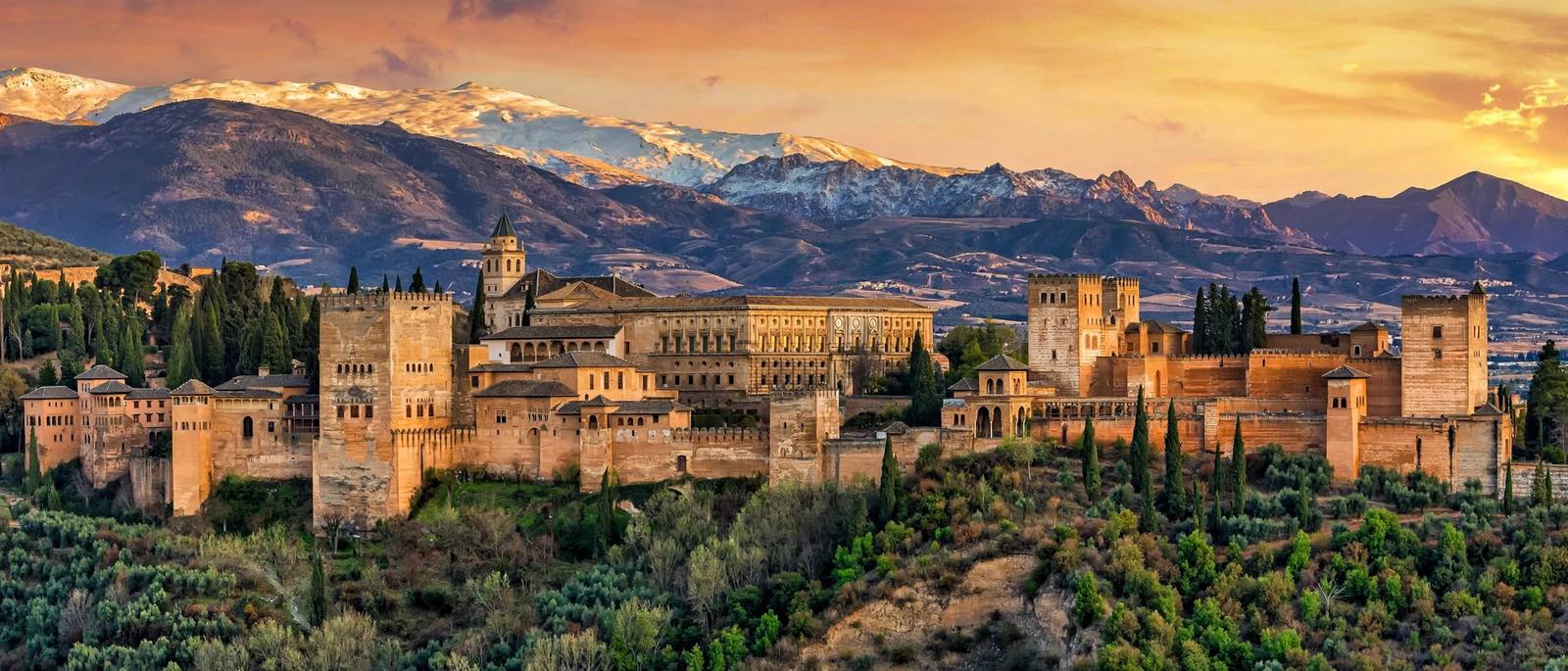
The Moorish palaces, the cathedral with a minaret for a bell tower, tapas at midnight, and summer heat that rearranges your plans whether you like it or not. The honest first-timer manual for southern Spain.
- Book the Alhambra the day you book your flights — general tickets are ~€22 and the Nasrid Palaces timed slots sell out weeks ahead. Buy only from the official Patronato site.
- April–May and September–October are the windows. Seville and Córdoba in July–August regularly pass 40°C; the cities don't slow down, but you will.
- Five days covers Seville, Córdoba, and Granada by train: two nights Seville, one in Córdoba, two in Granada. More than that, add Ronda and the white villages.
- Realistic mid-range budget: €120–180 per person per day, including a good hotel and proper dinners. Spain is no longer the cheap corner of Western Europe.
- Tapas culture is real but regional: in Granada many bars still serve a free tapa with your drink; in Seville you pay, but portions are generous.
Andalusia is the Spain that lives in most people's heads before they arrive: whitewashed villages on hillsides, flamenco spilling out of doorways, orange trees lining streets that smell incredible in April, and the great Moorish monuments, the Alhambra, the Mezquita, the Alcázar, that genuinely justify the trip.
It's also, for about three months a year, one of the hottest places in Europe, where sightseeing has to happen before noon or after six and the whole rhythm of the day bends around the heat.
The region rewards a specific strategy. Travel in spring or autumn, base yourself in the historic centers, use the fast trains between cities, and eat late.
Do that and it's one of the best-value cultural trips in Europe. Get the timing wrong and you'll be the person queuing for the cathedral at 2pm in 42 degrees wondering why nobody warned you.
This guide covers the practical side: entry rules, when to go, where to stay in each city, what the big sights actually cost, how the trains work, what to eat, and the mistakes first-timers keep making. Five to seven days is the sweet spot.
Visa and entry
Spain is in the Schengen zone, so the rules are the familiar ones.
- UK, US, Canadian, Australian, and Japanese citizens: visa-free for up to 90 days in any 180-day period. No forms, no fees at the border.
- ETIAS: the EU's electronic travel authorization for visa-exempt visitors keeps getting delayed — check whether it's actually live before you fly, because the start date has moved more than once.
- Other nationalities: check Schengen visa requirements for your passport well ahead; appointments at Spanish consulates can book out.
Most international flights land at Seville (SVQ) or Málaga (AGP); both have good connections across Europe. Granada's airport is smaller and mostly domestic. Madrid is 2.5 hours from Seville by high-speed train, so flying into Madrid and training south is a perfectly good option — sometimes cheaper, and the AVE ride is genuinely pleasant.
Your passport should be valid for at least three months beyond your planned departure from Schengen. In practice, six months of validity avoids any discussion at check-in.
When to go
Andalusia's climate is the single biggest factor in trip planning, and it's more extreme than the "sunny Spain" cliché suggests. Seville and Córdoba are routinely the hottest cities in Europe in summer.
March and June: the shoulder edges. March brings 20°C days and orange blossom; June is hot but manageable early on, brutal by month's end. Semana Santa (Holy Week, March or April) is spectacular if you want it — processions, incense, entire streets closed — and a logistical headache if you don't, with hotel prices tripling.
April–May: The best window. Highs of 22–28°C, everything in bloom, long evenings. Córdoba's Festival de los Patios (early-to-mid May) opens the city's famous flower-filled courtyards to the public — it's UNESCO-listed and the single most atmospheric week of the year, but book accommodation months ahead. This is when to go.
June: Hot but manageable early in the month; by late June Seville is regularly hitting 38°C+. Fine if you plan around the heat.
July–August: The furnace. Daytime highs of 38–42°C in Seville and Córdoba are normal, not exceptional. Sightseeing has to happen before noon or after 6pm; the middle of the day is for the hotel pool or a long lunch indoors.
Spaniards who can leave, leave, but the cities don't shut down, and evenings are magnificent. If summer is when you can go, go. Just don't pretend the heat won't shape every decision.
September–October: The second-best window. September is still warm (around 30°C early on) but the edge comes off; October brings 22–26°C days and golden light. Crowds thin, prices drop.
November–February: Mild by European standards — Seville highs around 16°C, Granada colder with the Sierra Nevada visible behind the Alhambra (genuinely stunning when snow-capped). These are also the cheapest months, with the quietest sights. Granada gets properly cold at night; pack accordingly.
Where to stay
Each city has a historic center where you want to be, and the wrong neighborhood mostly means a longer walk — Andalusia's old towns are compact.
Seville: Stay in Santa Cruz (the old Jewish quarter: winding lanes, orange trees, the prettiest streets in the city) or El Arenal (between the cathedral and the river, slightly calmer, great tapas streets).
Triana across the river is the flamenco-and-ceramics neighborhood, more local and livelier at night, a 15-minute walk to the center. Avoid the area immediately around the bus station unless the price is irresistible.
Córdoba: The Judería (Jewish quarter) around the Mezquita is the obvious base and the right one — everything is walkable and the lanes are the attraction. It's small; you can't really go wrong. One night is enough for most itineraries, two if you want the patios at a slow pace.
Granada: The Albaicín is the old Moorish quarter on the hill facing the Alhambra: atmospheric, steep, and the source of every great Alhambra sunset photo. Note the hills are serious; if stairs are an issue, stay in Centro near the cathedral instead.
Realejo (the old Jewish quarter, below the Alhambra) is a good middle ground: central, flatter, full of bars.
Ronda: If you overnight, stay in the old town near the Puente Nuevo. Most people do it as a day trip from Seville or Málaga, which works fine.
Mid-range hotels in the historic centers run roughly €90–150 a night in spring and autumn, dropping to €60–100 in winter. Apartments are often better value for three-plus nights.
What to see and do
Seville
The Real Alcázar. A royal palace still in use by the Spanish royal family, with Moorish courtyards and gardens that are the real draw. The Patio de las Doncellas alone is worth the ticket.
General admission is €15.50 (reduced €8 for students and over-65s, free for under-13s). Book the timed slot online in advance. The ticket office sells same-day only if slots remain, and in spring they usually don't.
Skip the Upper Royal Quarters supplement (€5.50) unless palace interiors are your thing. The main complex and gardens are the experience. (Ticket tips and opening hours)
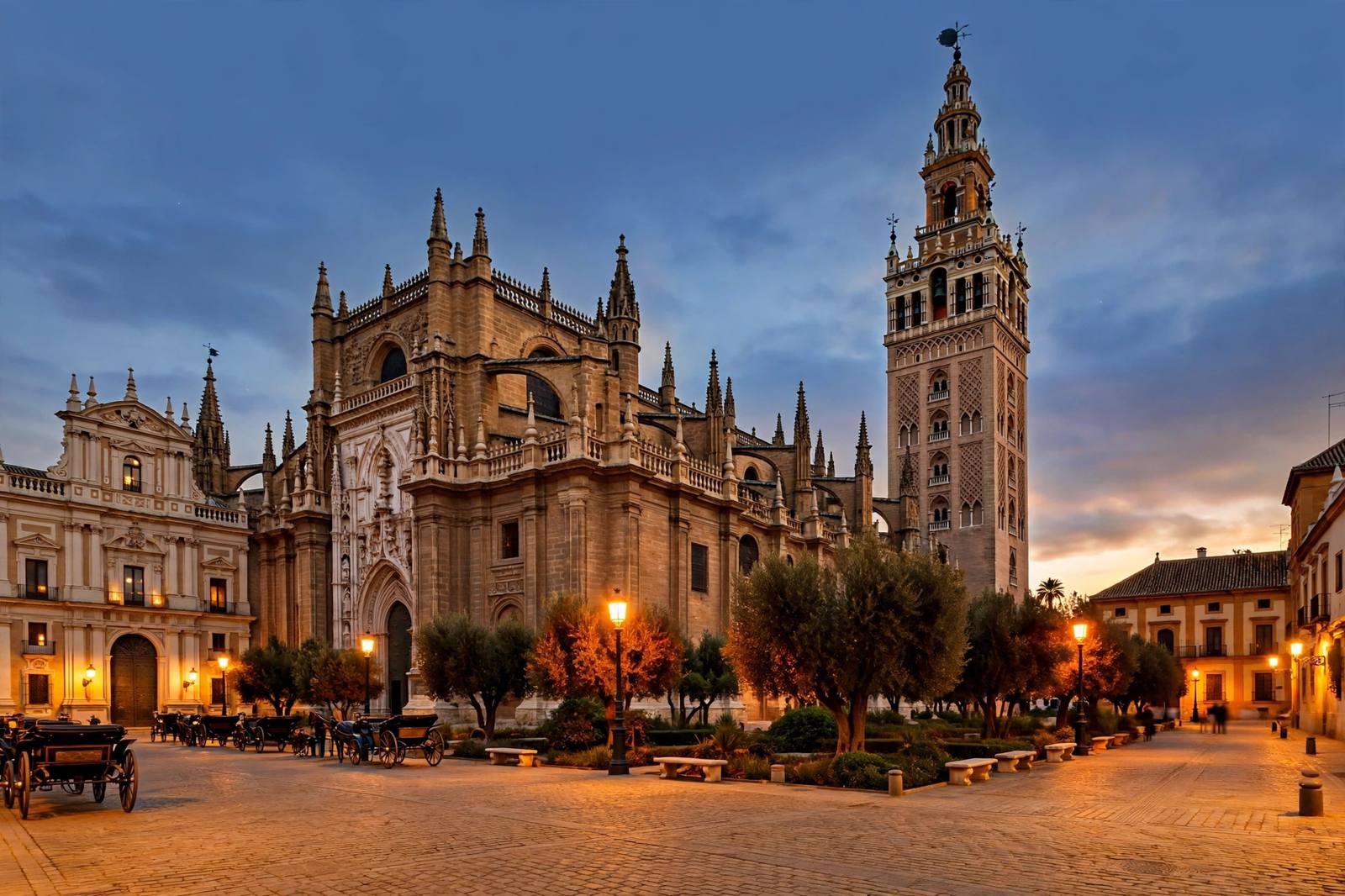
The Cathedral and Giralda. The largest Gothic cathedral in the world, and the Giralda bell tower is a converted 12th-century minaret. You climb it via ramps rather than stairs, because they were built for a man on horseback.
Tickets run around €13 online (€14 at the door) and include the Giralda and the Church of El Salvador. Inside, the scale is hard to grasp until you're standing in it.
The tomb of Christopher Columbus sits held aloft by four statues. Go early, because by midday the tour groups turn it into a crush. (How to get cathedral tickets)
Plaza de España. Built for the 1929 exposition: a vast semicircle of tiled alcoves representing every Spanish province, with a canal you can row boats on. It's free, it's spectacular, and it's the best no-ticket sight in the city. Go at sunset and give the tile work thirty minutes.
Metropol Parasol (Las Setas). The giant wooden mushroom structure in La Encarnación square, one of the world's largest wooden structures, with a rooftop walkway and city views. Divisive when built, now beloved. Head up at golden hour; the archaeological museum underneath is a decent bonus.
Triana. Cross the river for the ceramics workshops, the flamenco bars, and the food market (Mercado de Triana). Less polished than Santa Cruz and more lived-in, which makes it the best neighborhood for an evening of bar-hopping.
Flamenco. Seville is flamenco's capital and a proper show is worth it. Look for small tablaos in Triana or Santa Cruz rather than the dinner-show packages aimed at tour buses. Expect around €20–30 for a good one-hour show. Dinner-show packages are almost always worse and more expensive.
Córdoba
The Mezquita-Catedral. The reason to come. It's a 10th-century mosque with 856 columns of jasper, onyx, and marble, with a Renaissance cathedral dropped into the middle of it in the 1500s. Nothing prepares you for the forest of arches.
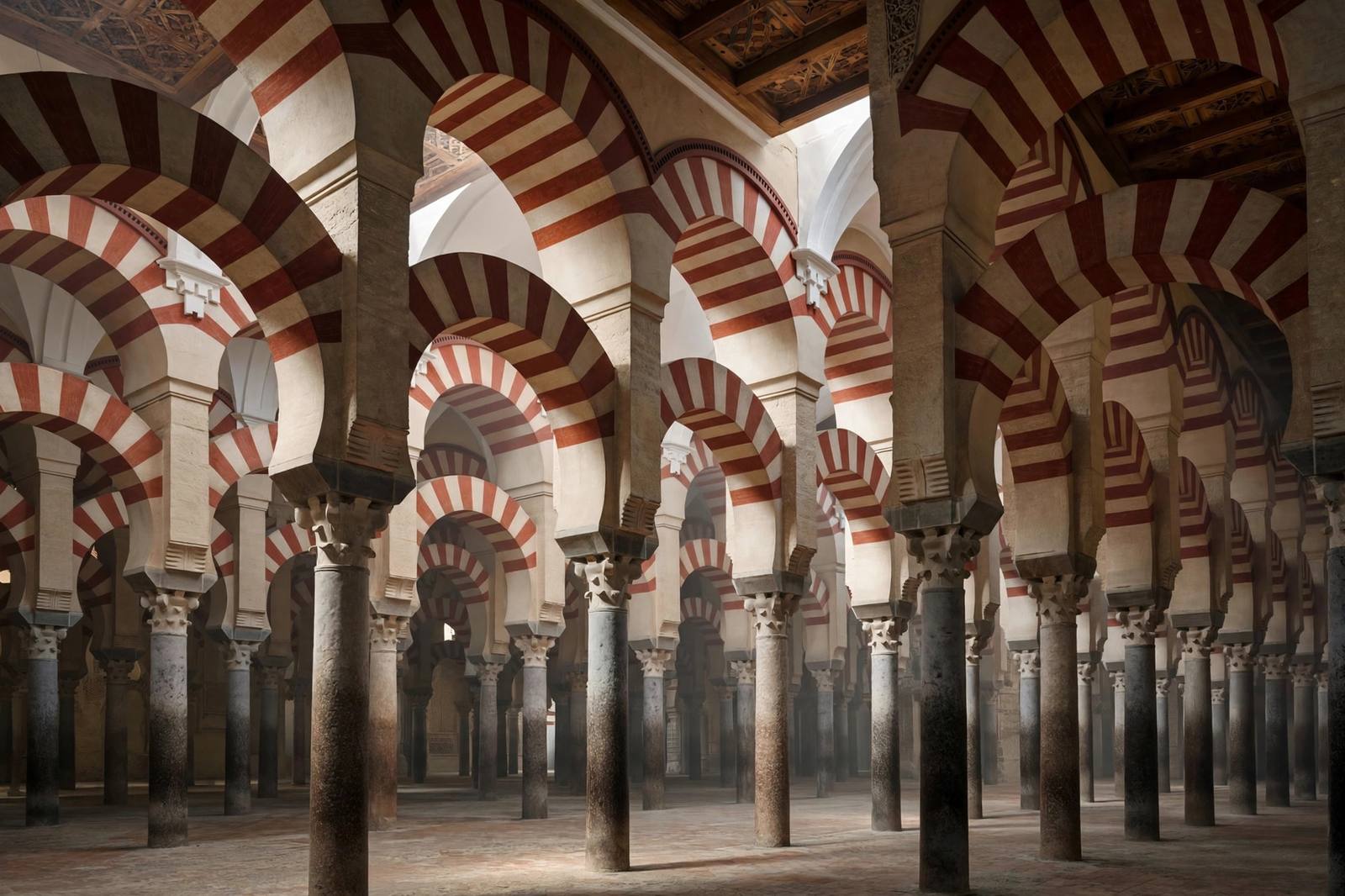
General admission is around €13, and here's the trick worth knowing: entry is free Monday to Saturday from 8:30 to 9:30am for individual silent visits. Arrive by 8:15 because the line forms early.
The bell tower (a converted minaret, like the Giralda) costs a few euros extra, and the 54-meter climb has the best view in the city. The interior stays cool even in summer thanks to the stone mass, which makes it one of the few sights in Andalusia that's genuinely pleasant at midday in August. (Mezquita tickets and visiting guide)
The Alcázar de los Reyes Cristianos. The Christian kings' fortress-palace, with some of the best gardens in Andalusia: terraced pools, fountains, orange trees. Smaller than Seville's Alcázar but the gardens are arguably better. Around €5 entry, and an hour is enough.
The Judería and the Patios. The old Jewish quarter's lanes are the attraction between sights, Calleja de las Flores being the famous one. If you're here in May, the Festival de los Patios opens private courtyards across the historic center. Outside May, the Palacio de Viana (€5-ish, 12 patios) gives you the idea year-round.
The Roman Bridge and Calahorra Tower. The bridge over the Guadalquivir is 2,000 years old at its core. Walk across it in the evening with the Mezquita behind you, because that's one of the great free moments in Andalusia.
Córdoba works as a day trip from Seville (45 minutes by train) but it's better as an overnight. The city empties of day-trippers by evening and the Judería at night is magical.
Granada
The Alhambra. The single most important booking of your trip. The Nasrid Palaces hold the Court of the Lions, the Hall of the Ambassadors, and stucco work that looks too delicate to be stone. This is the peak of Islamic art in Europe, and the Generalife gardens above it are the perfect counterpoint.
Official general tickets run €22.27 including the booking fee. It covers the Nasrid Palaces (timed entry slot, which is the part that sells out), the Alcazaba fortress, the Generalife, and the Palace of Charles V.
Book at the official Patronato site two to three months ahead for spring dates; summer slots go even faster. Ignore the reseller sites with official-looking .org domains, since they charge three to four times the price for the same ticket.
If the official site is sold out, a night visit to the Nasrid Palaces (~€13) is the best fallback: fewer people, dramatic lighting, genuinely atmospheric. (Alhambra ticket prices and booking strategy)
Practical notes: bring your passport (they check names against tickets), arrive 30 minutes before your Nasrid slot, and give the whole complex at least three hours. The walk up from the center is steep, so the minibuses (C3/C4) are worth the couple of euros.
The Albaicín and Mirador de San Nicolás. The old Moorish quarter's viewpoint frames the Alhambra against the Sierra Nevada. It's the most photographed view in Spain and it earns it.
Go at sunset but arrive early enough to get a spot, because it's packed. The walk back down through the Albaicín's lanes, past teterías (Moorish tea houses) and street musicians, is the evening.
The Cathedral and Royal Chapel. Granada's cathedral is massive Renaissance. The Royal Chapel next door holds the tombs of Ferdinand and Isabella, the monarchs who took Granada in 1492 and funded Columbus. Around €6 for the chapel, and worth an hour if you're passing.
Sacromonte. The hillside neighborhood of cave houses, historically Roma, and the birthplace of flamenco's zambras. Skip past the cave-house museum and save your evening for a flamenco show in a cave venue at night, rawer and more intimate than Seville's tablaos.
The free-tapa tradition. Granada is famous for it: order a drink in many traditional bars and a tapa arrives free, and it gets bigger with each round. It's not every bar anymore, since the tourist-center places have mostly dropped it, but in the Albaicín, Realejo, and around Plaza Nueva it's still alive. Ask; the worst answer is no.
Ronda and the white villages
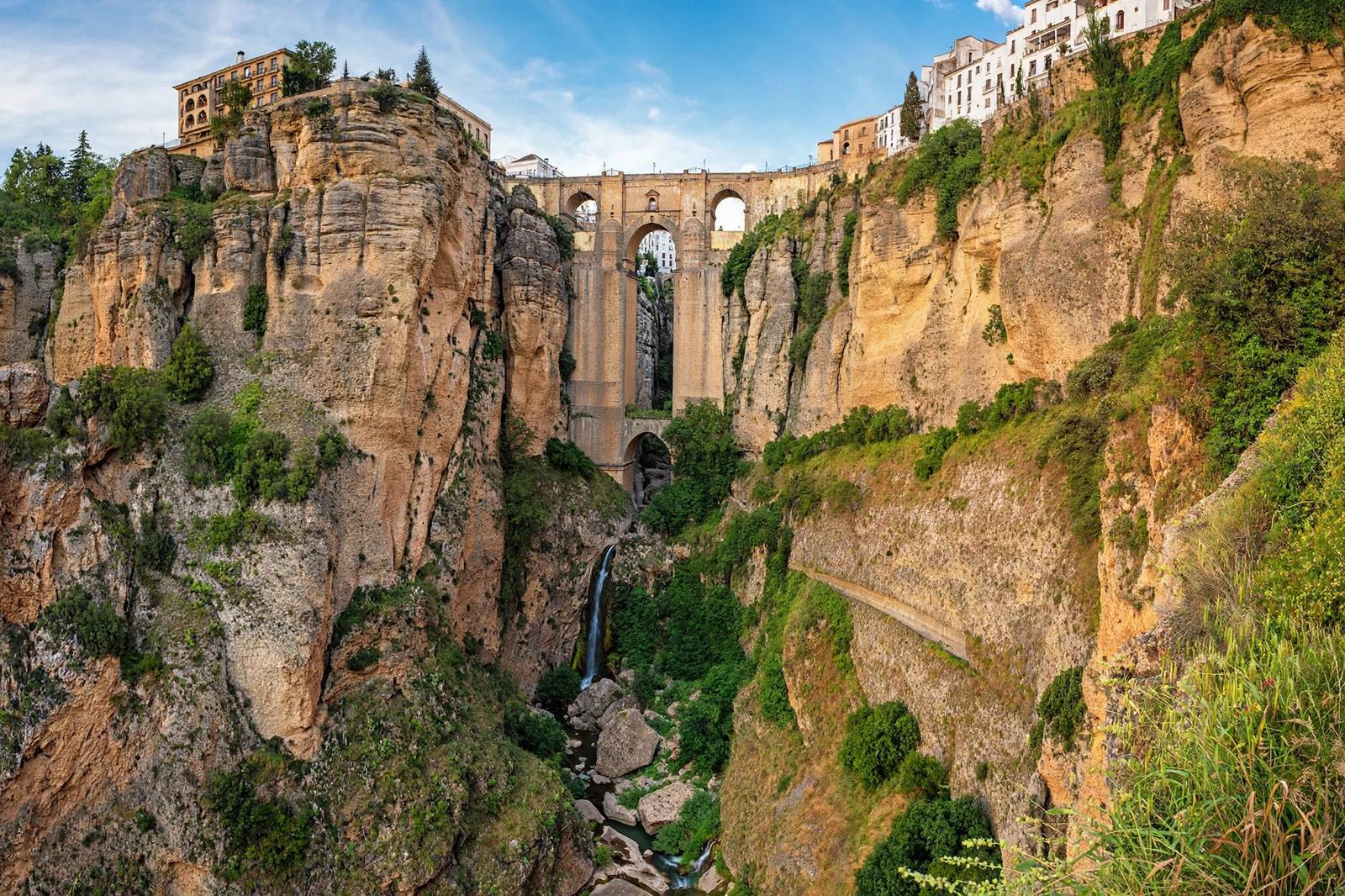
Ronda sits split across a 100-meter gorge, joined by the Puente Nuevo bridge. It's the classic day trip, 1.5–2 hours from Seville or Málaga, and the bridge view from the path below is genuinely staggering. Ronda's Plaza de Toros ranks among Spain's oldest bullrings. Half a day is enough; the gorge is the show.
The white villages — Zahara de la Sierra with its castle above a turquoise reservoir, Setenil de las Bodegas where houses sit under a rock overhang — are the Andalusia of the postcards. You need a car, since they're not practical by public transport. One or two villages plus Ronda makes an excellent day from Seville.
Cádiz and the coast
Cádiz is one of Europe's oldest cities, with 3,000 years of Phoenicians, Romans, and traders behind it, sitting on a spit of land surrounded by sea. It's saltier and more laid-back than the inland cities: the old town, the golden-domed cathedral, and the Playa de la Caleta city beach.
About 1.5 hours by train from Seville, and worth an overnight if you want sea air.
A 5-day itinerary
The classic first-timer route, all by train:
Day 1: Seville. Cathedral and Giralda in the morning (book the first slot), lunch in El Arenal, the Alcázar in the afternoon — the gardens are best in late light. Evening tapas crawl in Santa Cruz.
Day 2: Seville. Plaza de España in the morning, Metropol Parasol rooftop, Triana market and ceramics in the afternoon. Flamenco show in the evening. This is also your buffer day: if anything was closed or rained out on Day 1, it fits here.
Day 3: Córdoba. Morning train from Seville (45 minutes, so take an early one). Mezquita first thing, or the free 8:30 slot if you're disciplined. Alcázar gardens midday, Judería lanes and the Roman Bridge at sunset. Overnight in Córdoba. Staying the night is what gets you the evening atmosphere the day-trippers miss.
Day 4: Granada. Train to Granada (around 2–2.5 hours from Córdoba). Afternoon in the Albaicín, Mirador de San Nicolás at sunset, dinner and free tapas in Realejo. Book the Alhambra for tomorrow morning.
Day 5: Granada. The Alhambra. Arrive early and give it three to four hours. Afternoon: cathedral and Royal Chapel, Sacromonte viewpoint, and a cave flamenco show to finish.
More time? Add a day trip to Ronda (from Seville), a night in Cádiz, or slow the whole thing down. Six or seven days lets each city breathe. Less time? Cut Córdoba to a day trip and skip the overnight, but you'll miss the best part of it. (A detailed 10-day Andalusia itinerary if you're going longer.)
Budget: what it actually costs
Spain is no longer the bargain corner of Western Europe. Prices in the big Andalusian cities are solidly mid-range European now. What saves you is that the best things (Plaza de España, the Albaicín, the Roman Bridge, evening paseos) are free, and eating well is cheap if you eat Spanish.
A realistic mid-range budget is around €120–180 per person per day. A decent hotel in the historic center runs €90–150 a night in spring/autumn. (A full cost breakdown for a 10-day trip) A rough breakdown:
| Budget | Mid-range | |
|---|---|---|
| Accommodation | €20–40 (hostel) | €90–150 (hotel) |
| Food | €20–35 (tapas bars, menus del día) | €50–80 (restaurants) |
| Transport | €5–15 (city buses, one train leg) | €15–30 (AVE trains between cities) |
| Sights | €0–15 (free sights + one ticket) | €25–45 (two major monuments) |
| Daily total | €60–90 | €120–180 |
Money specifics worth knowing:
- Alhambra: €22.27 general (official price, book ahead). The single biggest advance-purchase item on the trip.
- Mezquita: ~€13, or free Mon–Sat 8:30–9:30am.
- Real Alcázar (Seville): €15.50. Cathedral + Giralda: ~€13.
- Menú del día: the lunchtime fixed menu. Three courses with wine for €14–20, and the best value in Spanish dining. It's everywhere on weekdays.
- Tapas: €3–5 per tapa in Seville. In Granada, the free-tapa bars mean your first few rounds cost the price of a beer (€2.50–3.50).
- Trains: Seville–Córdoba from ~€10 (45 min); Seville–Granada €25–45 (2.5–3.5h). Book Renfe or the low-cost Ouigo/Iryo services in advance, since walk-up AVE fares are steep.
- Flamenco show: €20–30 for a proper tablao.
- Tipping: not obligatory. Rounding up or leaving a euro or two is normal; 10% is generous.
Cards are accepted almost everywhere, including tapas bars. Carry a little cash for markets and small-town bars.
Getting around
Between cities: the train. This is the easy part. Renfe's AVE/Avant high-speed trains connect Seville–Córdoba in about 45 minutes and Seville–Granada in 2.5–3.5 hours; Córdoba–Granada is around 1.5–2 hours.
Book at renfe.com (the site is clunky but functional) or through the low-cost operators Ouigo and Iryo, which undercut Renfe on the main routes. Advance tickets are dramatically cheaper than walk-up fares. This is the one transport rule that matters.
Buses fill the gaps trains don't: ALSA runs the Ronda routes, the white villages, and the coast connections. Cheaper than trains, slower, perfectly comfortable.
In the cities: walk. Seville, Córdoba, and Granada's historic centers are all walkable — that's the point of staying in them. Granada's minibuses (C3, C4) climb to the Alhambra and Albaicín for ~€1.40. Taxis are cheap and metered; Uber/Cabify exist in the bigger cities.
Renting a car only makes sense for the white villages — for the Seville–Córdoba–Granada triangle it's an expensive parking problem. Book the smallest car you're comfortable with; old-town streets are narrow.
Food: what to eat
Dinner at 21:30 isn't a suggestion here, it's just when food happens. Andalusian cooking is built on olive oil, pork, seafood, and sherry, plus one non-negotiable rule: eat late. Lunch is 14:00–16:00, dinner rarely starts before 21:00. Show up at a restaurant at 19:00 and you'll eat alone.
- Tapas culture: order a caña (small beer) and a tapa, then move to the next bar. The essentials are espinacas con garbanzos (spinach and chickpeas, Seville's signature), salmorejo (Córdoba's thicker, creamier gazpacho, topped with ham and egg), and pescaíto frito (fried fish, best in Cádiz).
- Jamón ibérico: the real thing, acorn-fed, is a religious experience and priced like one (€20+ for a plate in a good bar). The cheap stuff is just ham. Pay for the good stuff once.
- Sherry (Jerez): the fortified wine from Jerez de la Frontera, with fino and manzanilla served ice cold alongside tapas. If you think you don't like sherry, you've probably only had the sweet cooking kind. Try a proper fino.
- Churros con chocolate: breakfast, thick hot chocolate, non-negotiable at least once.
- Menús del día: the weekday lunch deal. Three courses, wine included, €14–20. Follow the office workers.
Eat where the menu is in Spanish only and the room is full at 15:00. If a restaurant has photos of the food outside, that tells you everything you need to know.
Scams and safety
Andalusia is very safe by any standard. Violent crime against tourists is rare, and the issues are petty and predictable.
- Pickpockets: Seville's cathedral area, the Alcázar queues, and Granada's Albaicín viewpoints are the hotspots. The usual rules apply: front pockets, zipped bags, don't hang your phone off a café table.
- The "free" sprig of rosemary: in Granada and Seville, someone may press rosemary or a flower into your hand and then demand payment. Don't accept things from strangers' hands.
- Restaurant overcharging: rare, but check the bill in tourist-heavy areas. Watch for the classic move: charging for bread or olives you didn't order. It's usually a couple of euros, not a scam empire.
- Fake flamenco promoters: the people hustling "flamenco shows" on the street in Seville are selling marked-up tickets to mediocre venues. Book a known tablao yourself.
- The Alhambra reseller sites: worth repeating. Domains that look official but charge 3–4x the €22 ticket price; the real booking is through the Patronato.
One honest note: in summer the heat is a bigger safety issue than crime. Carry water, wear a hat, and don't try to power through 40°C afternoons. Solo travelers of any gender are common and comfortable here; normal city awareness is enough.
Culture and etiquette
- Meal times are real. Kitchens close between lunch and dinner (roughly 16:00–20:00). Plan around it or you'll be eating at the tourist places that never close.
- Siesta isn't a myth, it's logistics. Small shops close in the afternoon, especially outside the big cities. Museums and monuments mostly stay open.
- Churches and the Mezquita: shoulders and knees covered. The Mezquita enforces this; the cathedrals mostly do.
- Greetings: a handshake or two kisses (right cheek first) in social settings. "Buenos días" until lunch, "buenas tardes" after.
- Bullfighting: culturally significant and genuinely controversial within Spain too. Ronda's bullring museum is interesting regardless of your position; an actual corrida is a personal call.
What to pack
- Comfortable walking shoes with grip. Cobblestones, hills (Granada), and long days mean this is not a heels trip.
- A hat and sunscreen, whatever the month. Andalusian sun is serious even in March.
- A light scarf or shawl. It covers shoulders for churches and the Mezquita, and doubles as sun protection.
- Layers for spring/autumn: 25°C days and 12°C evenings are normal in April and October.
- A reusable water bottle. Fountains are everywhere and the tap water is fine.
- Swimwear if you're adding the coast. Expect swimmable sea roughly May through October.
- In winter: a proper jacket for Granada. It gets cold when the sun drops behind the Sierra Nevada.
Frequently Asked Questions
How many days do I need in Andalusia?
Five days covers the core triangle — two in Seville, one in Córdoba, two in Granada — by train without rushing. Seven lets you add Ronda, the white villages, or Cádiz. Less than four and you're choosing between cities rather than seeing them.
Is the Alhambra really worth booking months ahead?
Yes. Nasrid Palaces timed entry is capacity-controlled and sells out — spring weekends can go eight-plus weeks out. The €22 official ticket is the one to buy, from the Patronato site only. This is the least flexible part of the whole trip, so lock it in first and plan around it.
Can I do Córdoba as a day trip from Seville?
You can, since it's 45 minutes by train. But the city is better overnight. The day-trippers leave by 6pm and the Mezquita area empties out, and that's when Córdoba gets good: the Judería at night, dinner in a patio restaurant, none of the midday crowds.
What's the deal with the free tapas in Granada?
In many traditional bars, ordering a drink gets you a free tapa, escalating with each round. It's still real in neighborhood bars but fading in the tourist center. Don't demand it — it's a custom, not a right — and tip the difference.
Is summer really that bad?
It's genuinely extreme: 40°C+ days in Seville and Córdoba are normal in July and August. You can still go, since sights open early, evenings are wonderful, and the Mezquita stays cool. But plan every day around the heat: sights before noon, rest 14:00–18:00, dinner at 22:00. Spring and autumn are objectively better.
Do I need a car?
Not for Seville–Córdoba–Granada; the trains are faster and easier. You need one for the white villages and rural Andalusia. Rent for a day or two from Seville rather than for the whole trip.
Is Andalusia expensive?
Mid-range European, not budget anymore. Budget €120–180 per person per day for a comfortable trip with a good hotel and restaurant dinners. The weekday menú del día (€14–20 for three courses with wine) and free sights keep costs sane; the Alhambra, Alcázar, and cathedral tickets are the fixed costs.
The bottom line
Andalusia is the rare region where the famous sights actually live up to it. The Alhambra is as good as everyone says, and the Mezquita's forest of columns stops you mid-step. The Plaza de España at sunset is free.
It comes down to a simple formula: go in spring or autumn, book the Alhambra the moment your dates are set, take the trains, stay in the old towns, and eat on Spanish time.
Five days, three cities, one gorge, and more tiled courtyards than you can count. It's the most complete cultural trip you can do in Europe in a week. Just don't try it in August unless you mean it.