By Sofia · Updated October 2026*
- The Acropolis (€30, timed entry — book ahead) takes half a day. Athens earns the rest of your trip.
- Anafiotika, Exarcheia, Koukaki, and Pangrati are the neighborhoods where the city actually lives — each with a completely different character.
- Mount Lycabettus at sunset beats every Acropolis viewpoint for the classic panorama photo.
- Day trips that justify themselves: Cape Sounion (Temple of Poseidon at sunset) and Lake Vouliagmeni (thermal swimming, 25 minutes from the center).
- Athens is a late city — dinner at 9–10 PM, bars past midnight. Plan your days around it, not against it.
---
Everyone goes to Athens for the Acropolis, spends three hours there, and then stands around wondering what to do next. The standard answer — Plaka, the museum, maybe the stadium — fills a day. But Athens is a big, strange, wonderful city of four million people, and the interesting parts have almost nothing to do with antiquity.
This is the other Athens: the neighborhoods, the hills, the food, the coastline, and the day trips that most itineraries skip.
1. Get lost in Anafiotika
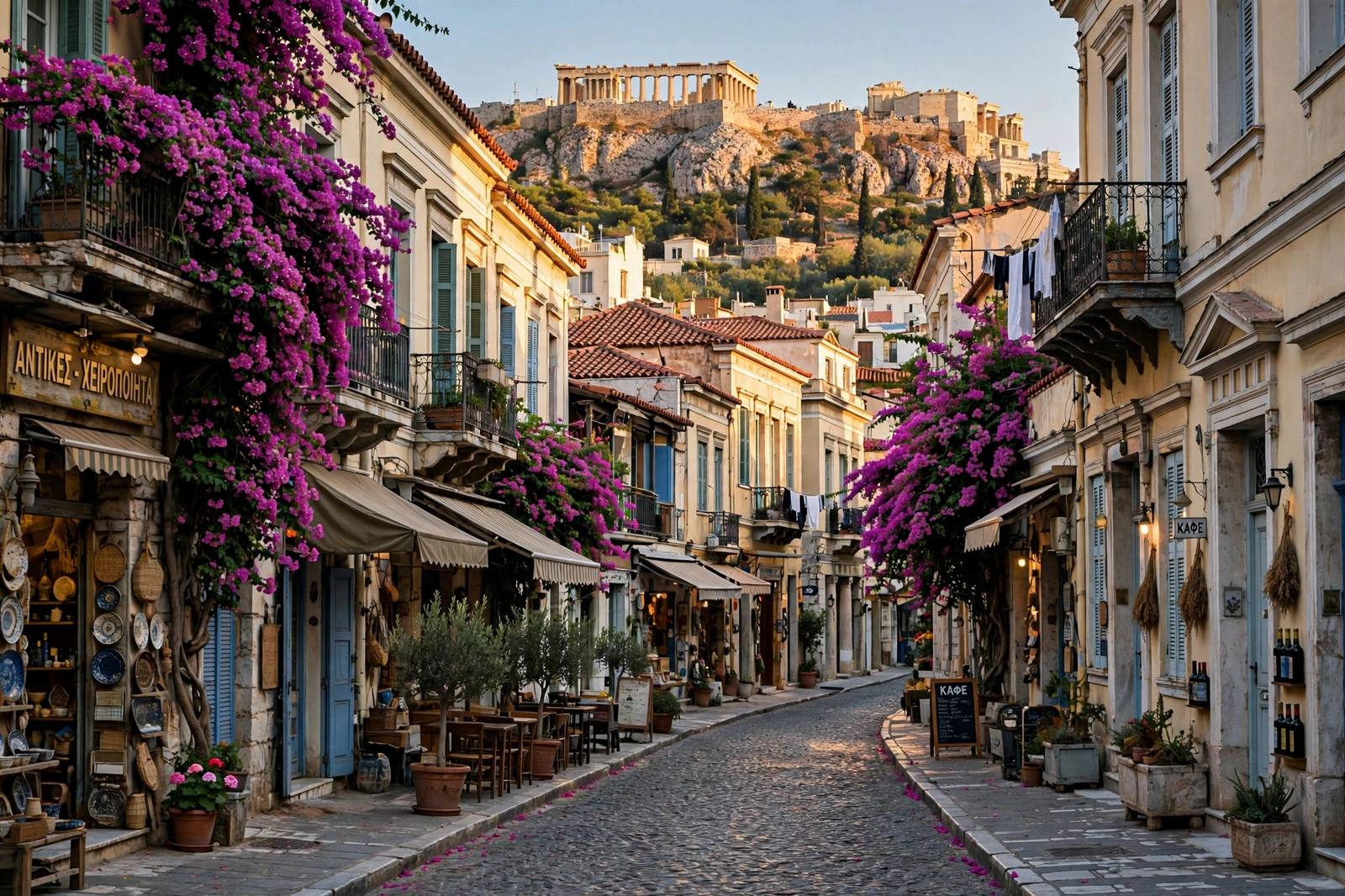
Tucked into the northeastern slope of the Acropolis, Anafiotika is the city's best-kept secret hiding in plain sight. Built in the 19th century by workers from the Cycladic island of Anafi, it's a tiny village of whitewashed cubic houses, blue shutters, bougainvillea, and cats — dropped improbably into the middle of Athens.
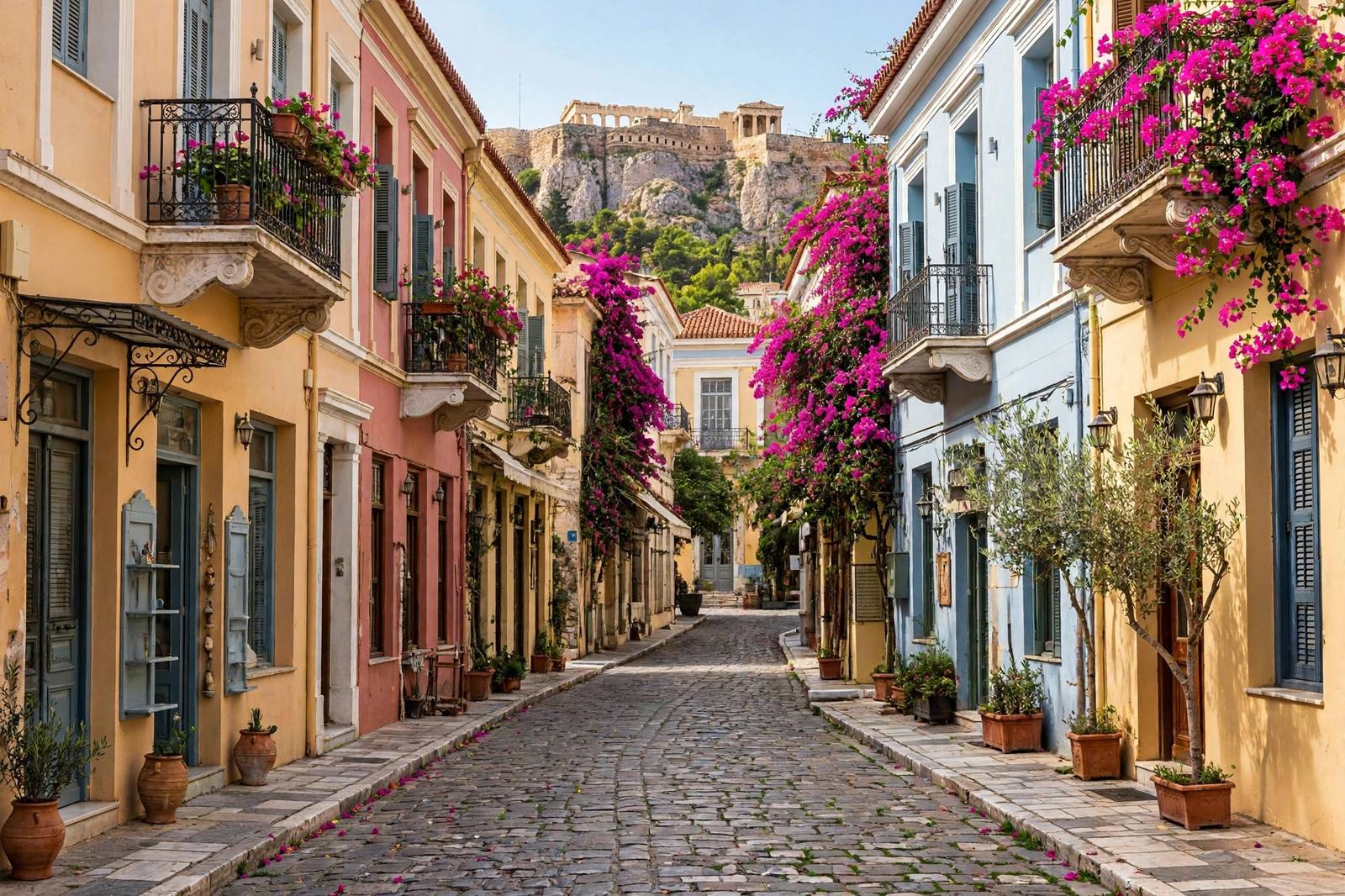
It takes about twenty minutes to walk through, but you'll want longer. Go early in the morning or late afternoon for the light and the quiet.
Heads up: people actually live here. Keep your voice down, don't peer into windows, and don't block doorways for photos. The residents' patience is not infinite.
2. Watch the sunset from Mount Lycabettus
At 277 meters, Lycabettus is the highest point in central Athens, and the 360-degree view — Acropolis one way, the Saronic Gulf the other — is the panorama every visitor wants. Sunset is the move: the city goes gold, then the lights come on.
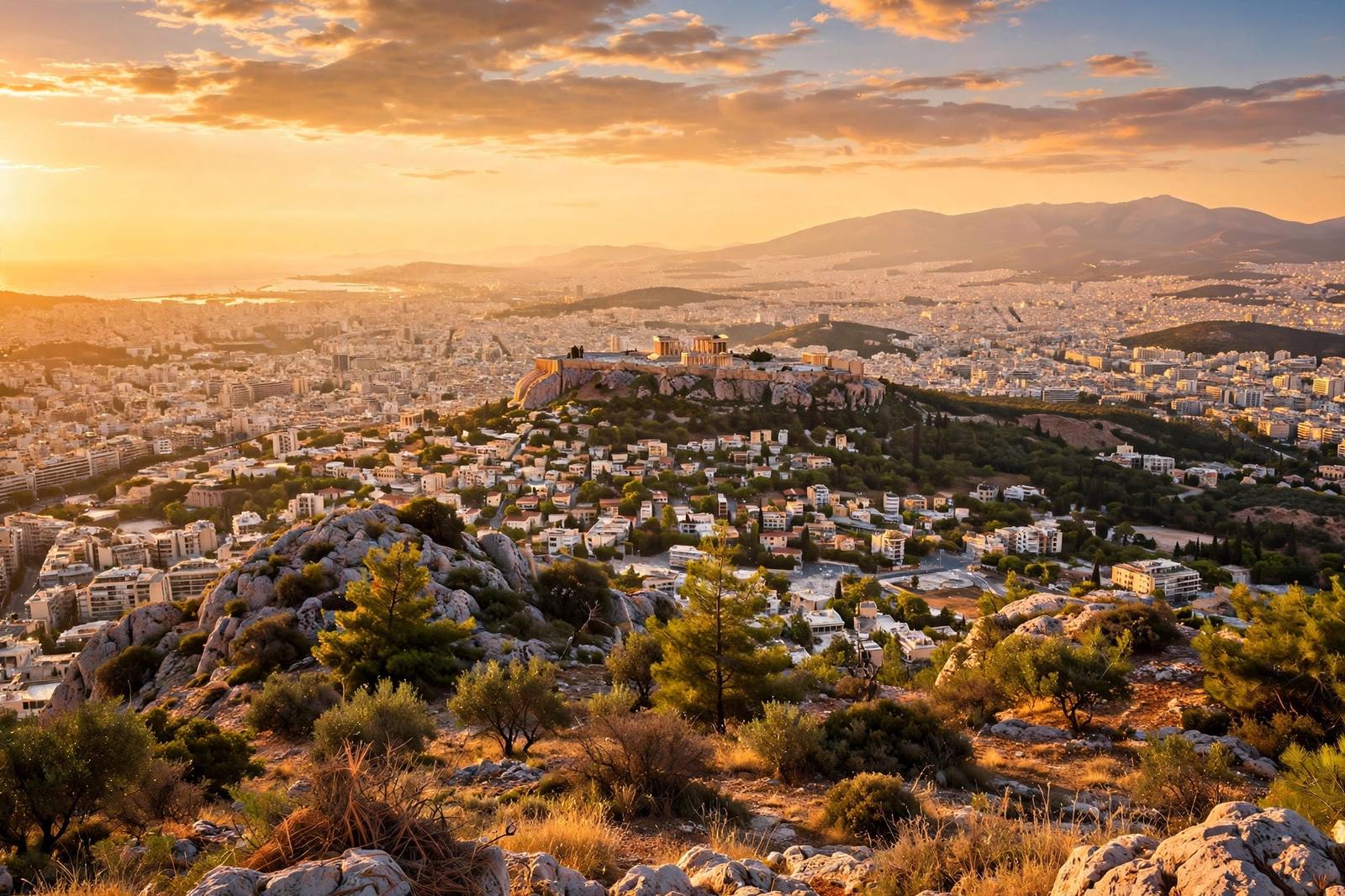
You can hike up (about 30 minutes, steep in places) or take the funicular from Kolonaki. The hilltop has a small chapel and a restaurant with a terrace.
Bring water if you're hiking — there's none on the trail, and summer afternoons are brutal. The funicular saves your legs for the Acropolis.
3. Explore Exarcheia, the city's rebellious heart
Exarcheia is Athens' anarchist quarter — and before that description scares you off, it's also its most interesting. The walls are covered in some of Europe's best street art, the bookshops are genuinely independent, the record stores and vintage shops are worth an afternoon, and the café culture is the least touristy in the center.
The neighborhood has a reputation for edginess that outruns the reality during the day. It's fine to explore on foot in daylight; just stay aware of your surroundings as you would anywhere, and skip it late at night if you're not comfortable.
Worth combining: Exarcheia with the National Archaeological Museum, which sits right on its edge — one of the world's great museums that somehow never has crowds.
4. Eat your way through Koukaki
Koukaki, just south of the Acropolis, is where young Athenians actually live and eat. The streets around pedestrianized Drakou are lined with the kind of places that don't appear in guidebooks: tiny ouzeries, third-wave coffee shops, bakeries doing things with spanakopita you didn't know were possible.
It's a ten-minute walk from the tourist crush of the Acropolis Museum, and it feels like a different city — residential, relaxed, real.
For dinner: this is the neighborhood. Come at 8–9 PM, pick the busiest taverna, and order whatever the table next to you is having.
5. Climb Filopappou Hill for the free Acropolis view
Directly across from the Acropolis, Filopappou (Philopappos) Hill gives you the classic postcard view — the Parthenon on its rock, the whole ancient skyline — without paying €30. The walk up through the pine forest is lovely in itself, passing the Socrates prison caves and the Philopappos Monument at the top.
It's also the best sunset alternative if Lycabettus feels too far. Honestly, I prefer it — fewer people, better angle on the Parthenon, and the walk through the pines is nicer than the Lycabettus funicular queue.
Watch out: the marble paths are slippery when wet and the hill is poorly lit after dark. Go for sunset, leave before it's fully dark.
6. Spend an evening in Psiri
Psiri spent decades as leather workshops and warehouses; now it's the city's nightlife engine. By day it's street art and artisan shops (leather sandals made while you wait, if you want the cliché done well). By night the tavernas and bars fill up and the whole neighborhood hums until late.
It's tourist-friendly without being a tourist trap — Athenians come here too, which is the test that matters. If I had to pick one neighborhood for a night out, it'd be Psiri over Plaka every time.
Psiri comes alive after 9 PM. Eat dinner here rather than Plaka — better food, lower prices, half the tour groups.
7. Discover Pangrati, the local's neighborhood
Pangrati doesn't try to impress visitors, which is exactly why it's worth visiting. Centered on lively Plateia Varnava and Plateia Profitis Ilias, it's all neighborhood tavernas, old-school kafeneia, and wine bars where the list is entirely Greek.
It's also walking distance from the Panathenaic Stadium, so it pairs naturally with a morning of sightseeing.
Here's a move: ask for the wine list, then ignore it. Ask what's open by the glass from small Greek producers instead. Assyrtiko from Santorini and Xinomavro from Naoussa are the two to know.
8. See the changing of the guard at Syntagma
Every hour, the Evzones — the presidential guard in their famous pleated skirts and pom-pom shoes — perform the changing of the guard at the Tomb of the Unknown Soldier. The full ceremonial version happens Sundays at 11 AM and is genuinely impressive: slow, precise, and oddly moving.
It's free, it takes twenty minutes, and it's right in the center.
The Sunday ceremony draws crowds, so arrive by 10:40 for a front spot. On other days the hourly change is smaller but easier to watch up close.
9. Swim at Lake Vouliagmeni
Twenty-five minutes south of the center, past the beach suburbs, sits a brackish lake fed by thermal springs and the sea. The water stays around 22–24°C year-round, it's full of tiny nibbling fish (a free spa treatment, depending on your perspective), and the setting — limestone cliffs, pine trees — feels nothing like a city.
It's the easiest half-day escape from Athens and the most surprising.
It costs around €15 in summer (less off-season) and gets busy on summer weekends — go on a weekday morning if you can.
10. Walk the National Garden and Zappeion
Right behind Syntagma, the National Garden is 38 acres of green calm in the middle of the chaos — duck ponds, ancient ruins scattered among the trees, a small zoo, and shaded paths that feel ten degrees cooler than the street. The Zappeion hall at its edge is a neoclassical beauty.
Every Athens itinerary needs a midday reset, and this is the best free one.
The natural route: enter from Syntagma, walk through to the Zappeion, then continue to the Panathenaic Stadium. About 90 minutes total.
11. Visit the Museum of Cycladic Art
The Acropolis Museum gets the crowds, but the Museum of Cycladic Art — all white marble figurines from 3000 BC, impossibly modern-looking — is the city's most underrated museum. The top-floor café has a great Acropolis view and is a civilized lunch stop. I'd put this above the National Archaeological Museum if you're short on time, which is not the conventional advice.
It takes about 90 minutes and it's never packed.
It's in Kolonaki, the smart shopping district — combine the museum with a wander through the galleries and the walk up to Lycabettus.
12. Hunt for treasure in Monastiraki
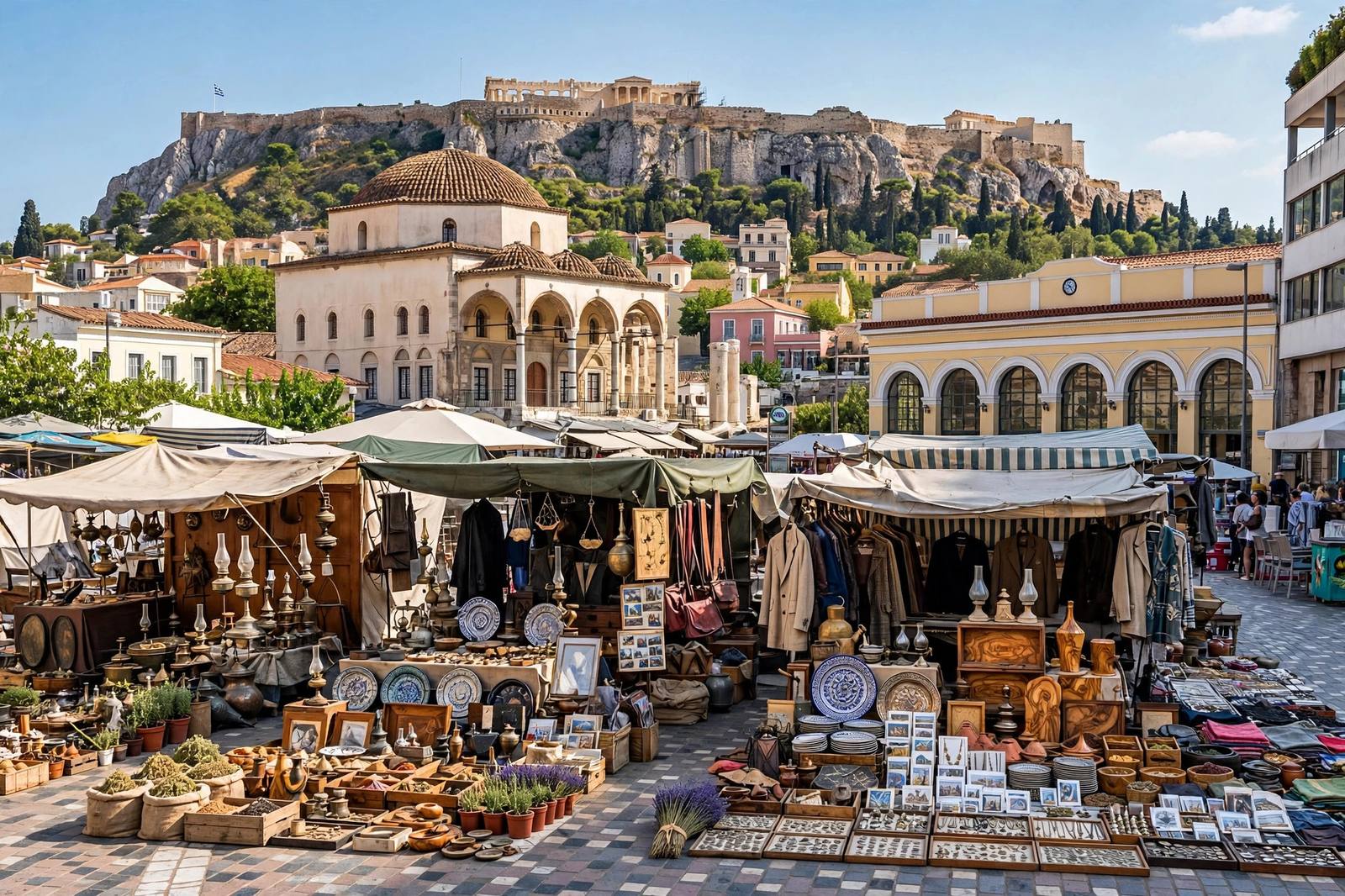
The Monastiraki flea market sprawls through the streets around the square — antiques, vinyl, vintage clothes, icons, worry beads, and a healthy amount of junk. Sunday morning is the main event, when the side streets fill with extra stalls.
Haggling is expected everywhere except the fixed-price shops. Start at half the asking price and meet in the middle.
Pandrossou Street is tourist-grade souvenirs. For the real market, head to Ifaistou and the streets west of the square.
13. Take the metro to the Acropolis station museum
You don't even need a ticket for this one. The Acropolis metro station is essentially an underground museum — the excavations found during its construction are displayed in glass cases along the platforms: ancient streets, houses, workshops, graves, all in situ.
Most people walk straight past it on their way up the hill. Don't.
It's free and it's literally on your way up. Give it fifteen minutes.
14. Day trip to Cape Sounion
Seventy kilometers south of Athens, the Temple of Poseidon stands on a cliff above the Aegean — 15 Doric columns catching the light, Byron's name carved into one of them (he wasn't the only vandal, just the most famous). At sunset, with the sea turning gold below, it's one of the great classical sites in Greece.
Public buses run from central Athens; organized half-day tours handle the logistics if you'd rather not think about it.
Go for sunset, not midday — the light is the whole point. Bring a jacket; the cape is windy even in summer.
15. Experience Gazi and Technopolis
The old gasworks of Gazi — a beautifully preserved industrial complex — now houses Technopolis, Athens' main cultural venue: concerts, exhibitions, festivals, and one of the best Christmas markets in southern Europe. The surrounding streets are the city's late-night district, packed with bars and clubs in converted industrial buildings.
It's the Athens that guidebooks written in 2010 don't know about.
Check what's on before you go — there's usually something happening, and it's often free or cheap.
16. Eat at a Varvakios market taverna
The Varvakios Central Market is Athens' working food market — meat, fish, produce, noise, chaos — and buried inside and around it are some of the city's most authentic tavernas. The ones in the meat market hall serve stews and grilled meats to market workers at prices that haven't moved in years.
It's not polished. That's the point.
Go for lunch — the market winds down by mid-afternoon. The fish section is worth walking through even if you don't eat there.
A note on the Acropolis itself
You should still go. Book the €30 timed-entry ticket at etickets.tap.gr (the official site — resellers charge more), pick the earliest morning slot you can, and go on a weekday. The Acropolis Museum (€20, separate ticket) is best at midday when the rock is at its hottest and most crowded. Under-18s enter free; EU residents under 25 enter free with ID.
Get it done efficiently and spend the rest of your time on everything above.
This is Athens lists what's on during your dates. Book Acropolis Museum tickets online to skip the line.
Frequently Asked Questions
How many days do I need in Athens?
Two full days covers the Acropolis plus the highlights above. Three lets you add Sounion or Vouliagmeni without rushing. More than four and you're repeating yourself — take a ferry somewhere.
Is Athens safe?
The center is generally safe, including at night in busy areas. Watch for pickpockets around Monastiraki and on the metro. Exarcheia is fine by day; exercise normal caution after dark.
What's the best neighborhood to stay in?
Koukaki for atmosphere and value, Plaka for first-timers who want to walk everywhere, Kolonaki for upscale, Psiri for nightlife. Avoid staying right on Omonia Square.
When is the best time to visit Athens?
April–June and September–October. Summer is hot (35°C+ isn't unusual) and the Acropolis is brutal at midday. Winter is mild and cheap but some island ferries reduce service.
Can I do Athens as a day trip from the islands?
You can, but it's a waste. The city deserves at least one night — it comes alive after dark, and that's half the experience.
Is the Acropolis really worth €30?
Yes, once. It's one of the world's great sights. Just don't pay a reseller €60 for the privilege — book direct.
The bottom line
The Acropolis is the reason people come to Athens; the neighborhoods are the reason they wish they'd stayed longer. Give the ancient stuff its half-day, then spend your time where the city actually lives — the hills at sunset, the tavernas at 10 PM, the markets in the morning, and the coastline twenty minutes south.
Athens rewards curiosity more than almost any European capital. Wander a street that isn't in the guidebook. It'll probably be the best part of your trip.