By Albert · Updated October 2026*
- Late May, June, and September are the best months: warm seas, everything open, and crowds that are present but not crushing.
- August is the hardest month — 35°C heat, maximum prices, 2–5 cruise ships a day, and the longest cable car queues of the year.
- September has the year's warmest sea (24–25°C); prices drop 40–50% below August by late in the month.
- The meltemi wind (June–September) can cancel ferries and boat trips — build buffer days into island-hopping itineraries.
- Fira stays open year-round but Oia largely closes November–March; don't plan a first visit in winter.
---
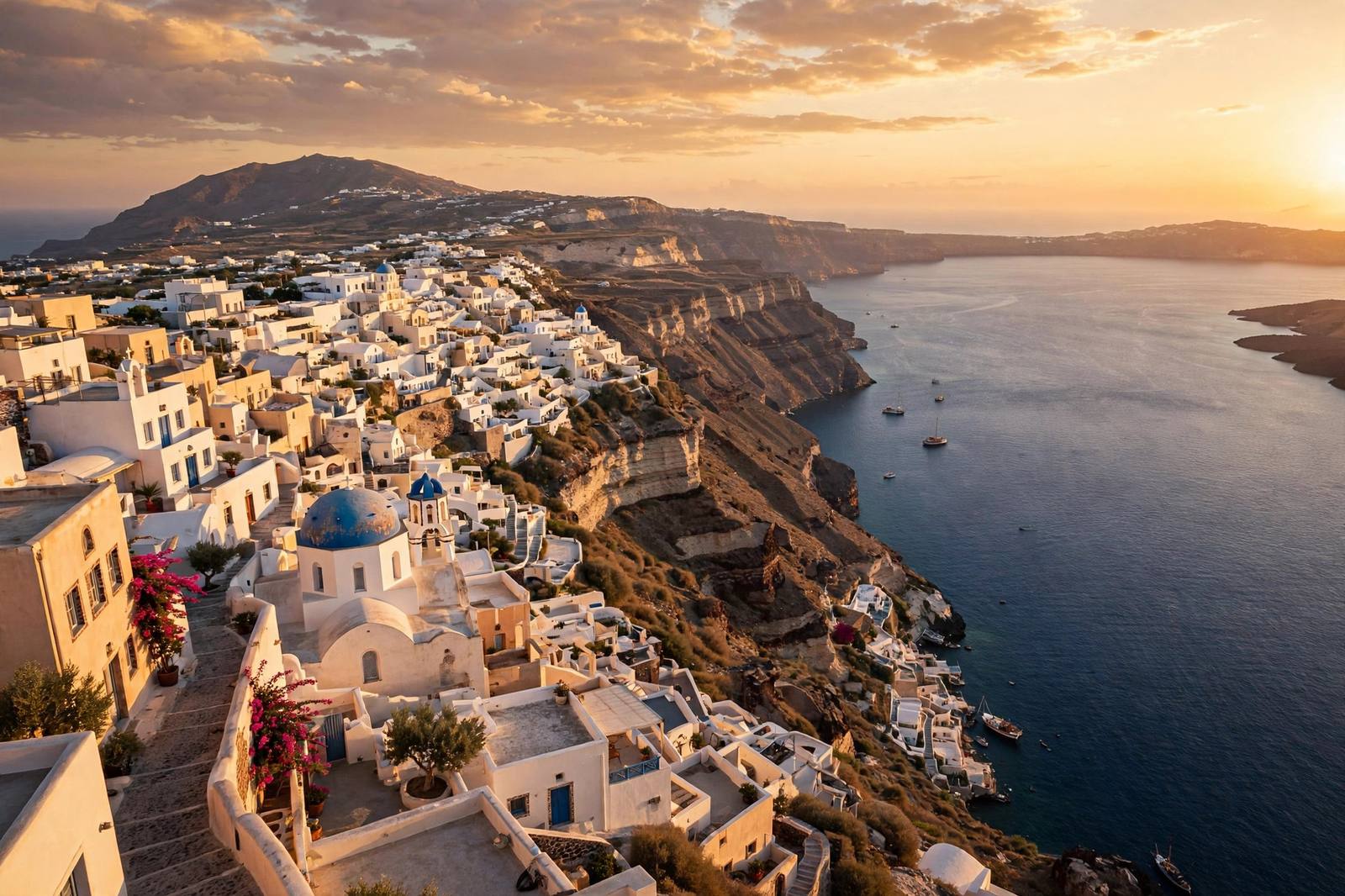
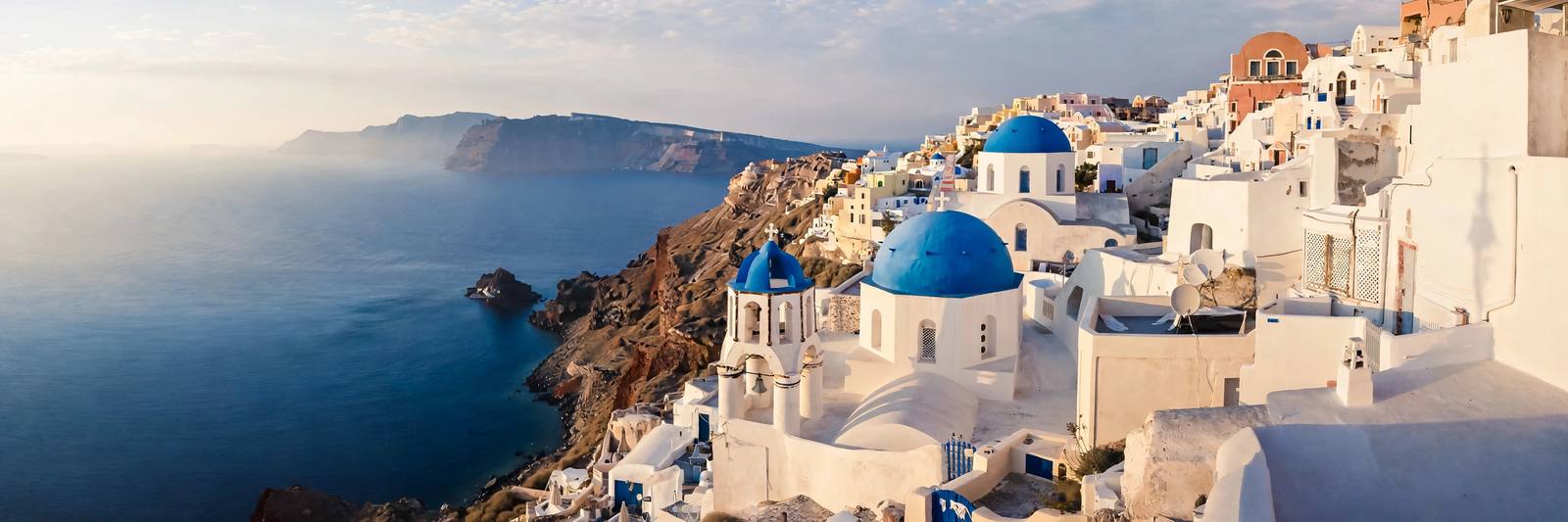
Santorini is the Greek island where timing matters most. It's tiny — the famous villages are basically two streets (Fira and Oia) — and the crowd problem compresses into a few hours a day. Right month: sunset over the caldera with room to breathe. Wrong month: sunset over someone else's shoulder.
Season runs roughly late April to late October. Within that window? Enormous differences. Here's the breakdown.
April: the quiet opening
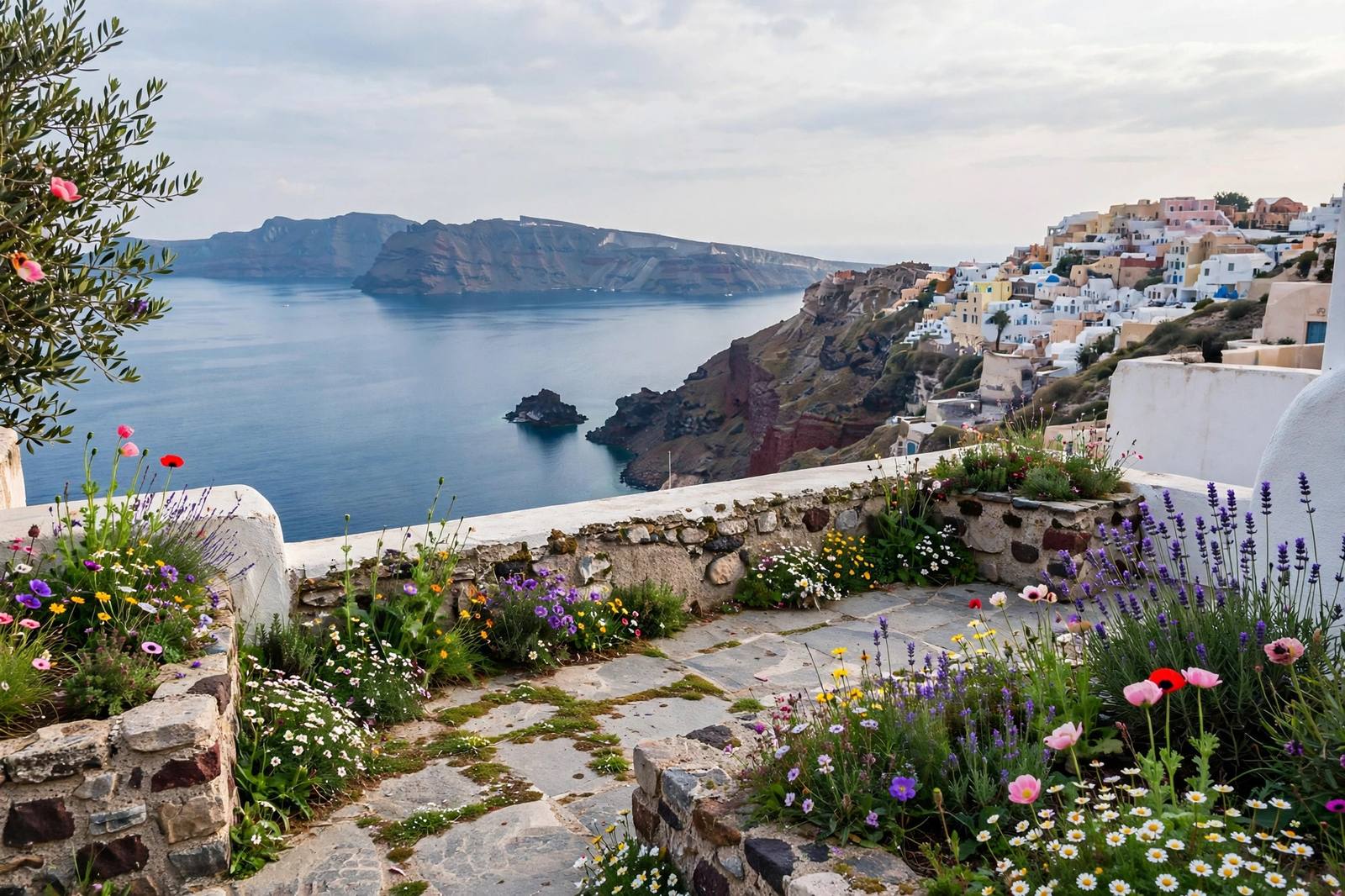
Here's Santorini before anyone arrives — wildflowers on the caldera cliffs, archaeological sites with nobody in them, and the lowest prices you'll see all year. The Fira-to-Oia path is genuinely at its best right now: 18–20°C, no heat haze, no crowds to dodge on the narrow bits.
The catch is the sea. At 17°C it's a hard no for most swimmers. Boat trips to the hot springs and volcano start mid-month but run limited schedules. And "open" is doing a lot of work in April — some hotels and restaurants haven't woken up yet, Oia especially.
So who should come? Walkers, photographers, anyone who wants the dramatic version of the island without the postcard version. It's not the classic Santorini trip. It's stranger and, I'd argue, more beautiful. Just confirm your hotel is actually operating before you book — April "open" isn't universal.
One wild card: Greek Orthodox Easter (usually April or early May) brings a brief domestic surge. Prices spike for the holiday weekend, but the midnight fireworks and village feasts are worth it if your dates happen to align.
Methodology: how we built this guide
We analyzed cruise ship schedules, 2026 hotel pricing, meltemi wind patterns, and seasonal business closures to identify the real sweet spots beyond the postcard season.
May: the balanced month
If April is the warm-up, May is when the island clicks into gear — and honestly, it's one of the smartest months to come. Low to mid-20s, sea climbing from 18°C (bracing) to 20°C (swimmable) by month's end. Hotels, wineries, beach bars, boats — almost everything's running.
Here's what I like about May: the crowds haven't arrived yet. Oia's sunset spots have actual space. You can walk into restaurants. And you're paying roughly half of August prices for the same caldera view.
Late May specifically is the play. Warmer water, sunset past 8:30 PM, the island fully awake — without the summer crush. If someone asked me to pick one fortnight for a first-timer who wants the postcard without the punishment, late May would be it. (September's the other answer — more on that below.)
Bonus for island-hoppers: the meltemi hasn't started, so ferries from Athens and Crete are calm. May's boring reliability is underrated.
June: the strong month
Longest days of the year, sea at 21–23°C — warm enough for everyone. June is the strongest single month for a classic summer holiday, full stop.
But here's the thing about June: it's really two months. Early June is calm, good value, almost May-like. Then European schools break and the second half shifts gears — Oia gets busier, Fira's square fills, the beaches (Kamari, Perissa, Red Beach) start feeling it. If you can pick, pick the first two weeks.
The meltemi starts stirring, especially late month. It's a dry northerly that runs two to four days at a stretch — the caldera side stays sheltered (boat operators know this and adjust), but high-speed ferries can get delayed or cancelled. Keep an eye on forecasts if you're arriving or leaving by sea.
Wineries are in full swing. Sunset's at its latest — 8:30, 8:45 — which means those long terrace evenings Santorini does so well.
One practical note: book 2–3 months out. The caldera-view rooms go first, and the gap between early and late booking prices is genuinely painful.
July and August: peak season
Maximum intensity. Past 30°C, pushing 35°C in August. Meltemi at its worst. Prices at their peak. And the crowds — here's what actually happens: two to five cruise ships a day dump thousands of people into exactly two villages, Fira and Oia, between roughly 11 AM and sunset. Fira's cable car queue stretches. Oia's main street becomes a slow river. Getting a sunset spot means arriving absurdly early or paying for a restaurant terrace.
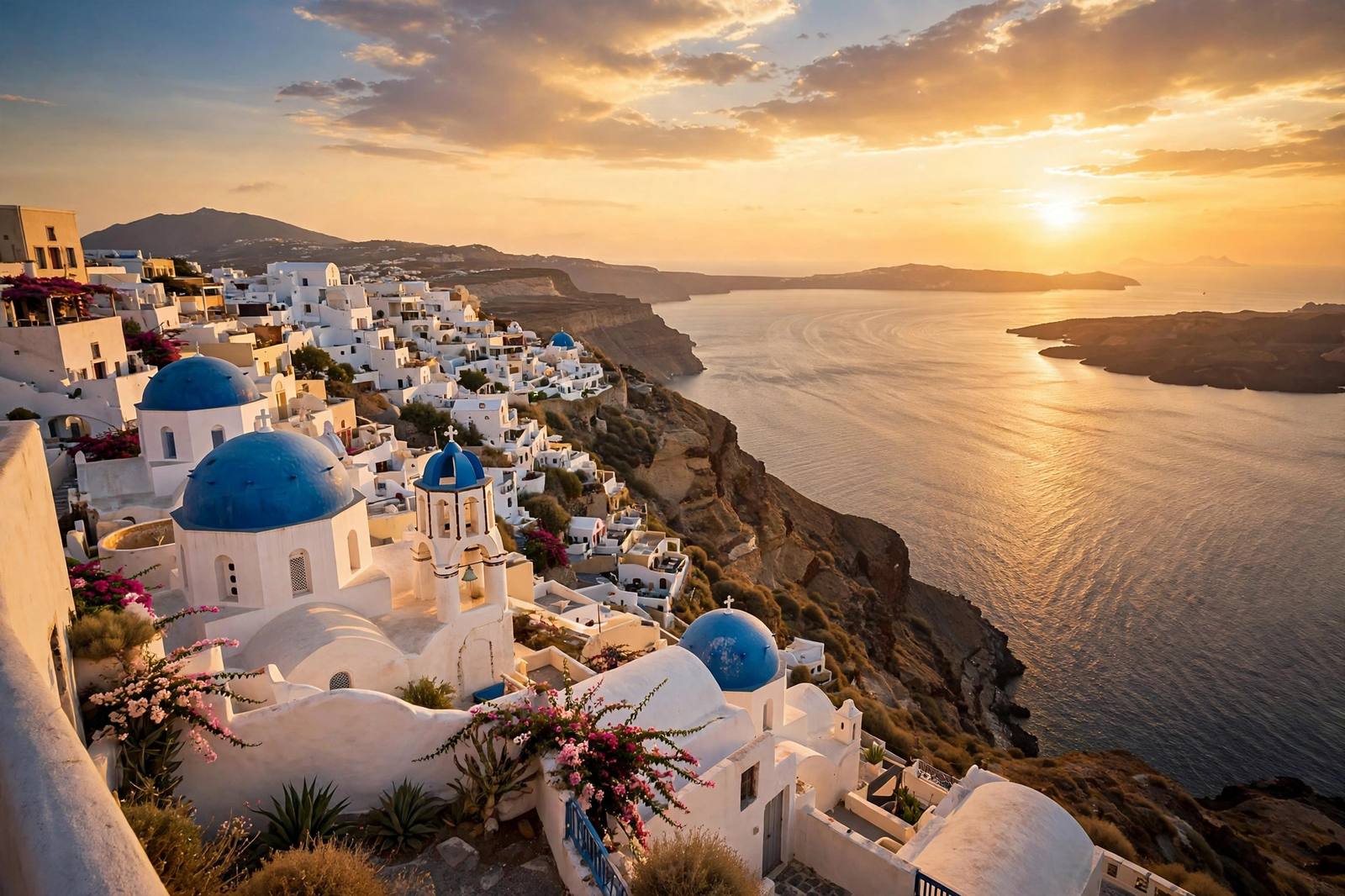
August is worse than July on every axis: hotter, more crowded, pricier, more wind cancellations. If you have any choice — any at all — don't make August your first Santorini trip. I mean that.
Now the counterpoint, because it's not all bad: the sea is 24–26°C. Everything's open — every restaurant, beach bar, boat, club. Fira's nightlife and the Perivolos beach clubs are at full tilt. And here's the secret nobody mentions: the caldera at 7 AM, before the ships arrive, is empty and magnificent. Summer Santorini brutally rewards early risers and punishes everyone else.
If you're stuck with summer dates, play it smart. Book boats and the first cable car early in your stay (so wind cancellations can be rescheduled). Do Oia at sunrise or skip it on cruise days. Eat in Imerovigli or Firostefani instead of fighting Oia's dinner scrum. Stay caldera-side — it's sheltered when the meltemi blows.
September: the best month
Ask Santorini regulars when to come and most will say September — quietly, like it's a secret. The data backs them up.
Warmest sea of the year: 24–25°C, after a full summer of heating. Air temps ease to 25–29°C. The meltemi fades. The light goes golden.
The crowd curve has a real break point. First week of September is still busy — European holidays tailing off. But from the second week, the island visibly exhales. Ships thin out. Oia's sunset spots become findable. It's like someone turned the volume down.
Prices track the same curve. Early September you're within 20% of August rates. By late September? 40–50% less for the same room. That late-September fortnight might be the best value in the entire Greek islands — August weather at shoulder prices.
Everything's still running: hotels, restaurants, wineries, beach bars, boats. The vineyards are harvesting — some estates do harvest experiences, new wines start appearing. Evenings are pleasant without August's stickiness.
Mid-to-late September. If you're planning one trip and want the best odds, that's the answer.
October: the long goodbye
October is September with the volume turned down further — cheaper, calmer, a touch cooler. And a clock ticking.
The first two to three weeks are genuinely good. 21–25°C days. Sea still 23–24°C into the third week — that's warmer than May, by the way. Villages quiet. Prices at half to a third of August.
Honestly? It's the best walking month. The Fira-to-Oia path without summer heat. The hike to Ancient Thera. Trails around Akrotiri — all comfortable, all nearly empty. Photographers: the light in October is the year's best. Low sun, dramatic clouds, golden hours that just keep going.
Then mid-October hits and things start closing. Boat trips cut departures, then stop. Beach bars shutter. Some hotels close for winter. Direct European flights run to late October — after that you're connecting through Athens. Clocks go back the last Sunday, and suddenly it's dark at 6.
October's for people who don't need the full apparatus: walkers, couples, photographers, anyone who'd rather eat in a Pyrgos taverna than fight for a Perivolos sunbed. If your trip depends on boats and beach clubs, come in the first half and confirm schedules before you book anything.
November to March: winter on the caldera
Winter Santorini is beautiful, cheap, and absolutely not for first-timers.
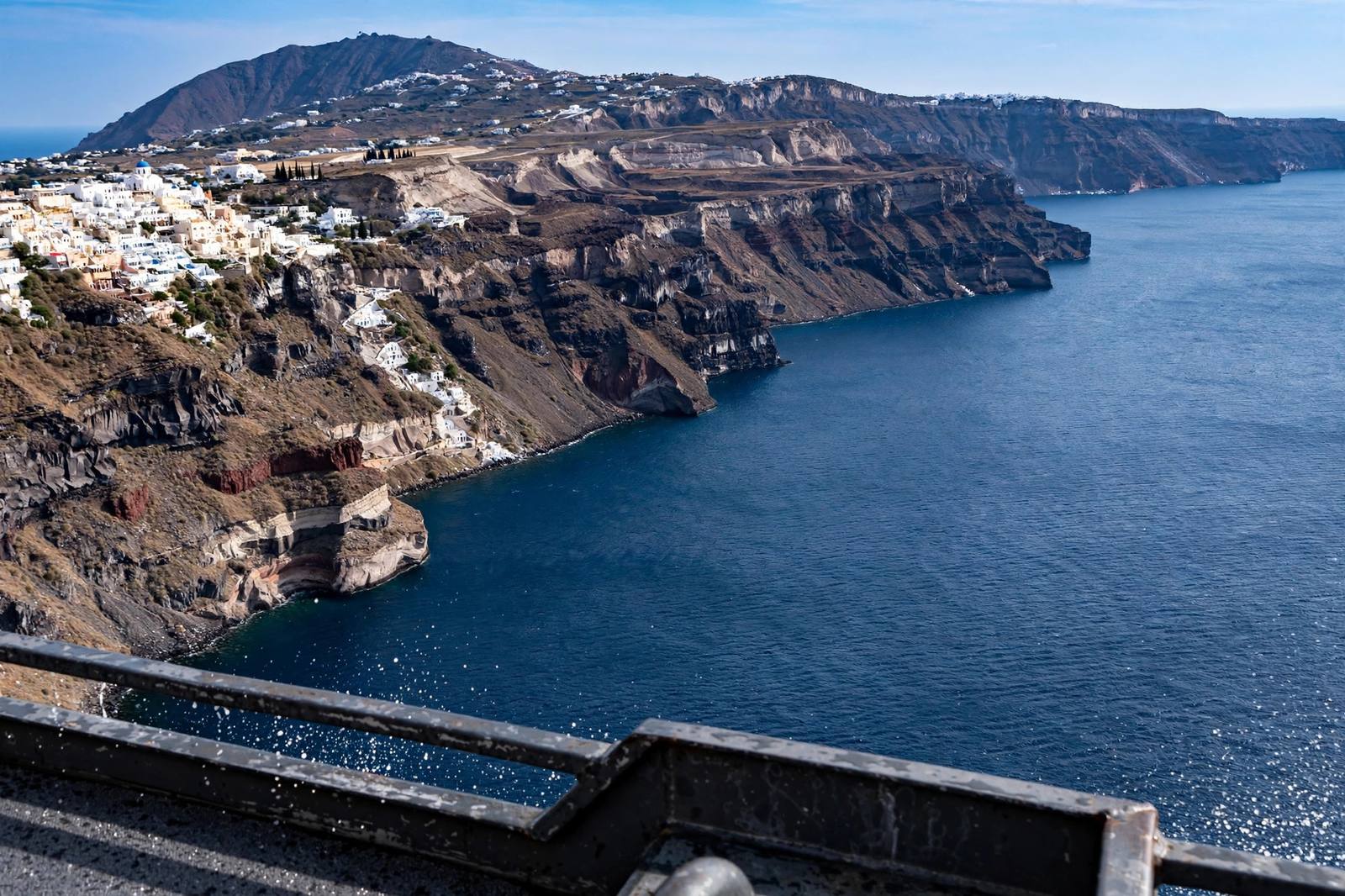
15–18°C days. Occasional rain and wind. An island stripped to its bones. Fira keeps going — shops, some restaurants, the museums (Akrotiri, the Museum of Prehistoric Thera) on winter hours. Oia? Mostly closed. Walking its empty lanes in January is haunting — in a good way — but you won't be having dinner there.
No boats. No beach scene. Athens connections only. Hotels at roughly a quarter of August prices, and only the year-round ones are open.
So who comes? Writers. Photographers. People who've done the summer version and want to see what the island looks like underneath. A storm rolling across the Aegean from a cave suite in Imerovigli is genuinely dramatic — the caldera doesn't close for winter.
But if you haven't seen Santorini in season yet, don't start here. The postcard version — boats, beach bars, Oia's restaurants, the village life — simply doesn't exist from November to March.
Practical tips for timing your Santorini trip
Time of day beats month for the worst crowds. The cruise-ship crush hits Fira and Oia from mid-morning to late afternoon. Oia at 8 AM in August is emptier than Oia at 4 PM in May. Plan major village sightseeing for early morning or after 6 PM regardless of month.
Check the cruise schedule. Multiple ships in the caldera on the same day transforms the experience. Some travelers plan their entire itinerary around it: heavy cruise days become beach days (Perissa, Kamari, Vlychada — the cruise crowds don't go there) or boat days, and quiet days become Oia and Fira days.
The meltemi is the trip-ruiner nobody plans for. It blows June through September, strongest in July–August. It cancels high-speed ferries, reroutes boat trips, and makes east-coast beaches unpleasant. Book boat excursions early in your stay so a cancellation can be rescheduled. Check wind forecasts, not just weather.
Stay on the caldera side in windy months. Fira, Firostefani, Imerovigli, and Oia sit on the sheltered caldera rim. The east-coast beach towns (Kamari, Perissa) catch the meltemi full force. In July and August, a caldera-view room isn't just prettier — it's calmer.
Three nights minimum, five is the sweet spot. Two nights is a stopover — you'll spend half of it arriving and departing. Three gives you the villages and a boat trip. Five lets you add Akrotiri, a winery, a beach day, and one day of doing nothing on a terrace, which is half the point.
Book the caldera view early or don't bother. The price difference between a caldera-view room and a room without one is enormous, and the good ones sell out months ahead for June–September. If the view rooms are gone or over budget, consider staying in Karterados or Messaria — traditional villages 10 minutes from Fira, far cheaper, and authentically Greek.
Ferry schedules change by season — Visit Santorini keeps the current timetables. The national tourism site has island-hopping practicalities.
Frequently Asked Questions
What is the best month to visit Santorini?
September — specifically mid-to-late September. Warmest sea of the year (24–25°C), thinning crowds after the first week, easing winds, falling prices, and everything still open. June is the best alternative for longer days and a livelier scene.
Is Santorini too crowded in August?
For many people, yes. Two to five cruise ships a day funnel through Fira and Oia, temperatures hit 35°C, prices peak, and the meltemi disrupts boats. It's manageable with early mornings and a good strategy, but it's the island at its most stressful. Choose another month if you can.
Can you swim in Santorini in October?
Yes, well into the month. The sea holds 23–24°C into the third week of October — warmer than May. Air temperatures of 21–25°C are comfortable for the beach. Late October gets cooler and some beach facilities close.
How do cruise ships affect Santorini?
Enormously, and very specifically. Ships tender passengers to Fira's old port; most head up to Fira town or take buses to Oia. The crush concentrates between roughly 10 AM and 5 PM in those two villages. The rest of the island — Akrotiri, Pyrgos, the south-coast beaches, the wineries — barely notices.
When do things close for winter in Santorini?
The wind-down starts mid-October: boat trips reduce then stop, beach bars close, some hotels shut. By November, Oia is largely closed and the island runs on its winter skeleton (Fira functioning, museums on winter hours, no boats). The season restarts around Greek Easter in April.
Is the meltemi really a problem?
It can be. It's a strong, dry northerly that blows for days at a time, mainly July and August. It makes exposed beaches unpleasant, creates choppy ferry crossings, and cancels small-boat trips. It's also why the caldera side stays comfortable — the cliffs shelter Fira, Imerovigli, and Oia. Respect it in your planning, especially for ferries.
Is Santorini worth it in winter?
As a second visit, yes — dramatic landscapes, empty villages, quarter-of-August prices. As a first visit, no. The Santorini of the postcards (boat trips, beach bars, Oia's restaurants, the full village life) doesn't exist between November and March.
The bottom line
Santorini's season is really three seasons: the gentle opening (April–May), the intense summer (June–August), and the golden wind-down (September–October). The middle one gets the most visitors and the worst experience per euro. The edges — late May and late September especially — deliver the island at its best for half the price and a fraction of the stress. Time it right and Santorini is everything the photos promise. Time it wrong and it's a very expensive queue with a view.