By Albert · Updated October 2026*
- April–June and September–October are the best windows: warm days, manageable crowds, and the Acropolis without heatstroke.
- July and August hit 35–40°C; the Acropolis has closed during afternoon heatwaves, and marble walkways radiate heat all day.
- August 15 empties the city of Athenians — traffic drops, local restaurants close, but tourist sites stay packed.
- Peak-season doubles near the Acropolis run €180–300+; shoulder season cuts that significantly.
- Book Acropolis timed tickets 2–3 months ahead for shoulder season, 4–6 months for summer. Arrive at the 8 AM opening regardless.
---
Athens is a city that punishes bad timing more than almost anywhere in Europe. Visit in May and you'll walk the Acropolis in a t-shirt, eat dinner on a rooftop at 9 PM, and wonder what everyone was warning you about. Visit in August and you'll understand — the marble radiates heat like a pizza oven, the midday sun empties the streets, and the Parthenon shimmers in a haze.
The good news: Athens has a long good season. The bad news: the difference between the best and worst months is extreme. Here's the honest breakdown.
April: the city wakes up
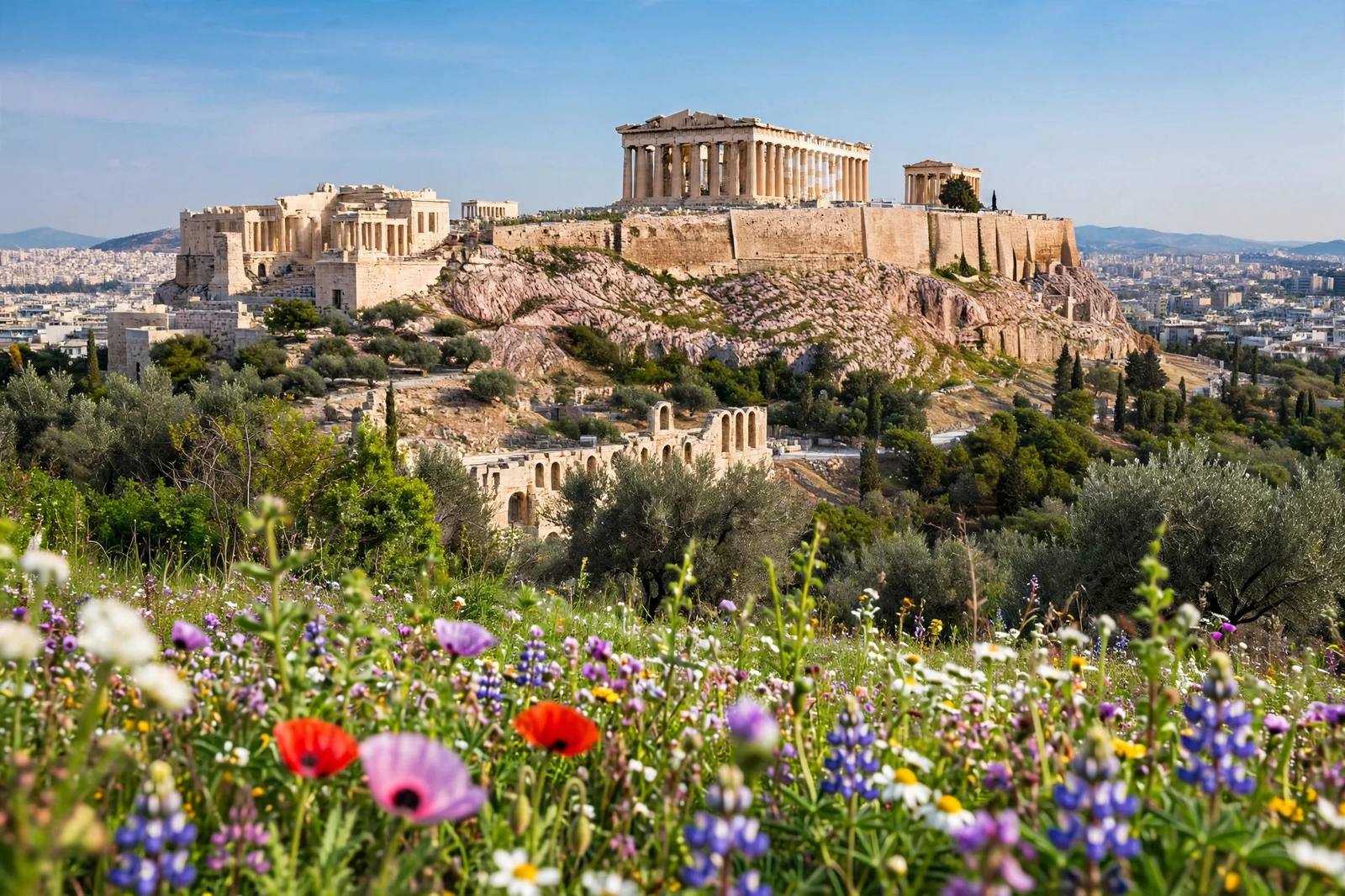
April's when Athens starts feeling like itself again. 18–22°C, sun more often than not, and the sites at their most walkable. The Acropolis in April — no queues, no heat, wildflowers on the slopes — might honestly be better than the Acropolis in any other month.
Then there's Easter. Greek Orthodox Easter (check the year's dates — it doesn't follow the Western calendar) is the country's biggest holiday. Good Friday processions, the midnight Resurrection service, the whole city in a festive family mood. Worth building around if your dates align. Just know the Easter weekend itself sees domestic travel surge, and some businesses close Good Friday and Easter Monday.
Rooftop bars crack open their terraces. Outdoor tables appear in Psiri and Koukaki. The city feels optimistic — you can feel it.
April's one real limitation: the sea. Combining Athens with the coast (the Riviera down to Glyfada and Vouliagmeni)? Water's still 17–18°C. For the city itself, though, April is close to perfect.
Methodology: how we built this guide
We combined 2026 Athens climate data, Acropolis visitor patterns, hotel price tracking, and event calendars. Recommendations balance weather comfort against crowd levels.
May: the sweet spot
If Athenians were tourists in their own city, they'd pick May. Mid-20s, long evenings, everything outdoors. Rooftop restaurants in full swing. The outdoor cinemas — films under the stars, a beloved local institution — open for the season.
Sightseeing doesn't get better than this. Full day across the Acropolis, Ancient Agora, Temple of Olympian Zeus without hiding from the sun at noon. Short queues. Easy restaurant reservations.
Prices are still reasonable, though climbing. Book 2–3 months out for well-located rooms near the Acropolis — the view-facing doubles go first, always.
Day trips hit their stride too. Delphi. Cape Sounion at sunset (Temple of Poseidon, do it). Aegina, 40 minutes by ferry. The sea's warming; by late May, Vouliagmeni is bracing but swimmable.
One visit, one month? Make it May.
June: summer arrives, gently at first
June is two months in a trench coat. Early June still feels like spring — warm days, pleasant evenings, manageable crowds. Late June? Proper summer. 30°C creeping in, European schools breaking up, prices climbing.
The Athens & Epidaurus Festival starts — ancient drama at the Herodion, that stone amphitheater tucked under the Acropolis. Greek tragedy where it was meant to be performed, on a warm June night. One of Europe's great cultural experiences, genuinely. Book early; the good performances sell out.
For the Acropolis, June is your last chance at a midday visit without suffering. By late June, switch to the summer split: 8 AM opening, indoors noon to 5, back out for the evening. And wear grippy shoes — the marble paths around the entrance get polished slippery by thousands of feet, even when dry.
The Riviera's in full beach mode now. Tram to Glyfada, 40 minutes from the center, drops you at proper beaches with sunbeds and bars.
July and August: the furnace
This is when Athens tests you. 35–40°C isn't a heatwave here — it's Tuesday. The stone and marble soak up heat all day and radiate it all night; the center stays warm hours after sunset. Air conditioning stops being a perk and becomes the difference between sleeping and staring at the ceiling.
The Acropolis is the thing to plan around. Recent summers have seen afternoon closures when it gets dangerous up there — announced the evening before or morning of. Check the status before you go, and always have a backup. The Acropolis Museum (air-conditioned, genuinely world-class, right at the foot of the hill) is the obvious one.
The rhythm that works: outdoors 7:30–11:30 AM (be at the gate for the 8 AM opening), indoors noon–5 PM (museums, long lunches, pool), back out after 5 when the city wakes up. Athenians live this way naturally. Rooftop dinners, Plaka evening walks, Exarchia late nights — summer Athens is better after dark anyway.
Now the August paradox. It's the most tourist-crowded AND most locally empty month simultaneously. Around August 15 (Dormition of the Virgin — big holiday), Athenians vanish to islands and villages. Traffic drops three-quarters. Your neighborhood taverna closes for its own holiday. But the Acropolis, Plaka, Monastiraki? Packed with visitors. Shorter taxi rides, longer restaurant hunts.
Hotels peak — €180–300+ near the Acropolis, booked out 4–6 months ahead. Two non-negotiables for summer: timed Acropolis entry booked well in advance (specific times, 15-minute leeway), and a hotel whose AC actually works. Confirm the second one; don't assume.
August isn't unvisitable. It's just the month where Athens demands the most planning for the least comfort.
September: the local favorite
Ask Athenians when they like their city best and September wins by a mile.
Heat breaks — highs back in the upper 20s, nights cooling off. But summer's not done: warmest seas of the year, Riviera weekends stretching deep into the month.
Cultural life reboots. Open-air concerts. The Epidaurus Festival tail. Exhibitions opening after the summer pause. The Herodion under the stars in September, crowds thinned, air soft — it's special.
Tourist numbers drop hard from the second week. Restaurants get easier. Hotel prices start sliding. The Acropolis becomes an all-day proposition again instead of a dawn raid.
And it pairs beautifully with island-hopping — ferries still on full schedules, meltemi easing, late-summer seas without August prices. If May is the spring answer, September is the autumn one.
October: autumn's version of spring
September's quieter sibling. 20–24°C days, evenings that want a light jacket, sites at their most pleasant. The light goes golden. Crowds thin to almost nothing.
This is walking-tour, food-tour, neighborhood-wandering season — more time in Koukaki's cafes and the Central Market than ticking monuments. Delphi and the Peloponnese are comfortable day trips.
Hotels well below summer rates. Good availability, though the best rooms still reward a few weeks' notice.
Late October brings the first real rain and cooler days. Clocks go back the last Sunday. But for most of the month? One of Athens' best-kept secrets. (Between you and me, October might beat May for pure sightseeing — cooler air, autumn light, nobody around.)
November to March: the quiet season
Winter Athens is a different city. Whether that's good depends on what you want.
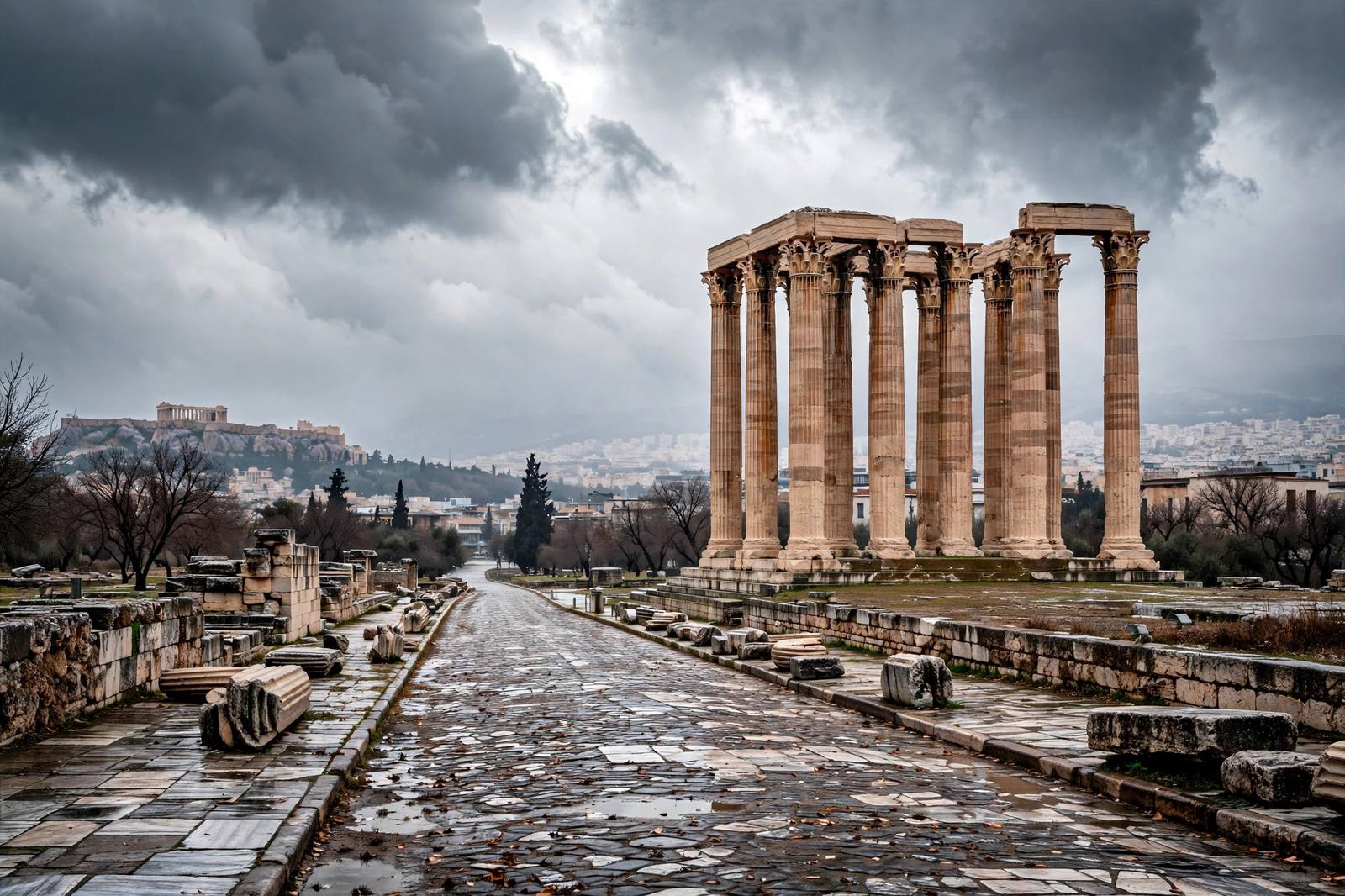
10–15°C days. Some rain. Sites nearly empty — the Acropolis on a crisp January morning with twenty other people is something summer visitors literally cannot buy.
Museums at their best: no queues, no crowds, room to actually look. National Archaeological, Benaki, Cycladic Art — all world-class, all walkable in winter without breaking a sweat.
Cheapest prices of the year. Restaurants full of locals, not tourists. Theater, concerts, exhibitions running full tilt — winter's when Athenians actually go out.
The tradeoffs are real: some rooftops close, island day trips mostly off the table (ferry schedules shrink to nothing), and you'll need a proper jacket. The Marathon in November and Christmas in December give winter its own rhythm.
Don't come expecting beaches. Do come for museums, food, and the most authentic version of the city you'll find.
Practical tips for timing your Athens trip
The Acropolis dictates your schedule. It's the reason most people come, and it's the most weather-sensitive sight in the city. In summer, the 8 AM opening slot is non-negotiable — shortest queues, coolest marble, best light. In shoulder season you have more flexibility, but early is still better. Book timed tickets online well ahead; walk-up availability in summer is unreliable.
Learn the summer split. The midday retreat isn't wasted time — it's how the city works. Museums (Acropolis Museum, National Archaeological Museum, Benaki) are air-conditioned and at their emptiest at noon. Long lunches in shaded tavernas are a feature, not a compromise.
August 15 changes the city. If your trip spans mid-August, expect closed local restaurants and shops but fully operational tourist sites. Stock up on the knowledge that Plaka and Monastiraki will be open; your neighborhood taverna might not.
Combine wisely. Athens pairs naturally with the islands, but the combination has a seasonal logic: spring and autumn, do Athens first (cool) then the islands (warming/warm). In summer, many travelers do the islands first and finish with 2–3 days in Athens — by then you'll be heat-adapted and the city is a manageable finale rather than a shock.
Watch for strikes and demonstrations. Athens has a tradition of public-sector strikes that can affect the metro, museums, and archaeological sites, and demonstrations in Syntagma Square. They're usually announced in advance. Check local news a day or two before your visit.
Check This is Athens, the city's official tourism site, for event dates that might shape your timing. The Acropolis Museum posts its seasonal hours there too.
Frequently Asked Questions
What is the best month to visit Athens?
May and September. May has ideal sightseeing weather and the city in full bloom; September has warm seas, cultural events restarting, and thinning crowds. October is a close third for pure sightseeing.
Is Athens worth visiting in August?
It can be, with the right strategy: early-morning sightseeing, midday retreat, evenings out. The tourist sites are fully operational and the city is navigable. But it's the hottest, most expensive month, and many local businesses close around August 15. If you have any flexibility, choose another month.
How many days do you need in Athens?
Three full days covers the essentials: the Acropolis and its museum, the Ancient Agora, Plaka and Monastiraki, plus a half-day trip to Cape Sounion or Aegina. Four to five days lets you add the National Archaeological Museum, Lycabettus Hill at sunset, and the Athens Riviera without rushing.
Does the Acropolis really close in summer?
Yes, during extreme heatwaves authorities close it (and other exposed sites) during the hottest afternoon hours. It's happened in recent summers and will likely continue. Check the status the evening before your visit and book morning slots.
Is Athens walkable?
Very. The historic center — Acropolis, Plaka, Monastiraki, Syntagma, Kolonaki — is compact and best explored on foot. The metro is clean and efficient for longer hops (Piraeus port, the Riviera). Wear grippy shoes; the marble around the Acropolis is slippery.
When is Athens cheapest?
November through February, excluding the Christmas–New Year stretch. Hotel prices drop sharply and restaurants are uncrowded. You'll trade beach weather for museum weather.
What should I avoid in Athens?
Avoid midday Acropolis visits in July and August. Avoid assuming restaurants near the main tourist streets represent Athenian food — walk ten minutes in any direction. And avoid the August 15 week if you want the local restaurant scene at full strength.
The bottom line
Athens has two cities inside it: the spring/autumn city of rooftop dinners and all-day ruins, and the summer city of split days and air-conditioned museums. Both are worth visiting, but they require different strategies. The travelers who suffer in Athens are the ones who treat August like May. Pick your month honestly, plan around the heat, and the city will take care of the rest.