
Everyone goes to Santorini and Mykonos. The rest of Greece's islands (over 200 inhabited ones) get a fraction of the visitors and, in several cases, deliver a better trip. These five sit outside the Cyclades, each in a different island group, and each worth building a holiday around.
The short version: Crete for the island that does everything. Rhodes for medieval history plus beaches. Corfu for green landscapes and family-friendly ease. Zakynthos for the famous shipwreck cove and sea turtles. Hydra for a car-free escape two hours from Athens.
| Island | Best for | Days needed | Budget level | Go in |
|---|---|---|---|---|
| Crete | Full-week variety | 5–7 | Moderate | May–June, Sept–Oct |
| Rhodes | History + beaches | 4–5 | Moderate | May–June, Sept |
| Corfu | Families, easy trip | 5 | Moderate | June, Sept |
| Zakynthos | Shipwreck cove, turtles | 3–4 | Moderate | June, Sept |
| Hydra | Car-free Athens escape | 1–2 | Higher | May–June, Sept |
Which Greek island works best as a full holiday on its own?
Start with Crete. It's the biggest island and, honestly, the best one too. The size is the whole point. Minoan palaces. Knossos is €20, book ahead, tickets sell out.
The Samaria Gorge is 16 kilometers of hiking that ends at the Libyan Sea (€5 entry). Start early, wear real shoes. Three distinct coastlines. Mountain villages that feel properly remote. Two weeks here and you wouldn't repeat a day.
Then there's the food. Cretan cuisine embarrasses the rest of Greece. We're talking dakos, kalitsounia, graviera cheese, and raki that materializes whether you ordered it or not. Chania's old Venetian harbor at sunset might be the single prettiest scene in the Mediterranean.
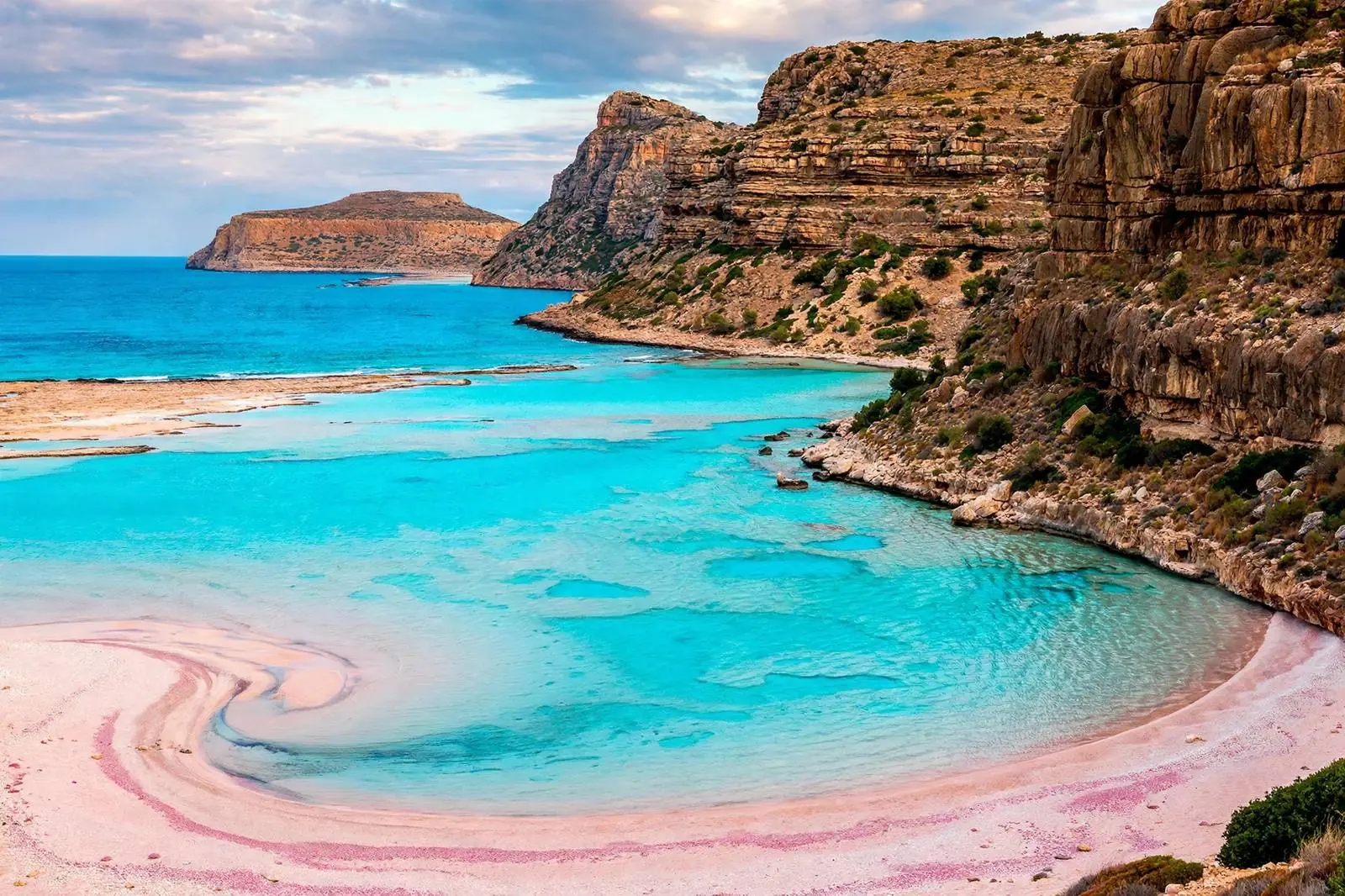
You'll need a car, since the best beaches and gorges aren't on bus routes. Elafonissi's pink sand gets the photos; Balos lagoon is the better swim. Five to seven days minimum, May–June or September–October. Skip Heraklion beyond the Archaeological Museum (€12, one of Greece's best). The Crete pages on Visit Greece cover regional highlights if you're planning a longer stay.
Where do you find medieval history and beaches in one place?
Then there's Rhodes. Its medieval Old Town ranks among the best-preserved walled cities in Europe. It's a UNESCO site where the Knights Hospitaller built palaces and hospitals 700 years ago, and people still live inside the walls. Combine that with genuinely good beaches, and it's the best two-for-one in the Dodecanese.
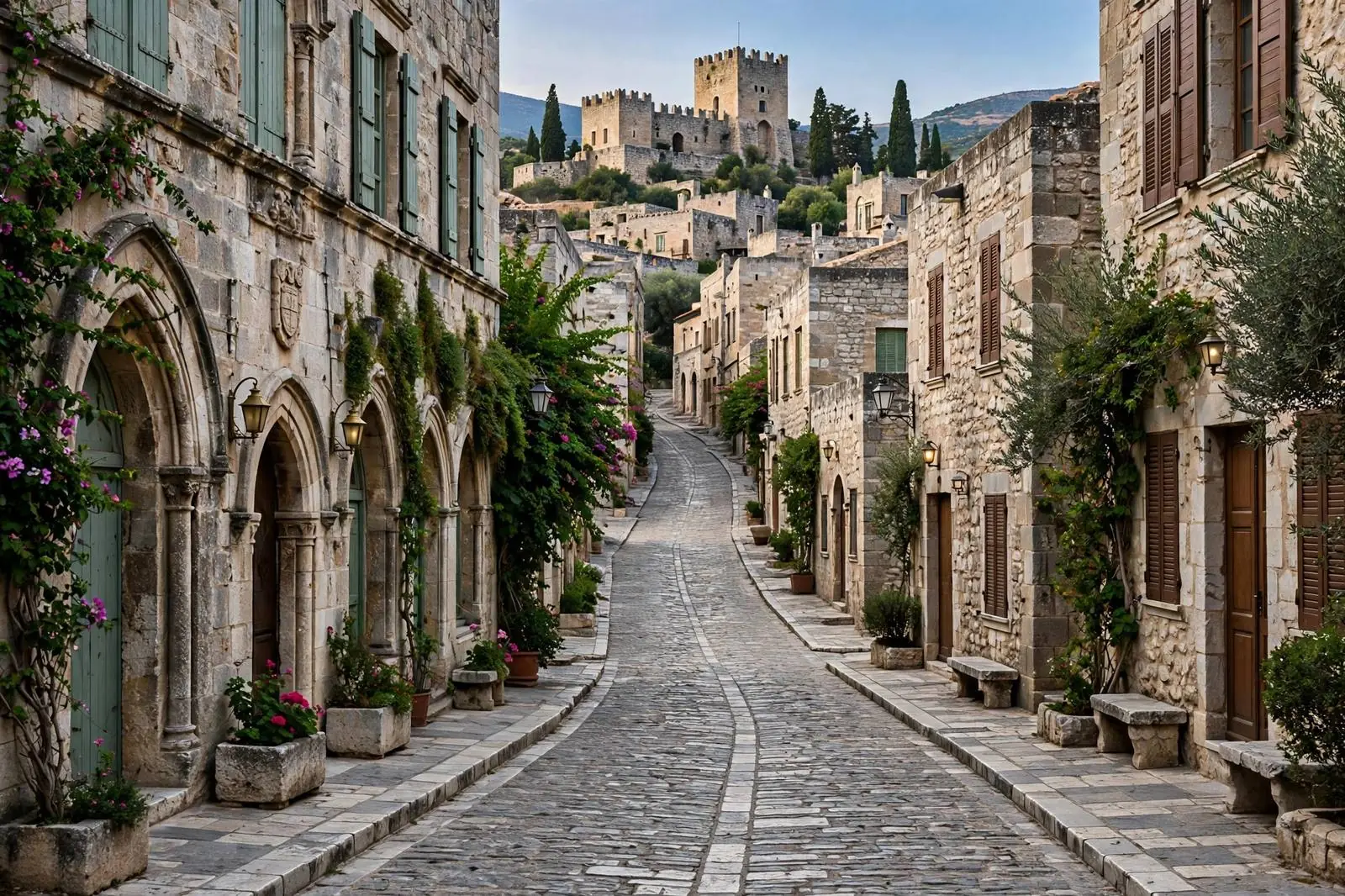
Two days for the Old Town and Lindos, then beach time. Four to five days total. May to June or September; Rhodes is one of the sunniest spots in Greece.
Lindos is the headline day trip, but go early. Tour buses arrive by 10am and the lanes get crushed until mid-afternoon. The Acropolis of Lindos (€12) at 8am, nearly empty, is magical.
Start the Old Town at the Palace of the Grand Master (€8). For swimming, Anthony Quinn Bay has the best water near Rhodes Town. Stick to the east coast for calm seas.
Ferries from Athens take 12+ hours overnight. Fly instead: about an hour, often under €50 with Aegean or Sky Express booked early.
Which island is easiest with kids?
Corfu is the greenest island in Greece. Its Venetian old town (UNESCO) feels more Italian than Greek, which makes sense since Venice ruled here for 400 years. Gentle beaches, enough history to keep adults interested, and direct flights from all over the UK and Europe.
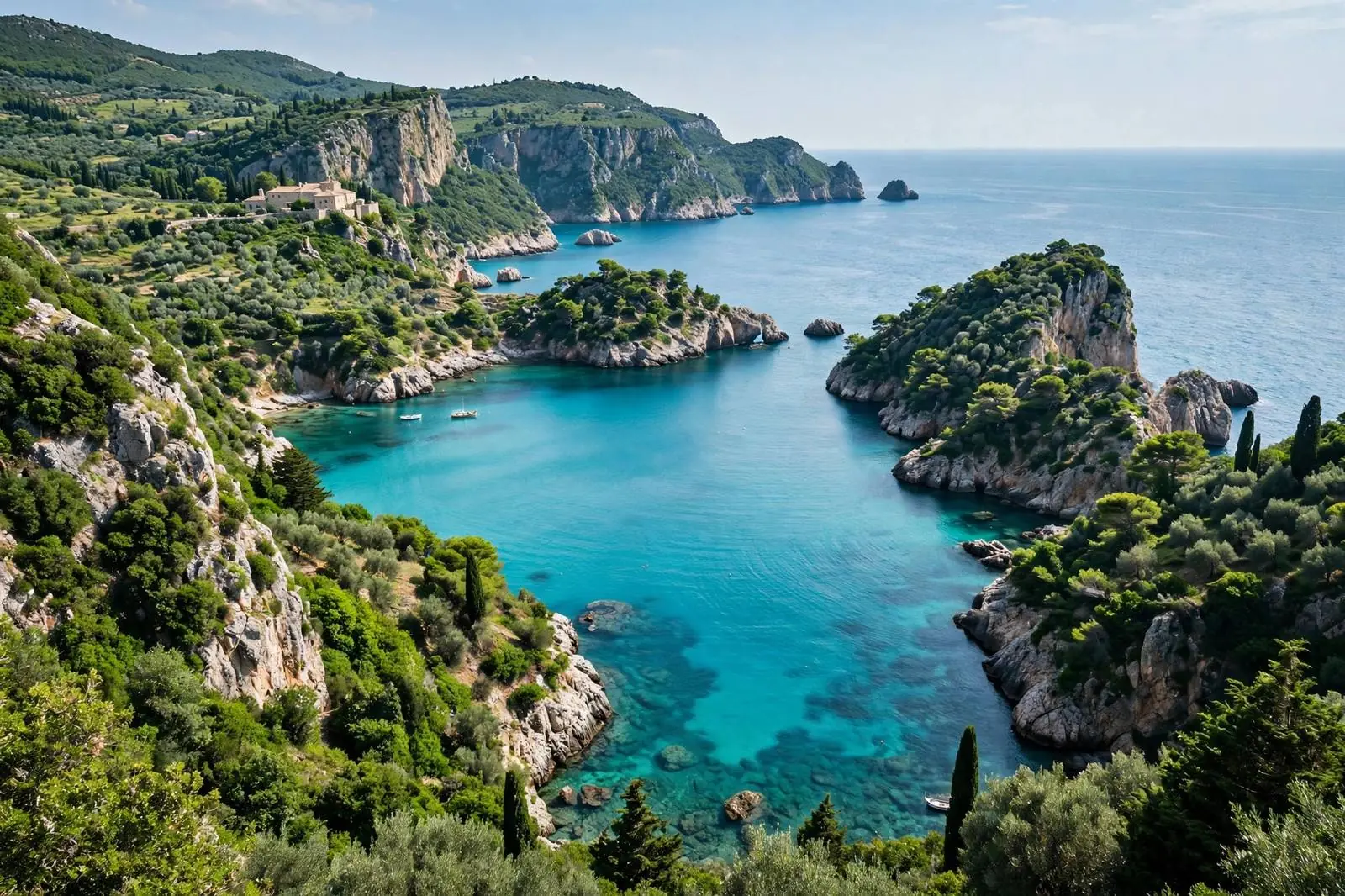
Five days works well. May to June or September. Corfu gets more rain than the Cyclades, so avoid the shoulder edges. The northeast coast (Kassiopi, Kalami) has the clearest water. Paleokastritsa on the west coast is stunning, though the water runs cold.
In town, the Achilleion Palace (€7), built by Empress Sisi of Austria, is worth an hour. Mouse Island and the Vlacherna monastery are the classic photo. Evenings belong on the Liston arcade, built for slow strolls.
And try the kumquat liqueur. It's the local specialty, and it's better than it sounds. Visit Greece's Corfu guide has the official rundown of sights and beaches.
Is the Shipwreck Beach worth the hype?
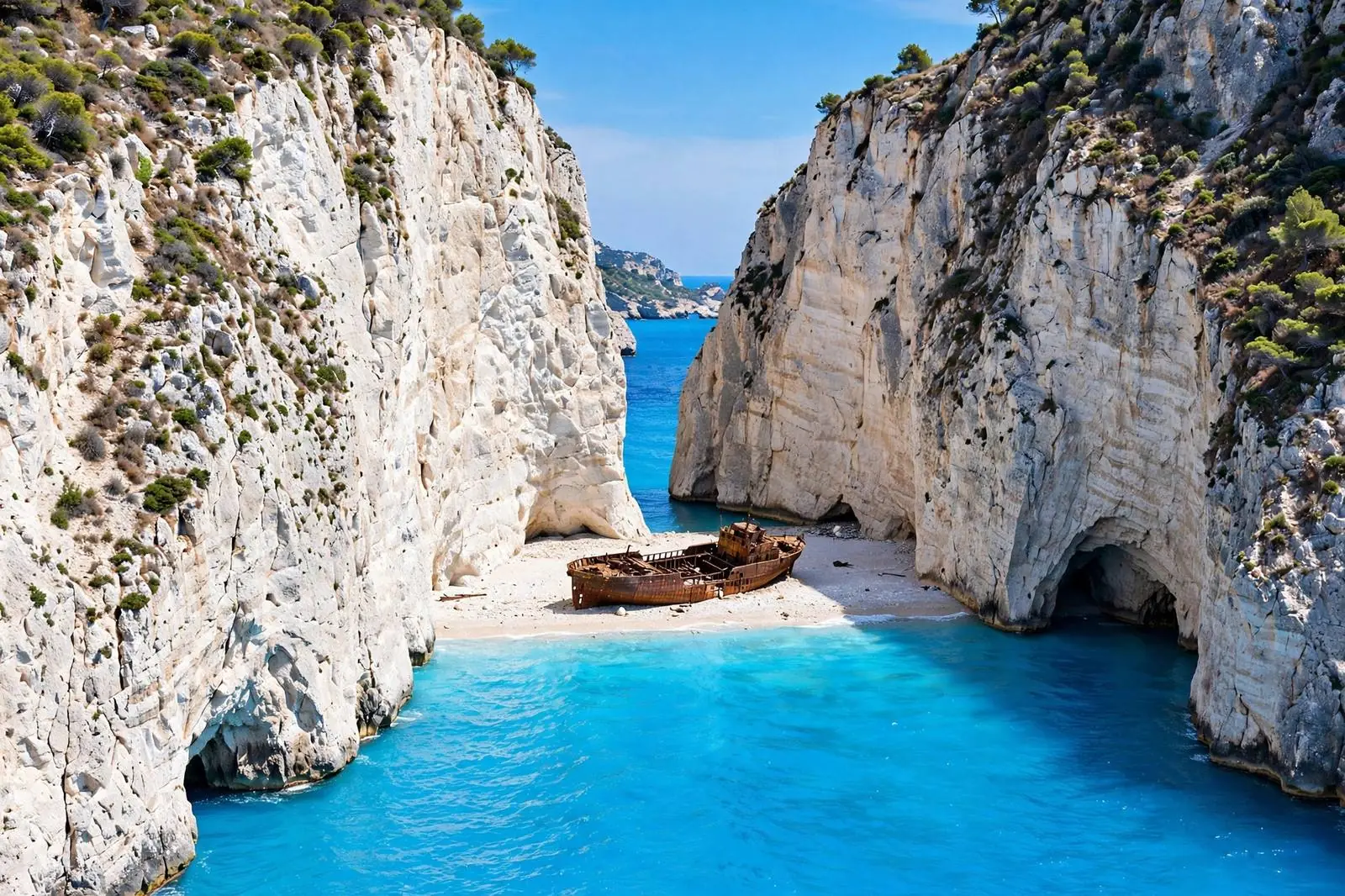
Navagio on Zakynthos is a rusted smuggler's ship on white sand between limestone cliffs, and it's one of the most photographed beaches on earth. It earns it. See it from the viewpoint above at sunrise, before the tour boats arrive. The beach itself is only reachable by boat, which limits the damage.
But here's what most visitors miss: the turtles. Loggerhead turtles (Caretta caretta) nest at Laganas Bay in summer, and watching them beats any beach photo. Three to four days covers the island. June and September; August is packed.
One warning that matters: Laganas is a British party strip. Stay elsewhere. Tsilivi for families, Keri for quiet. The island's interior, all mountain villages and olive groves, is actually lovely and makes none of the brochures. For time on the water, the Blue Caves trip from Skinari (€25–35) beats the shipwreck beach landing.
What's the easiest island escape from Athens?
Hydra. No cars, no scooters. Donkeys carry the luggage up from the harbor. Two hours by ferry from Athens and it feels like a different century. Stone mansions built by 18th-century shipping magnates. Leonard Cohen's old house (he bought it for $1,500 in 1960). A harbor barely changed in 200 years.
Most people need just a day, though staying overnight means getting the harbor to yourself after the last ferry leaves. Ferries from Piraeus run about €40–42.
Swimming is from rocks, not sand, so pack water shoes. Spilia and Hydronetta are rocky platforms with ladders into deep, clear water. The hike to the Monastery of Profitis Ilias takes about an hour, with views across the whole Saronic Gulf. Dinner on the harbor, watching the fishing boats come in, is the evening.
The honest caveat is that Hydra is expensive for what it is, and there's no beach. You're paying for atmosphere. We've got the full breakdown in our Hydra guide.
How do you get to these islands?
Getting there is straightforward:
- Crete, Rhodes, Corfu, Zakynthos: fly from Athens (under an hour, €40–60 booked early) or take seasonal direct flights from Europe
- Hydra: ferry only from Piraeus, about two hours, €40–42 Hydra is ferry-only from Piraeus: about two hours, €40–42, no cars allowed on the island at all.
For ferries elsewhere, Blue Star and SeaJets cover the main routes. Book through Ferryhopper four to eight weeks ahead in summer. And remember the climate resilience fee: €2–15 per room per night, April to October, collected at check-in.
When should you go?
May and September, same as the Cyclades. Warm enough to swim, everything open, prices sane. Corfu runs slightly wetter than the others, so lean toward June or September there rather than the edges of the season.
Frequently Asked Questions
Crete or Rhodes — which first?
Pick Crete for variety if you have a week or more. Pick Rhodes for history and beaches in a shorter trip. Both deliver far more than the famous Cycladic islands for the money.
Can you combine these with the Cyclades?
You can, but don't overdo it. Crete pairs naturally with Santorini (ferry between them). Hydra works as a standalone Athens add-on. Rhodes and Corfu are far enough apart that combining them means a travel day you'll feel.
Which is cheapest?
Crete, because its size creates competition. Rhodes runs reasonable too. Hydra is the priciest for what you get. You're paying for the car-free novelty.
Do you need a car?
On Crete: yes, really. On Rhodes and Corfu: strongly recommended. On Zakynthos: helpful. On Hydra: cars don't exist, which is the entire point.
The bottom line
Want one island that fills a full week without repeating yourself? Crete. Medieval streets and swim-worthy beaches in five days? Rhodes. Easy family trip with direct flights? Corfu. The famous cove photo plus turtles? Zakynthos. A car-free day or two from Athens? Hydra. None of them will charge you Mykonos prices for the privilege.