
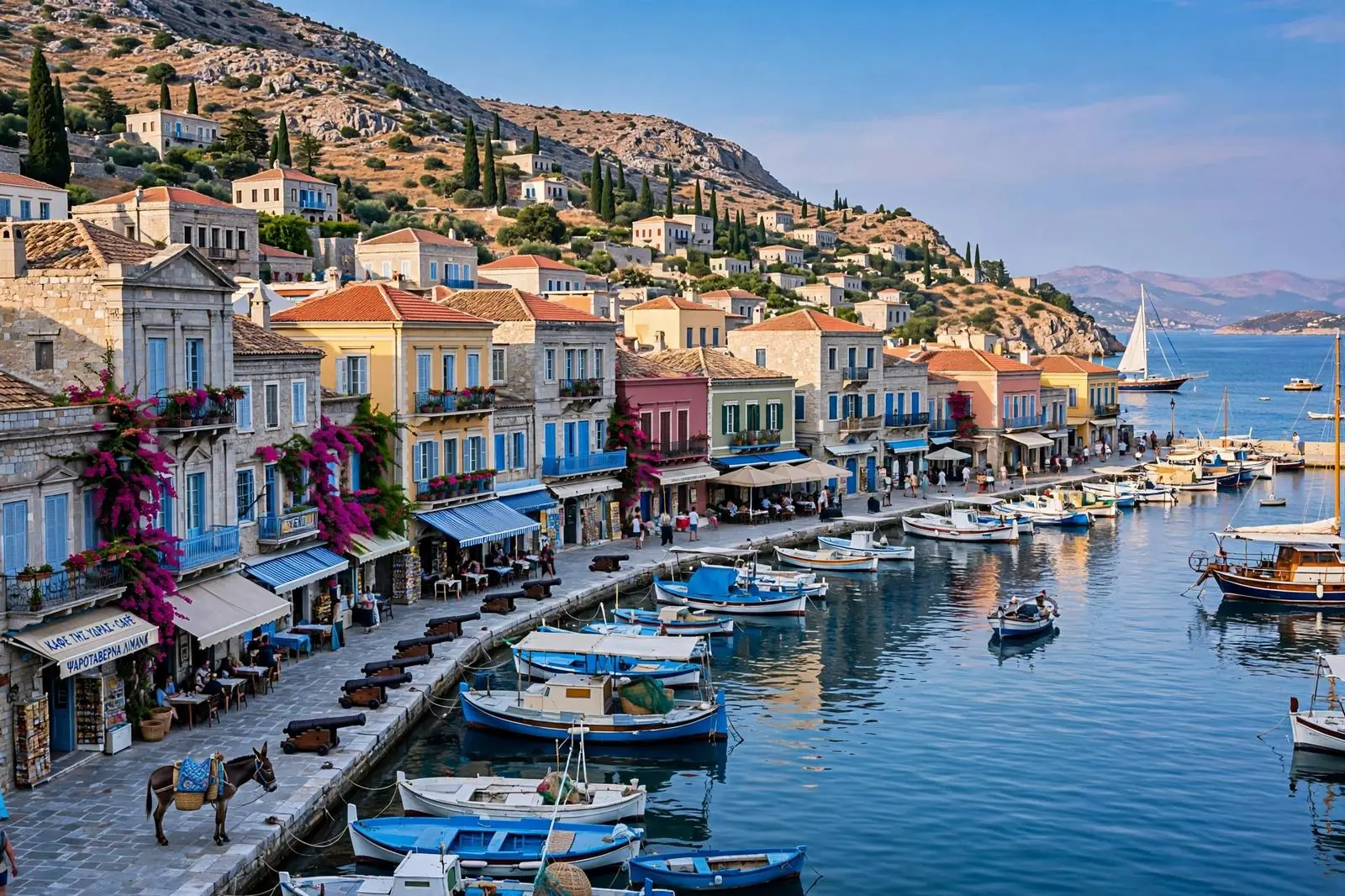
Hydra has banned wheeled traffic entirely. Donkeys carry the luggage, water taxis run the coastline, and everyone walks. An hour and a bit by fast ferry from Athens, this small Saronic island has kept its 18th-century stone mansions, its working harbor, and a creative streak that pulled in Leonard Cohen in 1960. It is the easiest island escape from the Greek capital, and one of the most distinctive.
Key takeaways:
- Ferries run from Piraeus (Gate E8) to Hydra in 65 minutes to 2 hours 20 minutes, costing around €40 each way. Book ahead in summer.
- Hydra works as a day trip from Athens, but staying overnight means you get the harbor after the day-trippers leave.
- Swimming is off rocks and concrete platforms, not big sandy beaches. Mandraki has the only real sand.
- Budget roughly €80 to €120 per day including a mid-range hotel, meals, and a water taxi or two.
Quick comparison: Hydra at a glance
| Topic | The short answer |
|---|---|
| Getting there | Piraeus (Gate E8), 65 min–2h20, ~€40 each way — book ahead in summer |
| Getting around | No cars at all — on foot, by donkey/mule, or water taxi |
| Swimming | Rocks & concrete platforms (Spilia, Hydronetta); the only sand is at Mandraki; Kamini & Vlychos are pebbly |
| Day trip or overnight | Day trip works (5–7 hours); 1–2 nights gets you the harbor before and after the day-trippers |
| Budget | ~€80–120/day mid-range; lunch €15–25, dinner €30–50 |
| Best time | Late Apr–May and late Sep–Oct; July–August is hot, busy and expensive |
How do you get to Hydra from Athens?
Ferries leave from the port of Piraeus, about 15 km south of central Athens. Take metro Line 1 (the green line) to Piraeus station, then walk to Gate E8. The Athens metro site has current schedules. Give yourself an hour before departure in summer; the port gets busy and the gates are spread out.
Four companies run the route, all with reserved seating:
- Hellenic Seaways runs 3 to 6 crossings daily, taking between 1 hour 5 minutes and 2 hours 20 minutes depending on the vessel. Fares start around €42.
- Alpha Lines runs 2 daily crossings at about 1 hour 15 minutes, from around €40.
- Magic Sea Ferries runs 3 to 4 daily, 1 hour 10 minutes to 1 hour 55 minutes, from around €40.
- Blue Star Ferries also serves the route with several daily sailings.
Hydrofoils and fast catamarans make the quickest crossings. The slower ones are still comfortable, just less urgent. All are foot-passenger only. You cannot bring a car to Hydra, which is rather the point.
Book tickets in advance through Ferryhopper, Hellenic Seaways, or Blue Star Ferries, especially for July and August weekends. Same-day tickets exist but the popular morning departures sell out.
What is Hydra actually like?
Hydra Town wraps around a deep natural harbor in a horseshoe. Stone mansions built by wealthy 18th-century shipowners line the waterfront, many now converted into museums, galleries, and hotels. Bougainvillea spills over whitewashed walls. Because the entire town is a protected national monument, new construction is essentially frozen in time.
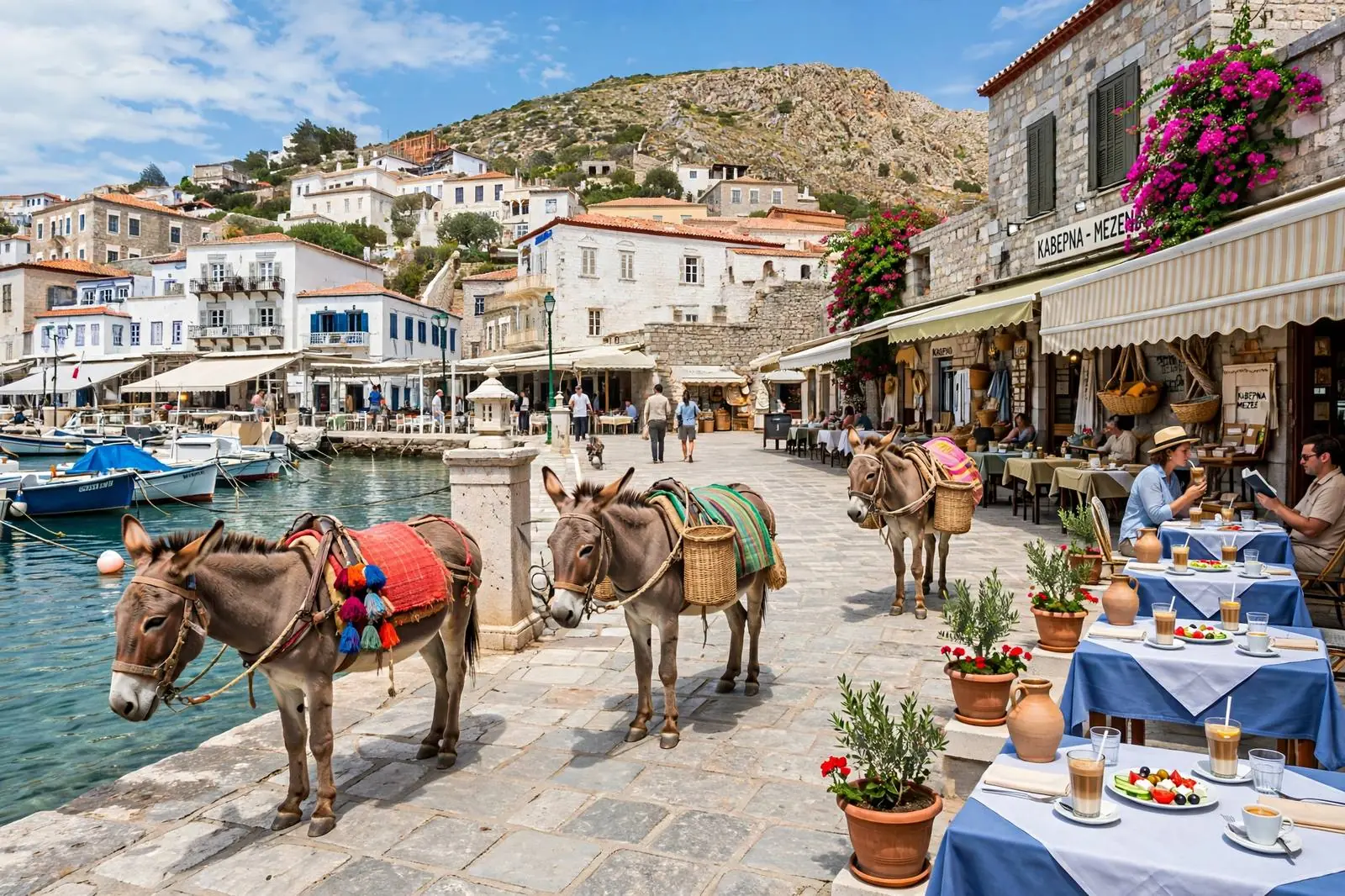
Without engines running, the island sounds completely different. The loudest sounds are donkey hooves on cobblestones, church bells, and water lapping against the quay. Deliveries happen by mule. Even the rubbish collection is done the old way.
Hydra sits somewhere unusual between backpacker stop and luxury retreat: artists and writers still come, wealthy Athenians keep summer houses here, and day-trippers flood the harbor between 10am and 5pm in high season. (See our best time to visit Greece guide for the full seasonal breakdown.) Pick your hours and you can have whichever version you want.
What are the best things to do in Hydra?
Walk the harbor and the back streets
Start with no plan. The harbor promenade runs from the clock tower at one end to the old gunpowder store at the other, lined with cafes, fish tavernas, and shops selling everything from handmade jewelry to overpriced fridge magnets. Then turn uphill into the maze of lanes behind the waterfront. This is where the real Hydra lives: cats on doorsteps, laundry lines, tiny chapels, and views that open up suddenly between houses.
Visit the Historical Archives Museum
Housed in the Koundouriotis mansion on the eastern side of the harbor, this museum covers Hydra's outsized role in the Greek War of Independence. The island's merchant fleet essentially bankrolled the revolution, and the exhibits include original manuscripts, ship models, and portraits of Hydriot admirals. The building itself, with its painted ceilings and harbor views, is worth the entry alone.
Find the Leonard Cohen connection
In 1960, a 26-year-old Leonard Cohen bought a whitewashed stone house on Hydra for $1,500, as documented in multiple biographies and reported by Mansion Global. He lived there on and off for about seven years, writing songs and the novel Beautiful Losers. The house sits on a hill just above the harbor and remains a private residence, so you cannot go inside. You can walk past it.
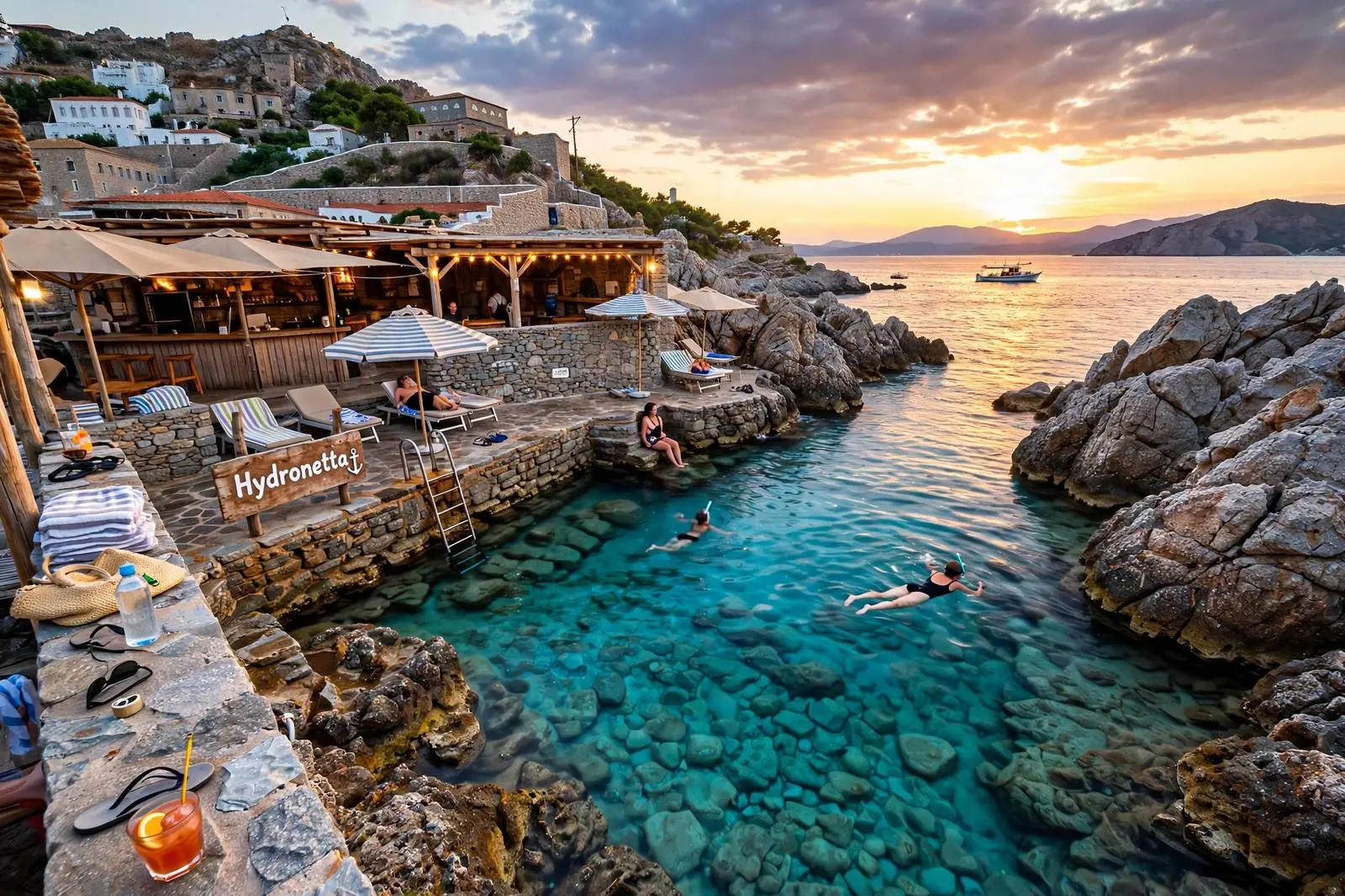
More accessible is the bench at Hydronetta, the cliffside swimming spot west of town. Islanders installed it for Cohen's 80th birthday; he died before that day, and it became his memorial. Sit there at sunset. You will understand why he stayed.
Down the road from the house, the former home and studio of painter Panagiotis Tetsis is open to the public as a small museum. Entry is granted with a ticket from the Koundouriotis mansion, so pair the two.
Hike to the Monastery of Profitis Ilias
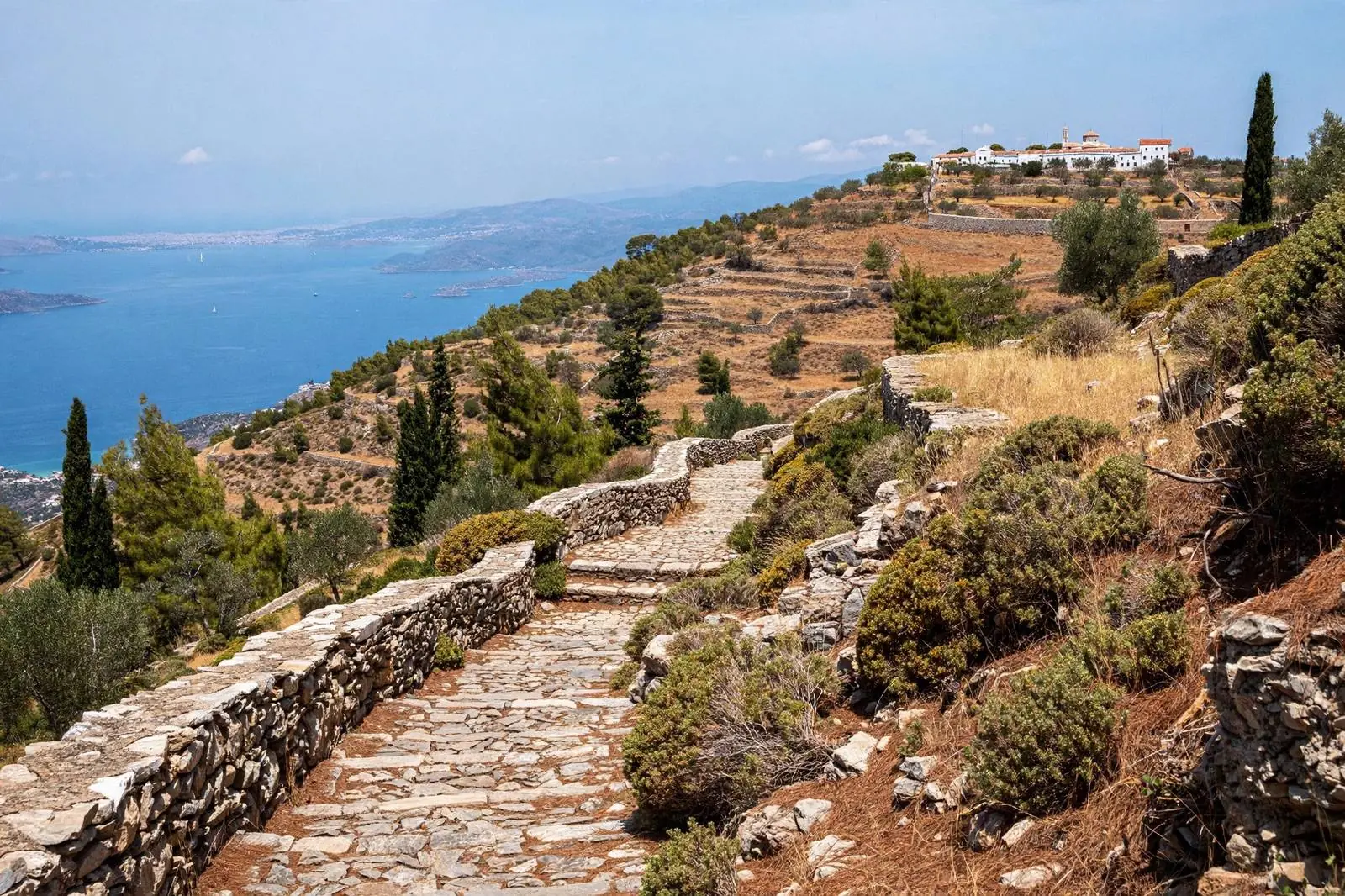
Mount Eros rises 600 meters above the island, the highest point on Hydra. The trail up passes through pine forest, past windmill ruins and small churches, to the Monastery of Prophet Elias near the summit. Allow 2 to 3 hours round trip from Hydra Town. Go early morning in summer; there is almost no shade on the upper sections and the heat builds fast.
Remember this is a working monastery, so dress respectfully and keep your voice down. Up there you get sweeping views over the Saronic Gulf and across to the Peloponnese.
See contemporary art at the DESTE Slaughterhouse
Greek collector Dakis Joannou opened this project space in 2009 in a former slaughterhouse on the waterfront east of town. Each summer it hosts a site-specific exhibition by a major contemporary artist. Check the DESTE Foundation program for what is on. Past shows have included Kiki Smith and Urs Fischer. A permanent Jeff Koons wind sculpture spins outside. Check what is on before you go; the summer program is the draw.
Take a water taxi to the far beaches
Hydra's coastline is best explored by water taxi. Boats leave from the harbor and run on loose schedules to beaches around the island. Agios Nikolaos and Bisti, on the western side, are the prettiest coves, with clear water and tavernas ashore. Agree on a pickup time with the driver or you may wait a while for the return.
Where can you swim on Hydra?
Set your expectations before you go. If you want long sandy beaches, Hydra will disappoint you. Most swimming is off rocks, concrete platforms with ladders, or pebbly coves. The water is exceptionally clear, which compensates for a lot.
- Spilia sits just below the old bastions east of the harbor. Swim off the rocks, then climb back up for a drink at the bar above. Closest proper swim to town.
- Hydronetta is a 15-minute walk west along the coastal path. Concrete platforms, deep clear water, the Cohen bench above. Good for confident swimmers.
- Kamini, about 2 km west, is a small fishing hamlet with a pebbly beach and tavernas. Walkable in 30 minutes or a short water taxi ride. Families like it here.
- Vlychos, just past Kamini, is similar: pebbles, calm water, a couple of beach tavernas.
- Mandraki, 20 minutes east of town, has the island's only sandy beach. There is a hotel here and it gets busy, but if sand matters to you, this is where it is.
Water shoes help on the pebbly beaches. You can manage the concrete platforms barefoot without any trouble.
Where should you stay on Hydra?
Hydra has no big resorts. Accommodation runs from simple guesthouses to restored captain's mansions. Book well ahead for Easter, the Miaoulia Festival in late June, and August.
Budget: Mistral Hotel. A straightforward 3-star in Hydra Town, rooms from around €100 per night in season. Clean, central, no frills. Fine if you plan to spend your days outside.
Mid-range: Bratsera Hotel. A 4-star set in a converted 19th-century sponge factory, with 25 rooms around a courtyard garden and pool. Made-to-order breakfast. From around €140 per night. On a hot island with no sandy beaches near town, having a pool matters more than you would expect.
Mid-range: Orloff Boutique Hotel. Eight rooms in a mansion built in 1796 by a Russian count who came to help the Greeks fight for independence. Walled garden with lemon trees, famous breakfast. From around €109 per night. Book early; eight rooms go fast.
Luxury: Mandraki Beach Resort. Adults-only, right on Mandraki beach east of town. Suites with sea views, beach yoga, cooked-to-order breakfast. Around €450 per night in season. The splurge option, and the only place on the island that feels like a resort.
Luxury alternative: Four Seasons Hydra Luxury Suites at Plakes Vlychou, with a private sandy beach. Small by Four Seasons standards, which on Hydra means intimate rather than underwhelming.
Where should you eat on Hydra?
Dozens of restaurants line the harbor, and price is no guarantee of quality. A few reliable picks:
- Omilos, perched over the water near Spilia, serves fresh seafood and elevated Greek classics with a view straight down to the swimmers below. Good for a long lunch.
- Enalion, at Vlychos beach, does the beach-taverna thing well: grilled fish, Greek salads, shade from acacia trees.
- For traditional cooking away from the waterfront prices, walk five minutes uphill into the back streets. The tavernas here serve the same moussaka and grilled octopus for noticeably less, and you will eat next to locals instead of day-trippers.
Eating out here costs more than on most Greek islands. Budget €15 to €25 for a taverna lunch, €30 to €50 for dinner with wine at a harborfront restaurant.
When is the best time to visit Hydra?
Late April through May and late September through October are the sweet spot: warm enough to swim, quiet enough to enjoy it. The island wakes up for Greek Easter, which is a big deal here, and stays lively through summer.
June brings the Miaoulia Festival, Hydra's biggest celebration, running from the second week of the month to the end. Expect crowds, music, and a naval reenactment in the harbor. Book accommodation months ahead if you want to be here for it.
July and August are hot, busy, and expensive. Day-trippers arrive on every ferry. If you come then, stay overnight: the island transforms after 5pm when the last boats leave.
November through March is very quiet. Many restaurants and hotels close. Ferries still run but less frequently. Fine for writers seeking solitude, less good for a holiday.
How long should you stay?
Hydra works as a day trip from Athens. Catch an early ferry, spend five or six hours, return in the evening. You will see the harbor, swim, eat lunch, and get the flavor.
But the flavor is not the meal. Staying one or two nights means you get the harbor at 8am before the boats arrive and at 10pm when the tavernas fill with people who actually live here. It changes the whole experience. If your Athens schedule allows it, stay over.
Practical tips
- There are no ATMs issues in town, but carry some cash for water taxis and small tavernas.
- Donkeys and mules carry luggage from the port to hotels. Agree on the price first; it is usually a few euros.
- Pharmacies, a medical center, and small supermarkets cover the basics.
- Sunscreen and a hat are non-negotiable in summer. The stone reflects heat and shade is scarce on the coastal paths.
- If you hike, bring more water than you think you need.
Frequently Asked Questions
Can you do Hydra as a day trip from Athens?
Yes. Ferries take 65 minutes to 2 hours 20 minutes each way from Piraeus, and the first departures leave around 8am. You get five to seven hours on the island, which is enough for the harbor, a swim, lunch, and a short walk. Book the earliest outbound and a late return.
Are there really no cars on Hydra?
Correct. Motor vehicles are banned outright. Everyone gets around on foot, by donkey or mule, or by water taxi. Even rubbish collection runs on mule carts. Only emergency vehicles are exempt.
How much does the ferry to Hydra cost?
Around €40 each way in 2026, depending on the company and vessel. The fastest hydrofoils cost slightly more. Book in advance in summer; walk-up tickets on popular departures sell out.
What is the best beach on Hydra?
It depends what you want. Mandraki has the only sand. Kamini and Vlychos are the best pebbly beaches near town. Spilia and Hydronetta are rock platforms for confident swimmers. Agios Nikolaos and Bisti, reached by water taxi, are the prettiest coves.
Can you visit Leonard Cohen's house?
You can walk past it, but it is a private residence and not open to visitors. The memorial bench at Hydronetta is publicly accessible and a better spot to sit with his music anyway.
Is Hydra expensive?
More than most Greek islands. Mid-range hotels run €100 to €150 per night in season, harborfront dinners €30 to €50 per person with wine, and the ferry alone is €80 return. Budget €80 to €120 per day for a comfortable trip, more if you stay at the high end.
The bottom line
Hydra earns its reputation. The car-free streets, the harbor that has barely changed in two centuries, the clarity of the water, and yes, the Cohen mythology all add up to something genuinely different from every other Greek island. Go in shoulder season, stay at least one night, walk everywhere, and swim off the rocks. That is the island at its best.