
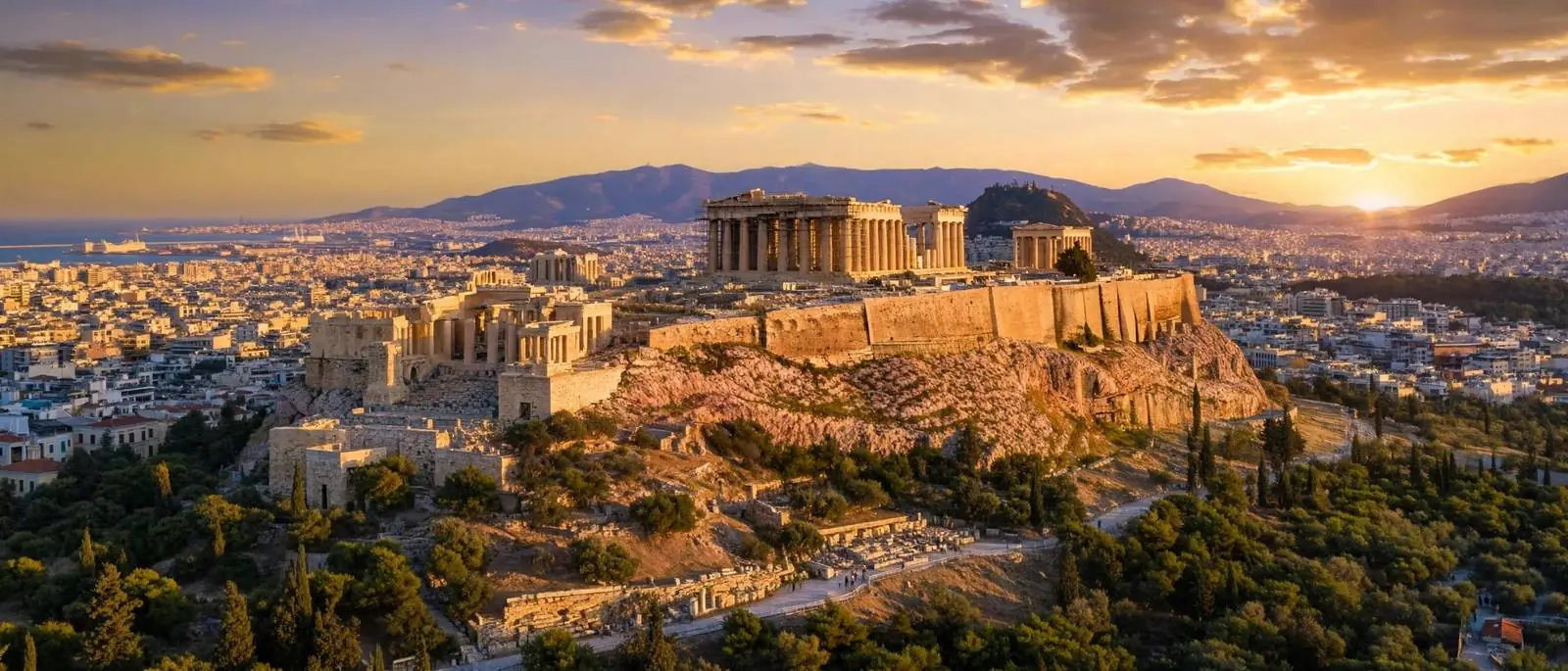
How long do you need in Athens? Three days. One day means sprinting up the Acropolis and leaving with the nagging feeling the city deserved better. A full week and the ruins start blurring together. Three days is the sweet spot: the essential ancient sites, the neighborhoods worth your evenings, plus room for either a sunset trip to the Temple of Poseidon or a slower museum day.
What follows is built for a first-timer who wants the highlights without the classic mistakes. Wrong ticket. Wrong entrance. Showing up at noon in August. Every price and schedule below is current for 2026.
Key takeaways:
- Book the Acropolis (€30) online at etickets.tap.gr with a timed slot, morning slots sell out days ahead in summer
- The old €30 combo ticket for 7 sites was discontinued in April 2025; buy separate tickets or a third-party combo
- Athens is a walking city. The metro costs €1.20 per 90 minutes and covers everything else
- Day 3 works well as either a Sounion sunset trip or a slow museum + neighborhood day, pick based on the season
Day 1: The Acropolis and the Old Town
Start at the Acropolis. Not because it's the obvious choice, because the logistics demand it.
Since April 2024, the Acropolis uses mandatory timed entry with a daily cap of 20,000 visitors. The 8:00 and 8:30 slots sell out first, and for good reason: the rock has zero shade, and by midday in summer the marble reflects enough heat to make the climb genuinely unpleasant.
Book the earliest slot you can get at etickets.tap.gr, the official Greek government portal. A standard ticket costs €30 year-round (€15 reduced for students and seniors; EU citizens under 25 enter free)..
Your ticket is valid from 15 minutes before to 15 minutes after your slot, so plan to arrive at the entrance 30 minutes early.
There are two entrances. The main west entrance near Theorias Street is the famous one but also the busiest.
The South Slope entrance, closer to the Akropoli metro station, puts you at the Theatre of Dionysus first and usually has shorter lines. Use it.
Plan on two to three hours up there. The Parthenon dominates, but the Erechtheion's porch of the Caryatids and the small Temple of Athena Nike reward close attention.
Note that parts of the Parthenon are under ongoing restoration with scaffolding as of 2026. It's still spectacular, just know before you go.
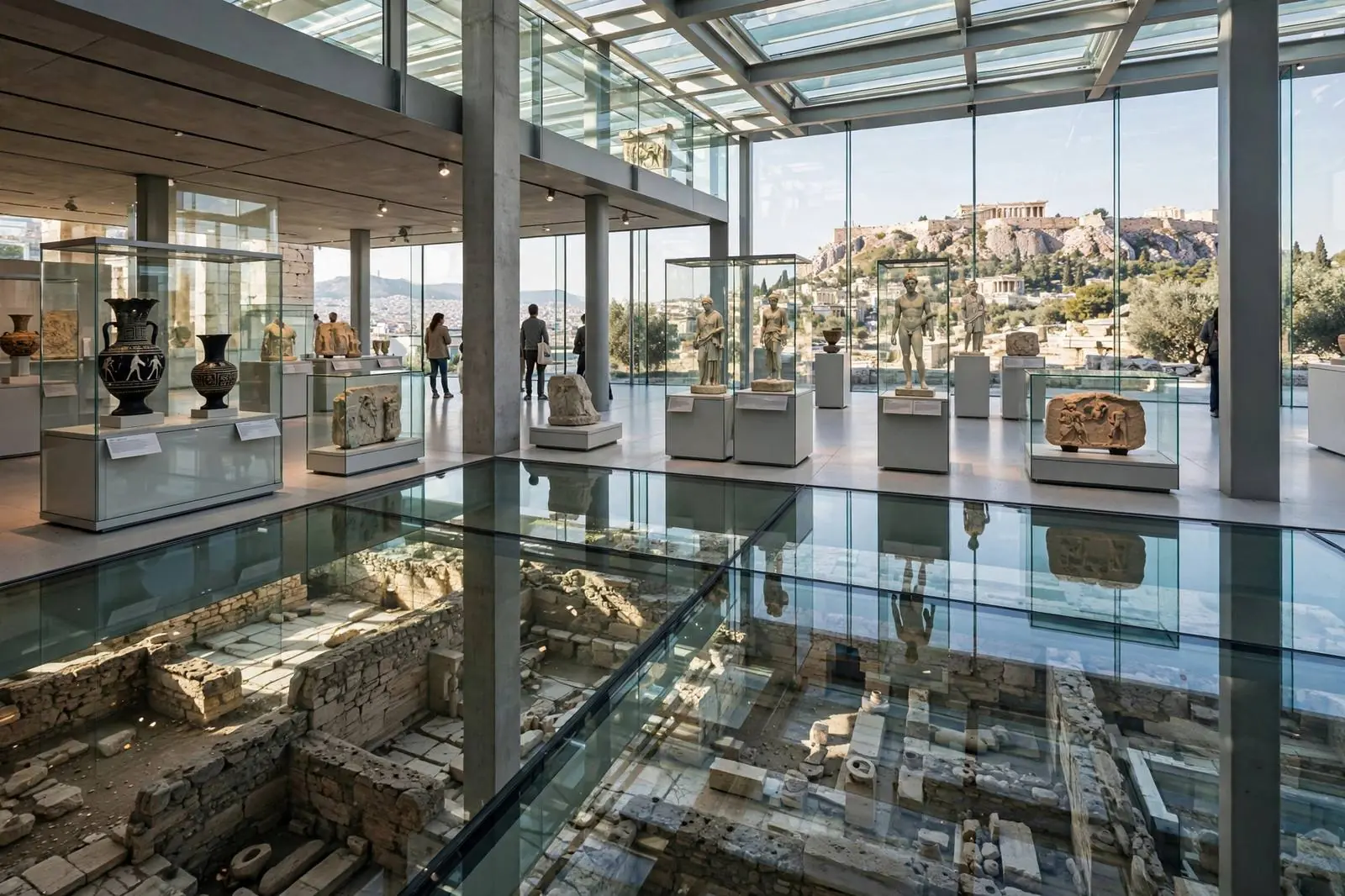
Come down the South Slope and walk straight into the Acropolis Museum. Two minutes from the exit, you can't miss it.
Don't skip this one. It's among the finest museums in Europe, built specifically to hold what was found on the rock above. The glass top floor aligns with the Parthenon's actual orientation, which is a lovely architectural touch.
General admission is €20 (€10 reduced), and it's a separate ticket from the site, the museum never shared the Acropolis ticket. Summer hours run 8:00 to 20:00, and the museum's air conditioning is exactly what you'll want at midday.
From the museum, walk into Plaka. This is the postcard Athens, neoclassical houses, narrow lanes, tavernas spilling onto steps. It's touristy and everyone knows it, but the streets between the museum and Monastiraki are genuinely lovely in the late afternoon.
If you wander uphill into Anafiotika, the tiny whitewashed quarter under the Acropolis's north slope, you'll find cats, bougainvillea, and almost no crowds. It feels like an island village dropped into the city because, in a sense, it was: 19th-century builders from Anafi island settled here and built homes in their own style.
Finish the day in Monastiraki. The square, the flea market stalls on Ifestou Street, the view of the Acropolis lit up above the rooftops, this is Athens's living room.
For dinner, skip the rooftop places with Acropolis views right on the square (you're paying for the view, not the food) and walk five minutes into Psiri, where the tavernas are cheaper and the grills are better.
Day 2: Museums, Neighborhoods, and Sunset
Slept well? Good, because day two covers a lot of ground.
Kick off day two at the National Archaeological Museum, which houses the most important collection of Greek antiquities in the world, the gold Mask of Agamemnon, the Antikythera mechanism, the bronze Poseidon of Artemision.
Admission is €20 from 2026 (up from €12, after a renovation pricing change). Doors open at 8:30 most days. Two hours minimum here, the Mycenaean gold alone justifies the trip.
A word on museum strategy: the Acropolis Museum covers the Acropolis; the Archaeological Museum covers everything else. You don't need both on the same day, and doing them back-to-back causes artifact fatigue.
Day 1's museum and Day 2's museum are different enough, classical sculpture versus the full sweep of Greek civilization, that the pairing works.
After the museum, head south into Exarchia. This is the student and anarchist quarter. The street art is the best in Athens, the bookshops are excellent, and the cafes on Plateia Exarchion are cheap.
It's grittier than the tourist center and that's the point, this is where the city actually argues with itself. If Exarchia feels too rough for your taste, Kolonaki is the alternative: upscale, leafy, with good lunch spots on the slopes below Lycabettus.
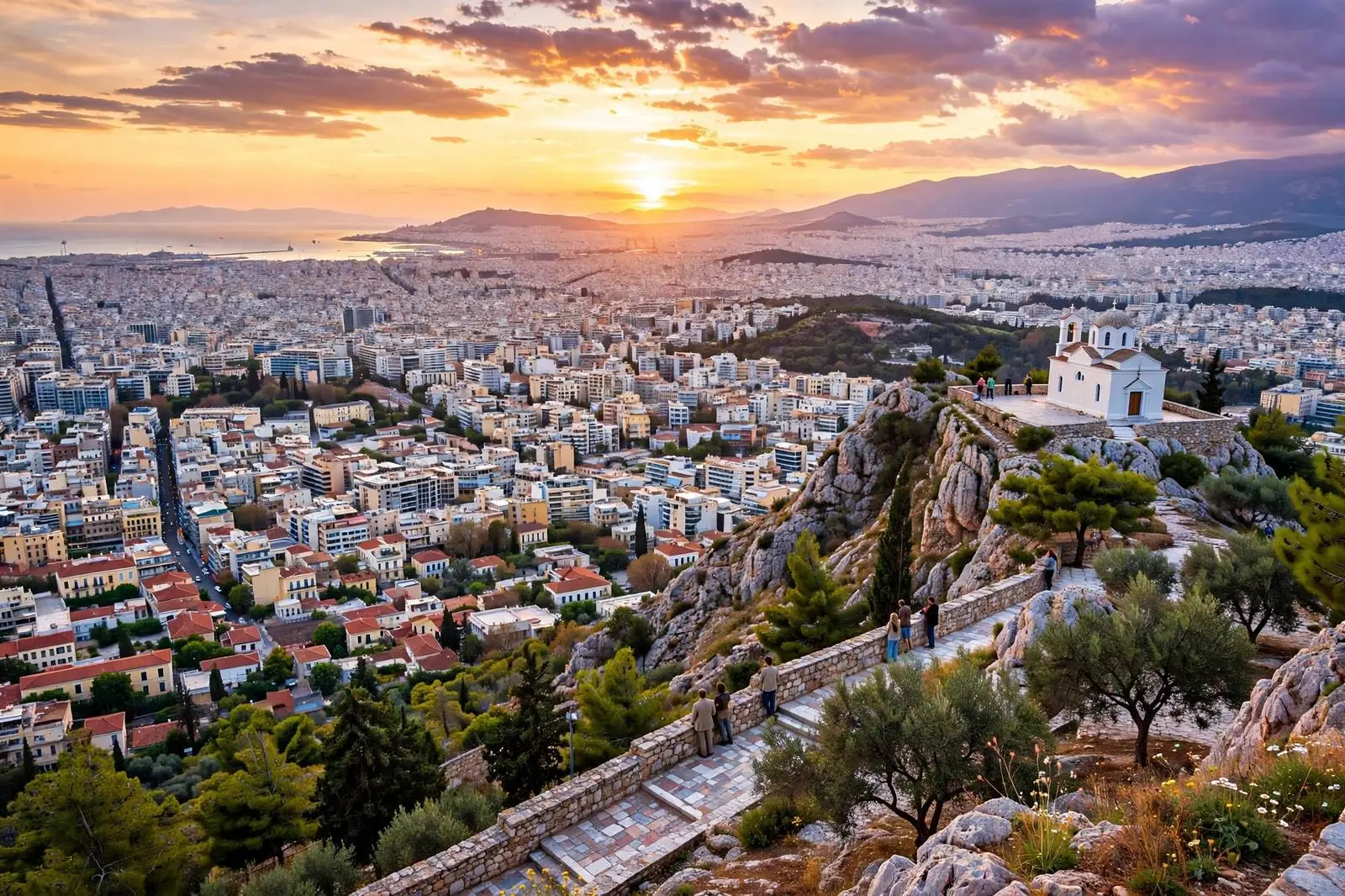
Mid-afternoon, head up Mount Lycabettus for sunset. At 277 meters, it's the highest point in central Athens, and the view runs from the Acropolis to Piraeus to the Aegean.
You can hike it in about 30 minutes from the Kolonaki side (moderate, well-paved path through pine forest) or take the funicular from Aristippou Street, €10 one way, €13 round trip, running through a tunnel so there's no view on the ride itself..
Walk up and ride down if your knees allow it. The hilltop chapel of St. George and the restaurant terrace make the summit worth lingering on.
Come evening, head back down to Psiri. Or try Koukaki, the residential neighborhood below the Acropolis Museum that's become the city's top food street.
The meze places on Veikou Street and around Drakou are where Athenians actually eat, order whatever the table next to you is having.
Day 3: Choose Your Ending
Last day. No wrong answer here.
You have two good options for the third day, and the right choice depends on the season and your energy.
Option A: Temple of Poseidon at Sounion.
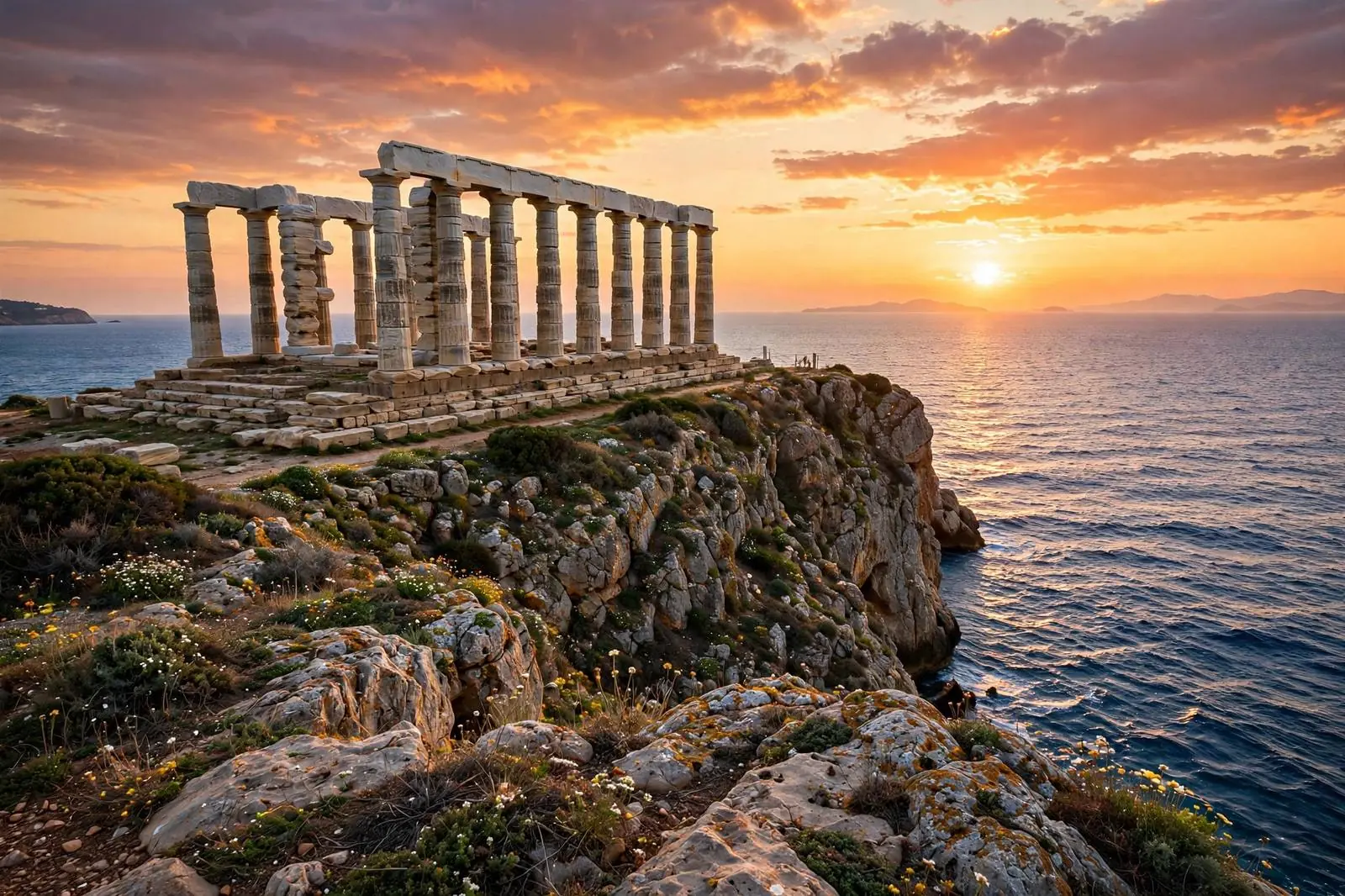
Cape Sounion sits at the southern tip of Attica, about 70 km from Athens, where the 5th-century BC Temple of Poseidon stands on cliffs above the Aegean. Byron carved his name into one of the columns (you can still see it). The sunset from the temple is one of the great Mediterranean experiences.
The KTEL Attikis buses run from Pedion tou Areos terminal, taking 1.5 to 2 hours along the scenic coastal road. Expect around €7 each way.
Half-day organized sunset tours run €50-80 per person with hotel pickup, worth considering if you don't want to navigate the bus schedule for the return. Temple admission is €10 from April to October, €5 from November to March.
Get there two hours before sunset if you can. Explore the site in the golden light. Find a good spot. Then watch the columns go from white to amber to silhouette.
The whole trip takes 4-5 hours door to door. A 3:00 or 4:00 pm departure works in most seasons.
Option B: Slow Athens.
If Sounion doesn't appeal, or it's winter and the sunset timing is awkward, spend day three going deeper into the city.
Morning: the Benaki Museum of Greek Culture (€12), which traces Greek art from antiquity to the 20th century in a beautiful neoclassical mansion. It's the museum Athenians recommend to each other, and it's calmer than the big two.
Midday: the National Garden behind Syntagma, a 15-hectare refuge of palms and ponds in the middle of the city. Walk through to the Zappeion and the Panathenaic Stadium, the marble stadium that hosted the first modern Olympics in 1896. Entry is around €5, and standing in the all-marble bowl is quietly thrilling.
Afternoon: Varvakios Market on Athinas Street, Athens's central food market. The meat and fish halls are intense; the surrounding streets sell spices, olives, and cheese at local prices. Then coffee in Monastiraki and a last wander through Plaka with no agenda.
Evening: book a rooftop dinner. After two days of eating well at street level, one sunset meal with the floodlit Acropolis in front of you is worth the splurge. The rooftop at the Acropolis Museum restaurant or any of the Koukaki rooftops delivers.
Where to Stay
Three neighborhoods, three budgets:
- Plaka / Koukaki, Ideal for first-timers. You're walking distance to everything on Day 1, and Koukaki has the greatest-value restaurants. Mid-range hotels and good Airbnbs. Some streets get noisy at night, that's the tradeoff.
- Syntagma, Ideal for transport. The metro hub connects to the airport (line 3, €10) and everywhere else. More business hotels, less charm, but supremely practical.
- Psiri, Ideal for nightlife. Lively, central, slightly edgy. Great if you plan to eat late and drink later. Can be loud on weekends.
Getting Around
Athens rewards walking. The historic center, Acropolis, Plaka, Monastiraki, Psiri, Syntagma, is compact enough that you'll rarely need transport between sights.
When you do, the metro is clean, fast, and cheap: €1.20 for a 90-minute integrated ticket covering metro, bus, and tram. A 24-hour ticket costs €4.10. Buy from machines at any station (English available). Note the airport metro is a separate €10 ticket.
Taxis are plentiful and metered, but traffic in the center can make a 10-minute walk faster than a 20-minute ride. For the airport, the X95 express bus (€6) runs 24 hours from Syntagma; the metro (€10) takes about 40 minutes.
The Ticket Situation in 2026
This is the part that trips people up, so here's the full picture.
The old official combo ticket, €30, five days, seven archaeological sites, was discontinued in April 2025. Multiple guidebooks still reference it; ignore them. Each site now sells its own ticket:
| Site | 2026 price |
|---|---|
| Acropolis | €30 |
| Ancient Agora | €20 |
| Temple of Olympian Zeus | €20 |
| Roman Agora | €10 |
| Hadrian's Library | €10 |
| Kerameikos | €10 |
| Aristotle's Lyceum | €5 |
If you're following this itinerary, you'll realistically visit the Acropolis (€30) plus maybe the Ancient Agora (€20) on Day 1. That's €50, the per-site tickets are fine. Third-party combo passes are still sold through GetYourGuide and similar platforms if you want to bundle, but check what's actually included before buying.
The Acropolis Museum (€20) and National Archaeological Museum (€20) are separate institutions with separate tickets. Budget €90-100 total for the major paid sights across three days.
Frequently Asked Questions
When is the ideal time to visit Athens?
April-May and late September-October are the sweet spots: warm enough for evening dinners outside, cool enough for the Acropolis climb, and the cruise-ship crowds are thinner. Summer (June-August) brings 35°C+ heat, the Acropolis can close for midday hours during heatwaves, but also the longest days and the liveliest rooftop scene. Winter is mild (10-15°C), cheap, and crowd-free, though some smaller sites have shorter hours.
Is 3 days enough for Athens?
Yes, for the essentials. You'll see the Acropolis properly, visit two world-class museums, eat well in three neighborhoods, and fit in either Sounion or a slow city day. What you won't do is the islands, save those for a separate trip. Anyone telling you Athens is a one-day stopover is rushing it.
Should I buy Acropolis tickets in advance?
Absolutely, from April through October. Timed entry is mandatory and the morning slots sell out days ahead. Book at etickets.tap.gr, the official portal, resellers charge more for the same ticket. In winter you can often buy on the day, but booking ahead costs nothing extra.
What's the best area to stay in Athens?
Plaka or Koukaki for first-timers, walkable to the Acropolis and the top food streets. Syntagma if you prioritize metro access. Psiri if nightlife matters more than quiet. Avoid staying near Omonia; it's central but rough at night.
Is the Sounion day trip worth it?
If you like sunsets and dramatic ruins, yes, the Temple of Poseidon at golden hour is genuinely special. If you'd rather spend the time in the city, the Benaki Museum + National Garden + stadium combination is equally rewarding. Don't do Sounion as a rushed morning trip; the whole point is the late-afternoon light.
How much should I budget per day in Athens?
A comfortable mid-range day runs €80-120: €30-50 for sights (averaged across three days), €10 for transport, €30-50 for food and drink. Budget travelers can manage on €50-60 by eating at tavernas, walking everywhere, and picking one paid sight per day. A simple gyro costs €3-4; a proper taverna dinner with wine runs €20-30 per person.
Can I do Athens in 2 days instead?
You can, but you'll sacrifice either the second museum or the day-three choice. The standard compression: Day 1 as above, Day 2 combining the Archaeological Museum morning with Lycabettus sunset, skipping Sounion. It works, but the pace is noticeably faster and you'll feel it by evening.
The Bottom Line
Three days in Athens gives you the Acropolis without the rush, two museums without the fatigue, and one day that's entirely yours to shape.
Book the Acropolis slot early, eat where the Athenians eat, and don't try to add an island, that's a different trip. Athens rewards the traveler who slows down enough to notice it's a living city, not an open-air museum.