
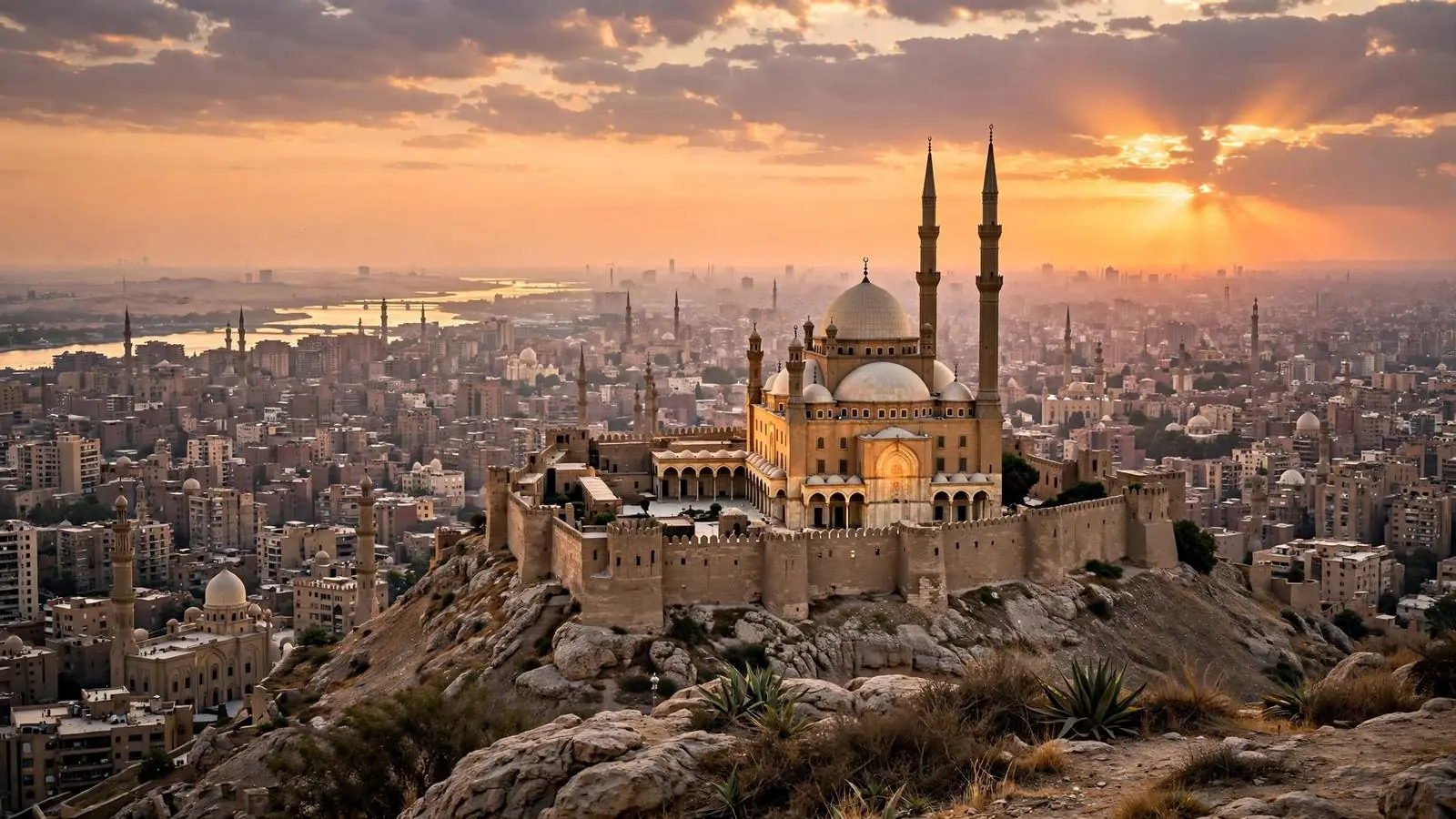
- October to April is Cairo's sightseeing window; November to February has the most comfortable weather (20–26°C days, cool nights).
- May to September hits 35–39°C with relentless sun. It's the cheapest time to visit, but outdoor sites like Giza become an endurance sport.
- March to May brings the khamaseen: hot desert winds that can bury a day in sand and push temperatures past 40°C. Keep Giza flexible in spring.
- Ramadan in 2026 is expected around February 18–March 20. It's atmospheric and worth experiencing, but plan daytime meals and earlier site visits.
- The Cairo International Film Festival's 47th edition runs November 11–20, 2026, and Christmas–New Year is the year's most expensive stretch.
Cairo is a desert city, and desert cities have a simple rule: the sun is the schedule. Get the month wrong here and the pyramids go from awe-inspiring to an endurance test. Get it right and you'll walk the Giza plateau in a light shirt while everyone back home is scraping ice off their cars.
On the plus side, Cairo is cheap and fascinating year-round. The bad news is that the difference between the best and worst months is about 20 degrees and a lot of sweat. Here's the honest breakdown.
October to February: the prime window
This is when Cairo earns its reputation. Daytime highs run from about 30°C in October down to 19–21°C in December and January, with nights cooling to 8–10°C in midwinter. Rain is almost a rumor: Cairo gets roughly 5mm in January and nothing at all from May through October. The light is soft, the air is clear, and the Giza plateau is walkable at any hour.
Winter nights catch people off guard. A January evening in Cairo can feel genuinely cold at 8°C, especially in unheated stone buildings and hotel rooms with thin blankets. Pack a proper jacket, not just a hoodie. Daytime, though, is glorious: 20°C, blue sky, and sites at their most pleasant.
This is also peak season, and the pricing reflects it. Christmas and New Year is the year's most expensive stretch: European winter-sun travelers and holiday visitors push hotel rates to their annual high, and the best Nile-view rooms in Zamalek and Downtown book out weeks ahead. November and early December (outside the holidays) and January–February after the holidays give you the weather without the worst of the pricing.
The Cairo International Film Festival lands in this window too. The 47th edition runs November 11–20, 2026 at the Cairo Opera House and venues around Downtown, drawing tens of thousands of visitors and giving the city a genuine cultural buzz. If you're a film person, it's worth building around; if you're not, just know Downtown is livelier (and its hotels pricier) that week.
Practical edge of winter travel: shorter days. You get about 10 hours of daylight in December versus 14 in June, so plan your site days accordingly and start at the 8 AM opening.
March and April: spring, with an asterisk
Spring looks great on paper. March averages about 25°C by day and 13°C by night; April warms to roughly 29°C. Crowds thin out after the winter peak, prices soften, and the city feels less rushed. If weather statistics were the whole story, this would be the best season.
Spring has one real problem, though: the khamaseen (also spelled khamsin), the hot desert wind that blows from March to May. When it comes, it brings fine sand with it: visibility drops, the air turns hazy, and temperatures can spike past 40°C for a day.
Severe episodes can effectively knock out a day of sightseeing; a well-known 2020 storm cut visibility to around 200 meters and disrupted transport. Most khamaseen days are shorter and milder than that, but the risk is real, and it's the one weather event in Cairo that can ruin a tightly planned itinerary.
Getting around it is simple: keep your Giza and Saqqara days flexible in spring, and schedule the must-see outdoor sites early in your trip so you have buffer days. Museum days (the Grand Egyptian Museum, the Egyptian Museum in Tahrir, Coptic Cairo's churches) are immune to sandstorms.
Ramadan in 2026 is expected around February 18–March 20 (Egypt's religious authorities confirm the exact start by moon sighting the night before, so treat these as planning dates, not certainties). If your trip falls in Ramadan, the city is magical after dark: lanterns, packed iftar tents, and a nightlife that runs until dawn.
Daytime is quieter: some sites close earlier, many restaurants open only in the evening, and you should avoid eating or drinking conspicuously in public during fasting hours out of basic respect. Plan your daytime meals and hydrate before heading out.
Then there's Sham El Nessim, Egypt's ancient spring festival, celebrated on the Monday after Coptic Easter (April 13 in 2026). Families picnic in parks and along the Nile eating feseekh (salted fish) and colored eggs. It's a lovely local spectacle, and parks get crowded.
May to September: the furnace (and the bargains)
Summer in Cairo is not a variation on heat; it's a commitment. June averages about 36°C by day and 24°C by night; July and August sit at 36–39°C with nights around 22–25°C that never really cool. Humidity is low, which helps, but the sun is relentless: 11–12 hours of daily sunshine and UV index at its annual maximum. There is no rain. None. Zero millimeters for months.
This is the cheapest time to visit Egypt. Hotels drop to their lowest rates of the year, tour prices soften, and you'll have the sites nearly to yourself at the edges of the day. Cairo is also at its most local in summer: the tourist-facing hassle around Giza thins out with the crowds.
But be honest about what you're signing up for. The Giza plateau at 2 PM in August is genuinely punishing: no shade, reflected heat off the stone, and the walk between the pyramids feeling twice as long. The workable rhythm is the desert split: outdoor sites 7–11 AM (be at the gate for opening), air-conditioned museums and long lunches noon–5 PM, and the city again after sunset, when Cairo's street life finally exhales.
Nights stay warm enough that you'll want air conditioning to sleep. Confirm your hotel's AC actually works before you book; "AC" on a listing and cold air in the room are not always the same thing in budget properties.
If you visit in summer, pair Cairo with the Red Sea (Hurghada, Sharm el-Sheikh): the same heat, but with water. Cairo alone in August is for the heat-tolerant and the bargain-hunting.
The shoulder months: October and late April
October deserves its own mention. At roughly 30°C days and 18°C nights, with zero rain and summer's crowds gone, it's the consensus sweet spot among repeat visitors. Hotel prices haven't hit winter-peak levels yet, the film festival hasn't started, and the Nile cruises and Red Sea combos are all running normally. If you want one month with the fewest compromises, October is it.

Late April and May sit between spring's sandstorm risk and summer's heat: warming days (32–35°C by May), low prices, and thinning crowds. May is the budget traveler's gamble: noticeably cheaper than October, noticeably hotter. Fine if you adopt the split-day rhythm; rough if you try to power through midday.
Month-by-month temperatures
Average daytime highs and nighttime lows in Cairo (long-run climate averages, °C):
| Month | High | Low |
|---|---|---|
| Jan | 19 | 8 |
| Feb | 21 | 9 |
| Mar | 25 | 11 |
| Apr | 29 | 14 |
| May | 33 | 17 |
| Jun | 36 | 20 |
| Jul | 37 | 21 |
| Aug | 37 | 22 |
| Sep | 35 | 20 |
| Oct | 30 | 18 |
| Nov | 26 | 14 |
| Dec | 21 | 10 |
Rainfall is negligible all year (about 5mm in January, zero from May through October). The khamaseen wind season runs March–May.
Methodology: how we built this guide
We combined long-run Cairo climate averages, the 2026 Islamic calendar estimates for Ramadan and Eid (dates confirmed by moon sighting, so treat them as planning dates), verified 2026 event dates, and mid-range travel budget data. Recommendations balance heat comfort against crowd levels and cost, not temperature alone.
Best time for what: a quick reference
Sightseeing (pyramids, museums, Islamic Cairo): October to February. November and February are the two best single months: great weather, past or before the holiday price spike.
Budget travel: May to September, with May and September as the tolerable edges. Expect 35–39°C and plan split days.
Beach combo (Red Sea): The Red Sea is swimmable year-round, but pairs best with Cairo in October–April, when both ends of the trip are comfortable.
Festivals and culture: November for the Cairo International Film Festival (November 11–20, 2026); Ramadan (expected February 18–March 20, 2026) for the city's most atmospheric month; Sham El Nessim (April 13, 2026) for the spring picnic tradition.
Avoiding crowds: May–September everywhere except the holiday weeks; late January–February for winter weather without Christmas pricing.
Nile cruise + Cairo combos: October to April is the cruise high season. In summer, boats run but the Upper Egypt heat (Luxor and Aswan run even hotter than Cairo) is brutal; the famous Abu Simbel sun festivals on February 22 and October 22 fall squarely in the good window.
The worst times, honestly
July and August are the hardest months: 36–39°C days, hot nights, and a city that slows to a crawl at midday. They're survivable with the split-day strategy and they're cheap, but don't pretend it's comfortable.
March to May carries the khamaseen gamble. You might get a perfect 26°C week; you might lose a day to sand. Spring visitors should build in buffer days and keep outdoor plans movable.
The Eid holidays (Eid al-Fitr around March 20–21, 2026, at Ramadan's end) bring domestic travel surges: crowded sites, fuller hotels, higher prices for a few days. Fine to be in Cairo for, but book ahead and expect the pyramids at their busiest.
Practical tips for timing your Cairo trip
Winter nights are cold. January nights average 8°C. Cairo's buildings aren't insulated for it. Bring a real jacket and check that your hotel has heating or at least heavy blankets.
The sun dictates the day, year-round. Even in winter, midday at Giza is strong. In summer, the 7–11 AM / after-5 PM split isn't advice, it's the only way.
Ramadan moves every year. The 2026 dates here (expected February 18–March 20) are astronomical estimates; Egypt's Dar al-Ifta confirms by moon sighting. Check Experience Egypt, the official tourism portal, before finalizing plans.
Book Christmas–New Year early. It's the one period when Cairo's good hotels genuinely sell out. Two to three months ahead is the safe minimum.
A realistic mid-range budget is $90–160 per person per day (decent hotel, restaurant meals, Uber everywhere, site entries). Summer can push that lower; the Christmas fortnight pushes it higher.
Climate figures above are long-run averages via Climate-Data.org and Weather2Travel; Ramadan 2026 estimates via Wego's Egypt guide; film festival dates via Ahram Online.
Frequently Asked Questions
What is the best month to visit Cairo?
October and November. October has warm-but-manageable days around 30°C with summer's crowds gone; November cools to about 26°C with peak-season weather and the film festival. February is the winter alternative.
Is Cairo too hot in summer?
For most visitors, yes. July and August average 36–39°C with no rain and nights around 22–25°C. It's doable with early starts, midday retreats, and strong AC, and it's the cheapest season, but outdoor sightseeing is genuinely punishing at midday.
What is the khamaseen?
A hot, sandy desert wind that blows through Egypt from March to May. It can raise temperatures past 40°C, cut visibility with windblown sand, and occasionally disrupt a full day of plans. Spring visitors should keep outdoor site days flexible.
Should I visit Cairo during Ramadan?
It can be wonderful: lantern-lit streets, festive nights, and a warm local atmosphere. But daytime is quiet, many restaurants open only in the evening, and some sites close earlier. Plan daytime food and water ahead, and avoid eating or drinking conspicuously in public during fasting hours.
When is Cairo cheapest?
May to September, when the heat drives prices down. Hotels and tours run at their lowest rates of the year. The tradeoff is 35–39°C days.
How cold does Cairo get in winter?
Days are mild at 19–21°C in December and January, but nights drop to 8–10°C. It feels colder than the number suggests in unheated buildings. Bring a proper jacket.
Can I combine Cairo with the Red Sea?
Yes, and it's the classic pairing. The Red Sea is warm enough to swim year-round; the combo works best October–April when Cairo's weather cooperates. In summer, the sea is the relief and Cairo is the endurance event.
The bottom line
Cairo has two cities inside it: the October-to-April city of clear skies and all-day exploring, and the summer city of dawn raids and air-conditioned afternoons. Both are real, both are cheap by world standards, but they demand different strategies. Most bad Cairo trips share one mistake: treating August like November. Pick your month honestly, respect the sun, and the city will take care of the rest.