By Nicolas · Updated October 2026*
- Morocco has two completely different beach coasts: the Atlantic (big surf, wind, cooler water — best for surfing and dramatic scenery) and the Mediterranean (calmer, warmer, clearer — best for actual swimming).
- Agadir is the best all-round beach resort; Taghazout is the surf capital; Legzira is the most spectacular single beach in the country.
- Atlantic water is bracing year-round thanks to the cold Canary Current — surfers wear wetsuits even in August. The Mediterranean is noticeably warmer in summer.
- Essaouira's beach is famous but windy — go for the town and the kitesurfing, not for lying on the sand.
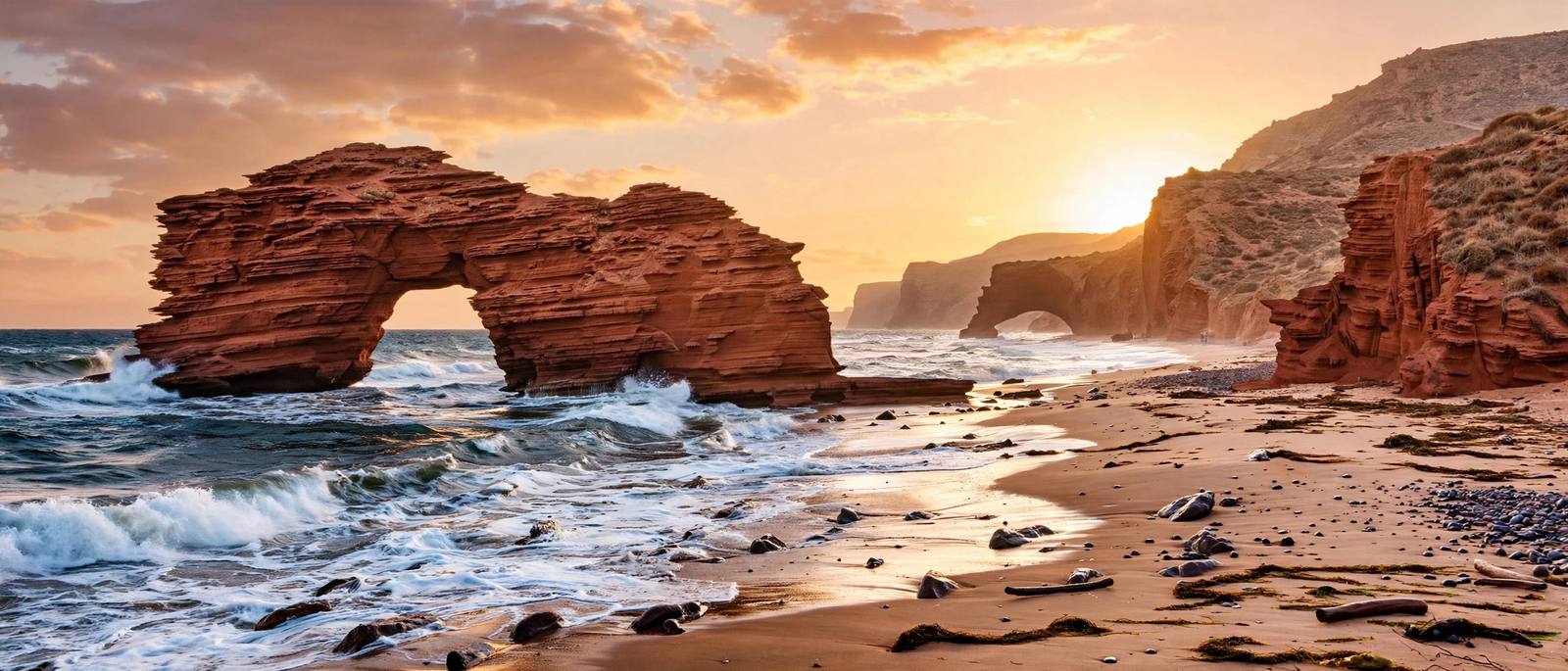
- Legzira's most famous arch collapsed in September 2016. One major arch still stands, and the beach remains extraordinary — just don't expect the old postcard photos to match.
---
Morocco has around 3,500 kilometers of coastline, split between the Atlantic Ocean and the Mediterranean Sea, and the two coasts might as well be different countries. The Atlantic side is wild: big surf, constant wind, dramatic cliffs, water around 19-21C even in August (surfers wear 3/2mm wetsuits year-round). The Mediterranean side is the opposite: calm, warm, clear water in coves that feel more like Greece than Africa.
Most "best beaches in Morocco" lists mash both coasts together without explaining this, which is how people end up disappointed — expecting to swim at Essaouira (too windy) or find surf-camp nightlife at Saidia (too quiet). This ranking covers both coasts honestly: what each beach is actually good for, who should go, and who should skip it.
1. Legzira: the most spectacular beach in Morocco
Between Mirleft and Sidi Ifni on the southern Atlantic coast, Legzira is an 8-kilometer stretch of sand backed by towering red sandstone cliffs, carved by the ocean into arches, buttresses, and overhangs. At low tide the wet sand mirrors the red rock, and at sunset the whole cliff face glows. It is the single most dramatic beach in the country, and it is not close.
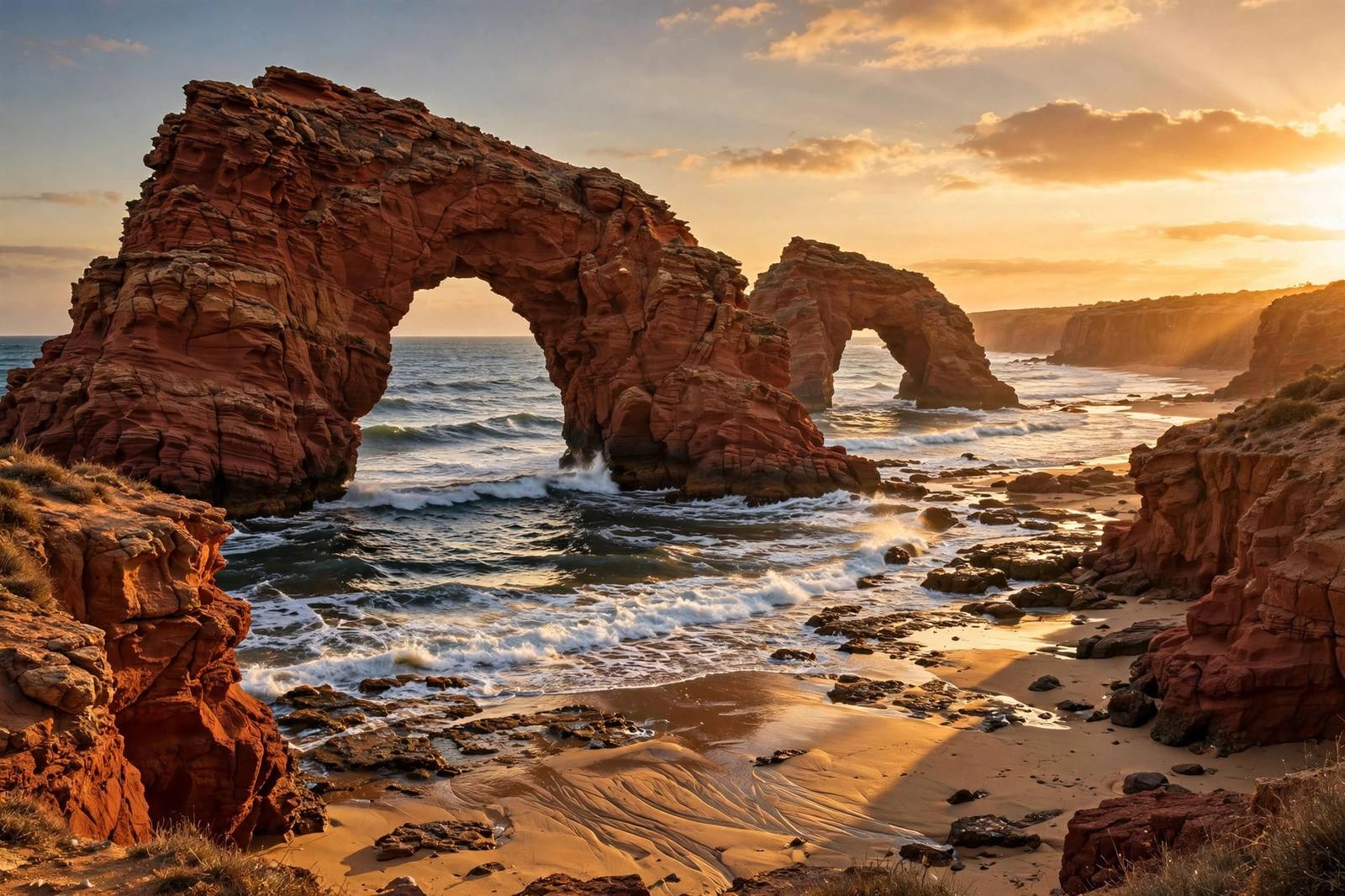
One honest note: the beach's most famous arch — the one in all the old photos — collapsed in September 2016 after years of erosion. A second major arch still stands (plus smaller formations further along the cliffs), and the beach lost none of its drama. But if you arrive expecting to recreate a specific Instagram shot from 2014, calibrate first.
Legzira is remote — about 150 km south of Agadir, reached by coastal road — and infrastructure is minimal: a few guesthouses, clifftop cafés, parking at the top with stairs down. That is the point. Come here if you want raw coastal scenery and don't need facilities. But if you need calm swimming water or any kind of nightlife, this isn't your beach.
Quick facts
Morocco's coastline stretches 3,500+ km across two seas — the Atlantic and the Mediterranean.
Inland, the Al Hoceima National Park protects 480 km² of coastal mountains and coves.
On the surf side, Taghazout hosts international competitions each winter, which tells you everything about the wave quality.
Methodology: how we ranked these beaches
We started with traveler consensus from forums and trip reports, then weighted swimmability, scenery, and the effort-to-reward ratio.
2. Agadir: the best all-round beach resort
Agadir's beach is a 9-kilometer sweep of golden sand, sheltered enough for comfortable swimming, backed by a proper promenade, and ringed by every category of hotel from budget to all-inclusive. The city was rebuilt from scratch after the 1960 earthquake, so there is almost no historic character — but as a pure beach base, nothing else in Morocco is this complete.
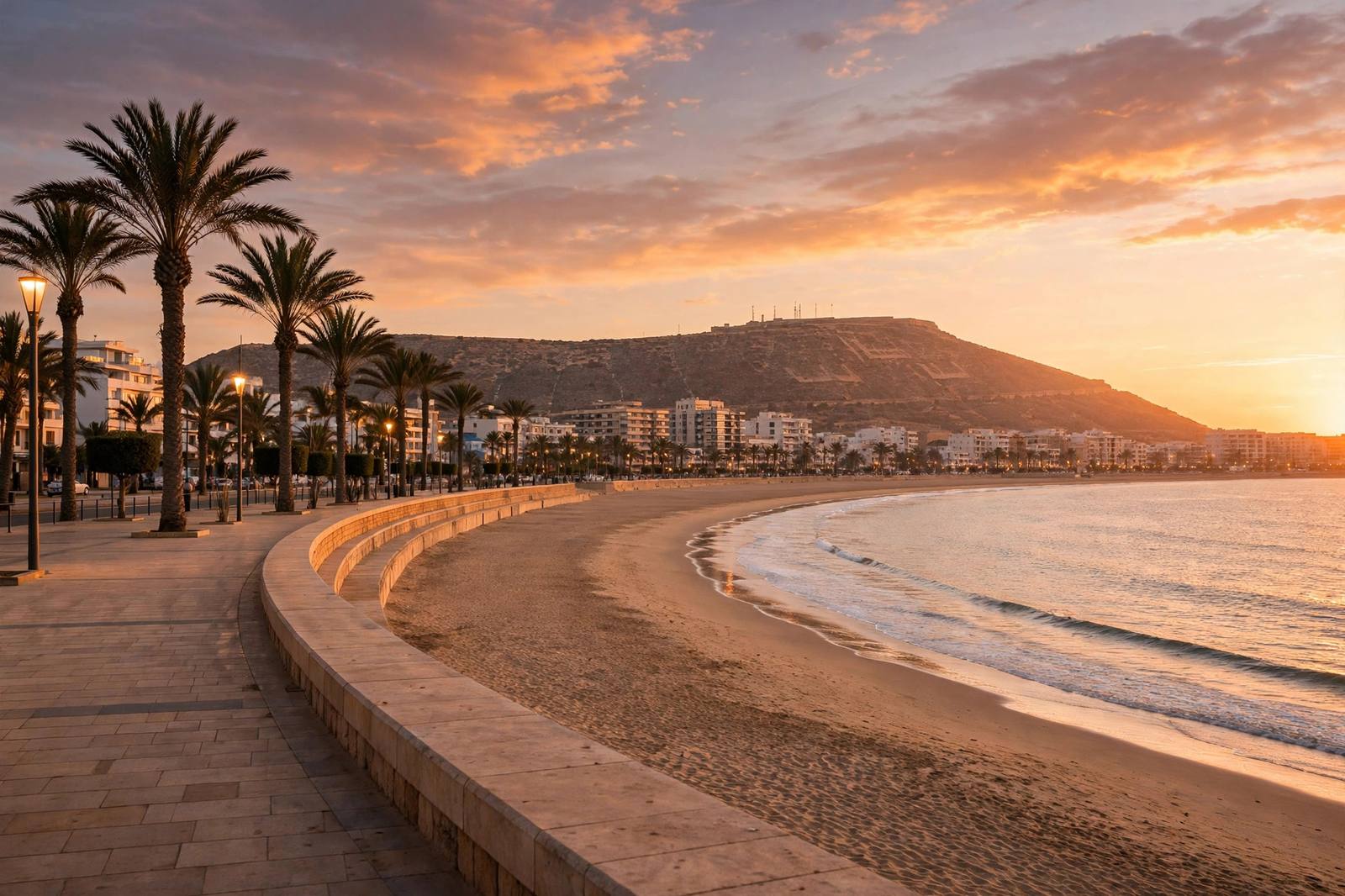
The water is still Atlantic (bracing, not bath-like), but the bay's shape keeps it calmer than exposed surf beaches. Winter sun is reliable enough that northern Europeans overwinter here. The marina, golf courses, and Paradise Valley day trip (natural pools in a gorge, about an hour inland) round out the non-beach hours.
Let's be honest: Agadir has almost zero historic character. But if you want a straightforward beach holiday with reliable weather and everything handled, nothing else in Morocco does it this well. Just don't come expecting culture — that's what the rest of the country is for.
3. Taghazout: Morocco's surf capital
Twenty kilometers north of Agadir, Taghazout went from fishing village to surf town without losing its soul entirely. The point breaks here — Anchor Point, Killer Point — draw surfers from October through April, when the Atlantic swell is at its biggest. Dozens of surf camps and hostels line the main drag, and the whole village runs on surf time.
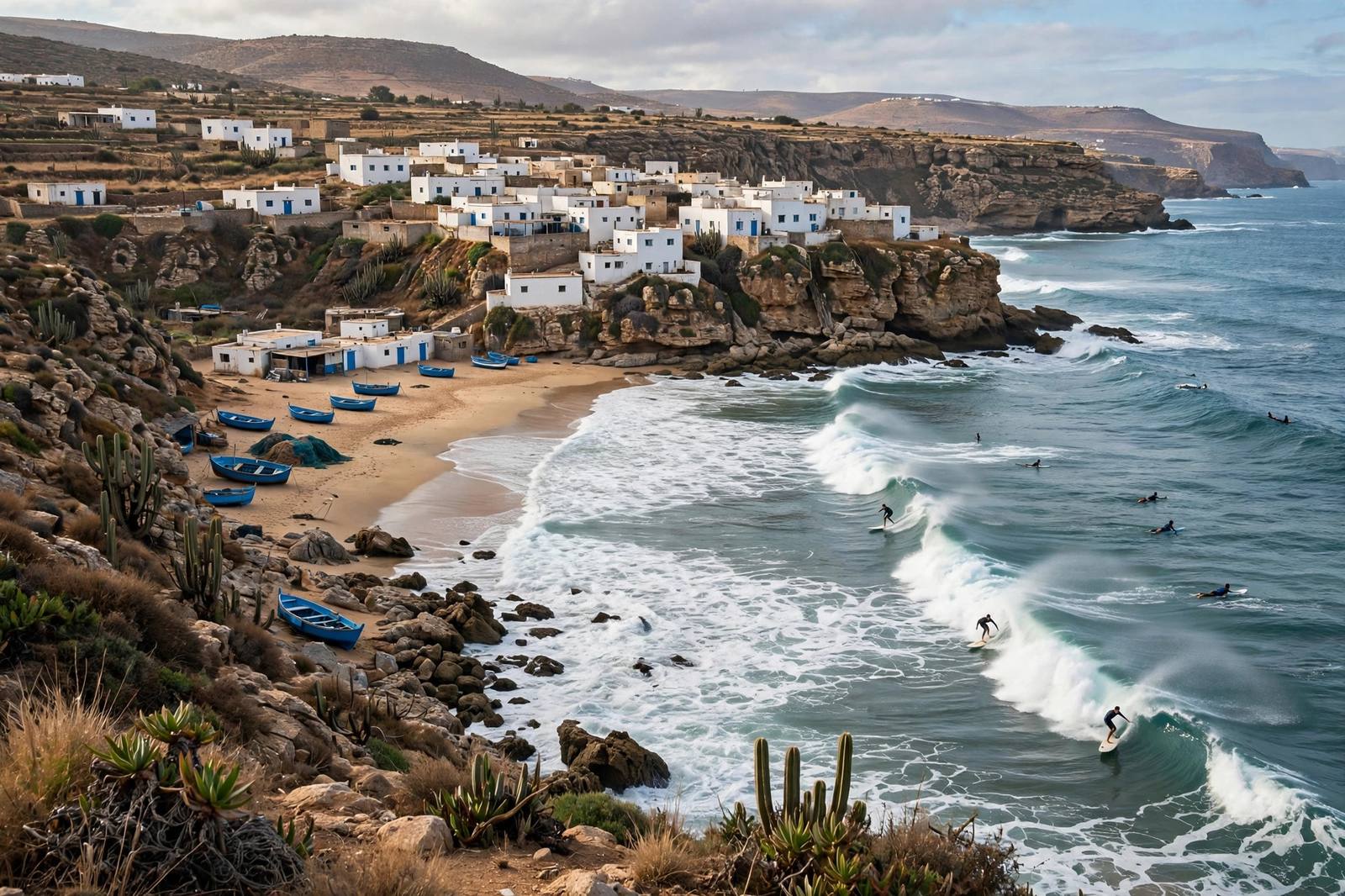
It is scruffy in the way surf towns are: great tagines, rooftop sunsets, wetsuits drying on every balcony. Beginners should know the main breaks are not beginner breaks — take lessons at the mellower beach breaks nearby (Tamraght, just south, is the learning zone). Summer surf is small; winter is the real season.
If you surf (or want to learn) and you like the surf-village social scene, you'll be happy here. If you want calm swimming or a quiet family beach, look elsewhere — this town runs on swell, not sunbathing.
4. Imsouane: the magic bay
Halfway between Agadir and Essaouira, Imsouane is a small fishing village wrapped around one of the longest right-hand point breaks in Africa — on a good day, rides here go for hundreds of meters. It has managed to stay smaller and more Moroccan than Taghazout: the fish market still operates, the harbor still works, and the surf scene feels grafted onto a real village rather than replacing it.
The beach itself (the Bay) is also one of the more sheltered swimming spots on this stretch of coast when the swell is small. Accommodation is simple — guesthouses and surf hostels, not resorts.
Think of it as Taghazout before the crowds found it. Less scene, more village. But don't come expecting nightlife or upscale anything — that's not what this place is.
5. Oualidia: the lagoon
Oualidia's superpower is geography: a sheltered lagoon protected from the Atlantic surf by a sandbar, creating calm, shallow, warm-ish water that is rare on this coast. It is the best natural swimming spot on the Atlantic side — families with small children, people who just want to float, anyone who finds the open ocean intimidating.
The town is sleepy in the best way: famous for oysters (the lagoon farms them), grilled fish shacks, and a slow pace that feels a world away from Agadir's resort strip. There is not much to do beyond the lagoon, the beach, and eating. That is the entire appeal.
This is the beach for people who just want to float. If you need surf, nightlife, or activities to stay entertained, you'll be bored by day two.
6. Essaouira: the town is the beach's excuse
Essaouira's beach is wide, sandy, and almost always too windy for comfortable sunbathing. The town's nickname — the Windy City of Africa — is not marketing. On most afternoons the wind picks up enough to sandblast anyone lying on a towel.
So why is it on this list? Because the beach here is not really for lying on. It is for kitesurfing and windsurfing (world-class conditions), for long walks south of the walls, for camel rides at sunset, and for the combination of beach + one of Morocco's most charming medinas. Nobody should come to Essaouira for the beach. Everybody should come to Essaouira, and the beach is a bonus.
Worth it if you windsurf or kitesurf, or if you want beach and culture in one trip. But if your main goal is swimming and sunbathing, Agadir does that better — no contest.
7. Mirleft: the quiet wild one
Just north of Sidi Ifni, Mirleft is a small town with a string of coves and beaches that feel undiscovered in a way few Moroccan beaches still do. The main beach is long and sandy; the smaller coves (like Imin Tourga) require a bit of walking or driving but reward it with near-solitude. The vibe is low-key European expat meets Moroccan fishing town — yoga retreats, small hotels, long lunches.
The ocean here is exposed Atlantic: beautiful, powerful, and not for casual swimming on most days. Come for the scenery, the quiet, and the sunsets.
This is a beach you mostly look at, not one you swim in. If that's a dealbreaker, stick to the Mediterranean side.
8. Sidi Kaouki: Taghazout without the scene
Twenty-five kilometers south of Essaouira, the road empties and the Atlantic gets wilder. The beach break here works for beginners and intermediates, there are a couple of surf camps, and the village itself is tiny — a handful of guesthouses, some goats, and a marabout (saint's tomb) on the hill that gives the place its name.
It is a good compromise if Taghazout sounds fun but overwhelming: you can surf all day and sleep somewhere quiet. Day-trippers from Essaouira come for the beach; almost nobody stays overnight, which keeps it peaceful.
Surfers who want Essaouira's waves with a quieter base will love it. Nightlife seekers should stay in town.
9. Saidia: the Mediterranean resort
Switching coasts entirely: in the far northeast near the Algerian border sits a long stretch of fine sand that feels nothing like the Atlantic side. The water here is everything the Atlantic is not: calm, clear, and 24-26C in summer. Families love it. The marina and golf courses complete the package.
The tradeoff is character. Saidia was developed as a resort zone, and it feels like one — this could be the Spanish or Turkish coast. It is also a summer destination; outside June–September it goes very quiet. And it is far from the classic tourist circuit (closest airport: Oujda).
If a warm-water Mediterranean beach holiday is the goal, Saidia delivers. But on the classic Marrakech-Fes-Sahara route, it's a detour, not a stop.
10. Al Hoceima: the Rif coves
Where the Rif mountains meet the sea, the coastline fractures into small turquoise coves backed by cliffs. The water is clear, the swimming is good in summer, and the setting — mountains dropping into the sea — is unlike anywhere else in Morocco.
It is also one of the least-visited beach areas by foreign tourists, partly because it is off the main routes and partly because the Rif has a complicated reputation. In practice, Al Hoceima town is calm and the beaches are lovely. This is a pick for travelers who have done the obvious Morocco and want the next layer.
If it's your first trip and you're short on time, skip it — the logistics don't justify the detour. But for a second visit, this is where Morocco gets interesting.
11. Dakhla: the kitesurf frontier
Dakhla is not really a beach destination in the normal sense — it is a 40-kilometer lagoon in the deep south, where the desert meets the Atlantic, and it is one of the best kitesurfing spots on the planet. Constant wind, flat water, empty beaches stretching to the horizon. The town is small, the vibe is expeditionary, and getting here takes commitment (a flight from Casablanca or a very long drive).
Non-kitesurfers can enjoy the sheer otherworldliness of the place — flamingos in the lagoon, oyster beds, desert dunes rolling into the sea — but be honest with yourself: if you don't kitesurf, Dakhla is a very long way to go just for scenery.
12. Asilah: the charming northern beach town
Forty kilometers south of Tangier, Asilah pairs a genuinely pretty beach with a whitewashed medina famous for its murals (repainted every summer during the arts festival). The beach is fine for swimming in summer — this is near the Strait of Gibraltar, where the Atlantic starts calming down — and the town is small enough to feel intimate.
Asilah works best as part of a northern itinerary (Tangier, Chefchaouen, Tetouan) rather than a standalone beach destination. Two days here — medina in the morning, beach in the afternoon, seafood at night — is the right dose.
Don't trek down from Marrakech just for this. But if you're already touring the north, it's the beach town with actual charm.
Atlantic vs Mediterranean: the cheat sheet
| Atlantic | Mediterranean | |
|---|---|---|
| Water temp (summer) | 18–22°C (bracing) | 23–27°C (pleasant) |
| Surf | Excellent (Taghazout, Imsouane) | Minimal |
| Wind | Often strong | Usually calm |
| Best for | Surfing, kitesurfing, dramatic scenery | Swimming, families, calm water |
| Season | Year-round (surf: Oct–Apr) | June–September |
| Vibe | Wild, spread out | Compact, resort-y |
The honest summary: if you want to do things on the water, go Atlantic. If you want to be in the water, go Mediterranean.
Practical tips
Water temperature is the thing nobody warns you about. The Canary Current keeps Atlantic water cold year-round — 17–19°C in winter, barely 21–22°C in summer. Surfers wear wetsuits twelve months a year. If you are a warm-water swimmer, the Atlantic will be a shock; the Mediterranean (in summer) will not.
Sun protection is non-negotiable. The wind on the Atlantic coast masks how strong the sun is. You will burn faster in Essaouira's breeze than on a still Mediterranean beach. Reapply constantly.
Tides matter on the Atlantic. Beaches like Legzira transform between high and low tide — arches accessible at low tide can be cut off at high tide. Check tide times before planning a visit, and never get complacent near cliff bases.
Blue Flag beaches (21 in Morocco) mark the ones with lifeguards, clean water monitoring, and facilities — useful if you are traveling with kids. Agadir's main beach and several Mediterranean beaches hold the designation.
Getting around: the coastal road south of Agadir (toward Mirleft, Legzira, Sidi Ifni) is spectacular but slow — allow more time than the map suggests. Renting a car is the only practical way to do the wild beaches; buses serve the towns but not the coves.
Frequently Asked Questions
Which beach in Morocco is best for swimming?
Agadir on the Atlantic (sheltered bay, calmest of the surf coast) or Saidia on the Mediterranean (warm, calm, purpose-built for swimming). For natural calm water on the Atlantic side, Oualidia's lagoon is the standout.
Is the sea warm in Morocco?
On the Mediterranean in summer, yes (23–27°C). On the Atlantic, no — not really, ever. The Canary Current keeps it at 17–22°C year-round. It is refreshing rather than warm, and most swimmers adjust within a few minutes.
What happened to Legzira's arch?
The most photographed of Legzira's natural arches collapsed in September 2016 due to coastal erosion. One major arch still stands, along with dramatic cliff formations. The beach remains spectacular — just don't expect it to match pre-2016 photos exactly.
Is Essaouira or Agadir better for a beach holiday?
Agadir, without contest, if the beach itself is the priority — calmer water, better swimming, more sun, full resort infrastructure. Essaouira wins if you want culture, food, and wind sports alongside the sand.
When is the best time for Morocco's beaches?
For the Atlantic surf coast: October–April for waves, June–September for the warmest (still cool) swimming. For the Mediterranean: June–September — outside summer it goes quiet and the water cools. Agadir works year-round.
Are Morocco's beaches safe?
The main resort and town beaches are safe, with lifeguards at Blue Flag beaches in season. The standard precautions apply: don't swim alone at remote beaches, respect the Atlantic's power (rips and strong currents are real), and keep valuables out of sight.
Can you surf in Morocco as a beginner?
Absolutely — it is one of the best learn-to-surf destinations in the world. Tamraght (near Taghazout) and Sidi Kaouki have mellow beach breaks and dozens of surf camps with English-speaking instructors. A week-long camp including board, wetsuit, and lessons typically runs €300–500.
Getting around the coast
Distances are bigger than they look on the map. Agadir to Legzira is about 150 km (2.5 hours). Essaouira to Sidi Kaouki is 25 km. If you're doing the full Atlantic run from Tangier to Dakhla, that's over 2,000 km — fly or break it into legs.
The CTM bus network covers the main coastal cities reliably. For the smaller surf villages, you'll want a rental car — book ahead in summer when prices jump 30-40%.
The bottom line
Pick your coast first, your beach second. Atlantic for surf, wind sports, and drama; Mediterranean for swimming and calm. Agadir for the easy resort week, Taghazout for the surf trip, Legzira for the one beach you will photograph until your camera gives up, and Essaouira for everything except the beach itself.