By Nicolas · Updated October 2026*
- March–May and September–November are the sweet spots for most trips: comfortable temperatures across cities, desert, and mountains without the extremes.
- Morocco has four distinct climates — the coast, the interior cities, the Atlas Mountains, and the Sahara — and they peak at different times. Plan around your itinerary, not a single "best month."
- July and August are brutal inland (Marrakech regularly hits 38–40°C) but excellent on the coast, where Atlantic breezes keep Essaouira and Agadir pleasant.
- Winter (December–February) brings the lowest prices and thinnest crowds, plus snow in the Atlas — but desert nights drop near freezing.
- June is festival season: the Fes Festival of World Sacred Music (June 4–7, 2026), Mawazine in Rabat (June 19–27), and the Gnaoua Festival in Essaouira (June 25–27) all land within three weeks of each other.
---
There is no single best time to visit Morocco, because Morocco is not one climate. It is four of them, stacked side by side: a breezy Atlantic coast, furnace-hot interior cities, snow-capped mountains, and the edge of the Sahara. The month that is perfect for hiking the Atlas can be miserable in Marrakech, and the season that empties the desert fills the surf towns.
Most guides flatten this into "go in spring or autumn" and call it done. That advice is not wrong, but it is incomplete — and it can steer you wrong if your trip leans heavily toward one region. This guide breaks Morocco down by region, month, crowds, and festivals, so you can pick the right window for the trip you actually want.
The short answer
For a classic first-timer circuit — Marrakech, Fes, the Sahara, maybe the coast — April, May, October, and early November are the best months.
Temperatures sit in the comfortable 20–28°C range across most of the country, the desert is warm by day without being punishing, and the Atlas trails are open and snow-free. April adds wildflowers and green valleys; October adds the date harvest and thinner crowds.
If you can only pick one month and want the single safest bet, October edges it. The summer heat has broken, the European holiday crowds are gone, hotel prices have dropped from their August peaks, and the desert nights are cool rather than freezing. April is a close second, but it comes with Easter crowds and higher prices.
Morocco's climate extremes are real: Marrakech hits 38-45°C in summer and drops to 5-8°C on winter nights. The Sahara swings from 40°C+ days to near-freezing nights in winter. Fes gets around 500mm of rain yearly, mostly November through February. You've got roughly 120 days for High Atlas trekking (June-September). Essaouira is the outlier — 20-27°C year-round, the most stable climate in the country.
Methodology: how we built this guide
Morocco's regions have very different climates, so we broke this down by zone using 2026 weather data and festival calendars.
Morocco's four climates (why one answer doesn't work)
Understanding the regional differences matters more than memorizing a month. Here is how the country actually behaves:
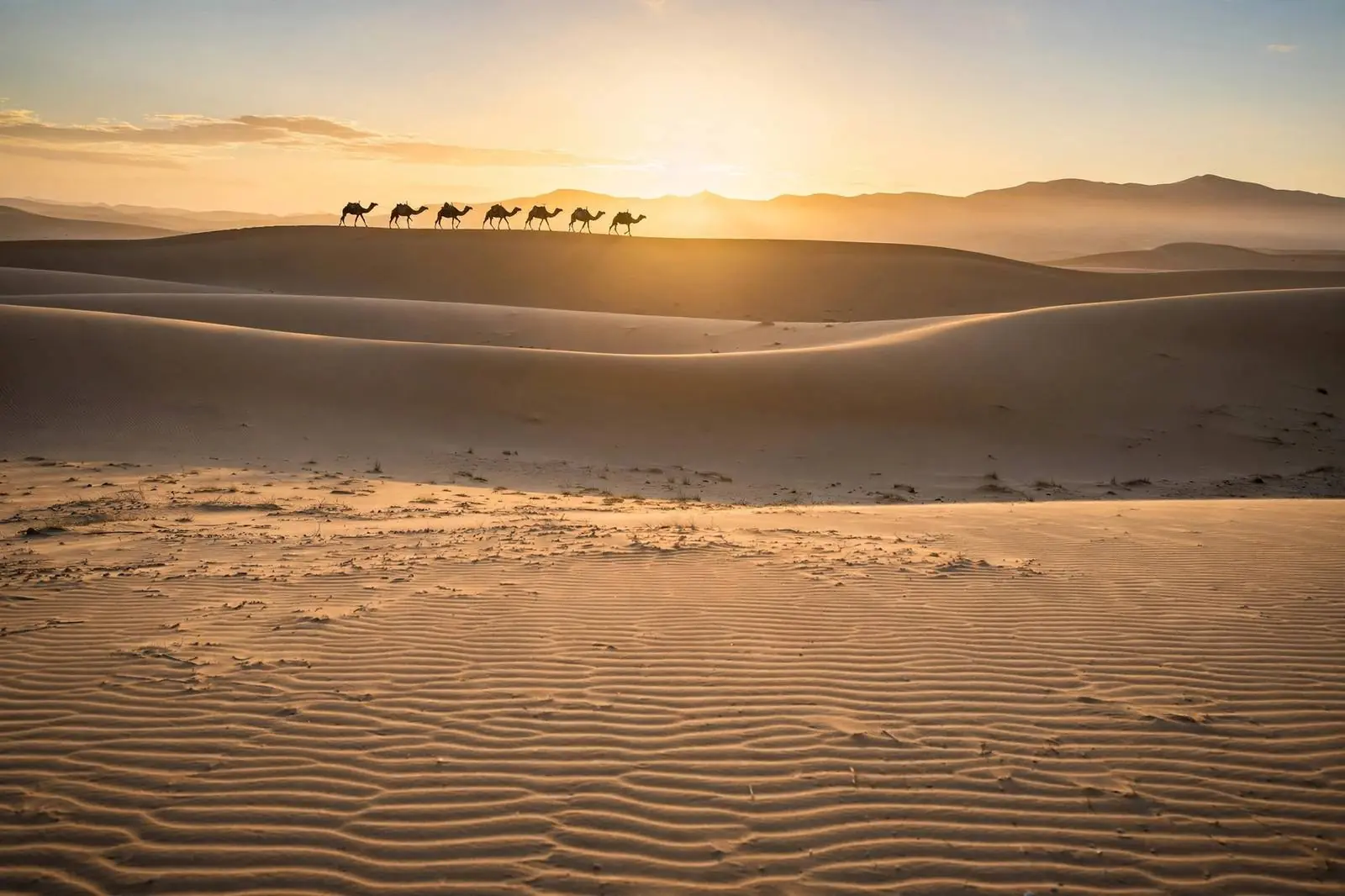
The interior cities (Marrakech, Fes, Meknes). Continental climate with real extremes. Summers are punishing — Marrakech averages 38°C in July and August, and Fes is not far behind. Winters are mild by day (17–20°C) but nights get cold, and unheated riads can feel genuinely chilly in January. Spring and autumn are the comfortable windows.
The Atlantic coast (Essaouira, Agadir, Casablanca, Rabat, Tangier). Moderated by the ocean year-round. Essaouira rarely tops 28°C even in August, thanks to near-constant wind — which is why it is a windsurfing capital and a mediocre sunbathing destination.
Agadir is the warmest coastal city, staying pleasant through winter (17–20°C days), which is why Europeans overwinter there. Rain is minimal but not zero, concentrated November through February.
The Atlas Mountains (Imlil, Toubkal, the valleys). Proper mountain weather. Snow from December through February (sometimes into March at altitude), with Toubkal requiring crampons and experience in winter. For trekking, aim for April–June or September–October. Summer is fine for high-altitude hiking but hot in the lower valleys.
The Sahara (Merzouga, Zagora, the dunes). Extreme by day, extreme by night. Summer days push past 42°C — desert camps mostly close June through August, and the ones that stay open are not experiences you want.
Winter days are pleasant (18–22°C) but nights drop to 0–5°C, and you will feel every degree of it in a canvas tent. October–November and March–April are the ideal desert months: warm days, manageable nights.
The practical takeaway: if your itinerary spans multiple regions, shoulder season (April–May, September–October) is the only time you will find comfortable conditions everywhere at once.
Month by month
January is when Morocco exhales. The holiday crowds have gone home, the prices have cratered (outside that first week — New Year in Marrakech is its own expensive bubble), and you can walk through the Fes medina without elbowing anyone. Marrakech days hover around 17–18°C, which is jacket weather, not coat weather.
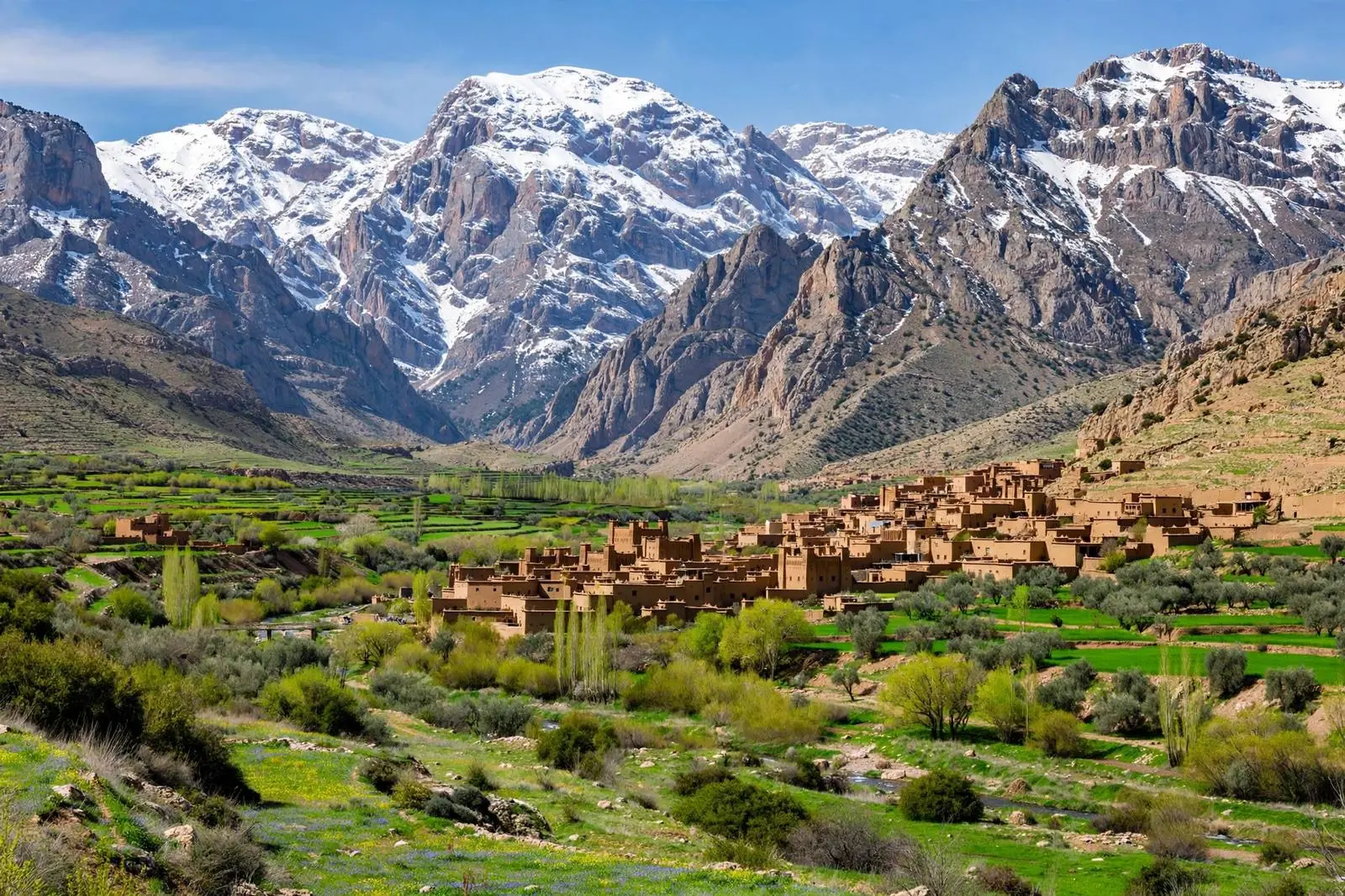
January in the Sahara is a paradox: the most comfortable days of the year paired with the coldest nights. You'll be in a t-shirt at noon and shivering at 3 AM if you believed the camp's "blankets provided" promise. Bring a sleeping bag liner. Trust me on this one.
Up in the Atlas, Toubkal is a serious winter mountaineering objective right now, not a trek — crampons, ice axe, the works. If that sentence excited you, you're in the right place. If it scared you, come back in April.
February is January with slightly better weather and one secret weapon: the almond blossoms. Down in Tafraoute, in the Anti-Atlas, entire valleys turn white and pink for a few weeks — and the timing shifts every year depending on the winter, so you have to be flexible or lucky. There's a festival, but honestly the blossoms themselves are the event.
Otherwise it's the same deal as January: thin crowds, low prices, mild coasts. If you're choosing between the two months, February wins on weather by a hair.
You can feel March coming a week before it arrives — the light changes, the almond blossoms give way to green, and the Atlas trails start shedding their snow. Temperatures climb into the low 20s in the cities. Morocco wakes up.
One warning: Easter. When it falls in March (some years it does), European visitors flood in and the "shoulder season" pricing evaporates overnight. Check the calendar before you book — a week either side of Easter can mean completely different prices for the same riad.
Here's the thing about April: it's objectively one of the two best months, and everyone knows it. Warm but not hot, wildflowers everywhere, desert nights you can actually enjoy, mountains at their most walkable. The 22–26°C days in the cities feel engineered for sightseeing.
Perfection has a price, and it's other people. April is peak season, full stop — book riads and desert camps well ahead, and don't expect to negotiate. Oh, and the Sahara can throw a sandstorm at you in March or April. They're brief, dramatic, and weirdly memorable, but worth knowing about.
Late May in the Valley of Roses smells incredible — that's the Rose Festival in Kelaat M'Gouna, and unlike most "cultural festivals" it's the real thing. Locals, not tour buses. Rose products everywhere. Worth a detour if you're in the south.
The broader picture: still excellent, but warming up fast. Marrakech pushes toward 30°C by month's end. And a heads-up for 2026 — Eid al-Adha falls on May 27, which means transport sells out and businesses close for days around it. If you're traveling late May, sort your logistics now, not later.
June is when Morocco forces you to choose. Early in the month, the interior is still pleasant. By mid-June, the furnace kicks on — and suddenly you're planning your days around heat instead of sights.
But here's the counterweight: June is festival season, and Morocco's festival season is genuinely world-class. The Fes Festival of World Sacred Music (June 4–7), Mawazine in Rabat (June 19–27), the Gnaoua Festival in Essaouira (June 25–27) — three major events in three weeks. If culture is your thing, there's no better month. Just book accommodation months ahead, because everyone else had the same idea.
Let's be blunt: July inland is punishing. Marrakech at 38°C isn't "warm" — it's the kind of heat where you plan your day around air conditioning and wonder why you came. The Sahara? Most camps don't even operate.
But the coast in July is a different country. Essaouira sits at 23°C with ocean breeze while Marrakech melts four hours inland. Agadir is warm without being oppressive. Moroccan families know this — they vacation on the coast in July, and the towns are lively for it. Just book ahead, because so does everyone else.
Everything I said about July applies to August, turned up one notch. Hotter inland, more Europeans on the coast, higher prices, lower availability. It's the hardest month to recommend and the easiest month to end up with if you're tied to school holidays.
Same playbook: stay coastal. Tangier, Asilah, Essaouira, Agadir. Treat Marrakech and Fes as transit points, not destinations — a night to break up the journey, not three days of sightseeing in 40°C heat.
September is the month people sleep on. Early in the month Marrakech can still hit 34°C, sure — but by the third week the heat breaks, the European school-holiday crowds vanish almost overnight, and you get something rare: summer warmth without summer chaos.
The ocean's at its warmest now — a detail nobody seems to factor in. The desert camps reopen. Prices drop. If I had to pick the single most underrated month for Morocco, it'd be this one.
If I had to commit to one month — gun to my head, book it now — it'd be October. Warm days, cool evenings, empty attractions, lower prices. The desert's back in its prime: warm days, crisp nights, absurdly clear skies.
The Sufi Culture Festival in Fes (October 17–24) is worth knowing about — quieter and more intimate than the June festivals, and a good reason to be in Fes specifically. But honestly, October doesn't need a festival to justify itself. It's just the best all-round month.
November is October's quieter sibling. Still pleasant — 20–22°C in the cities, comfortable desert — but with fewer people and lower prices. Rain becomes a possibility in the north, though it rarely ruins anything.
This is a good month if you're watching your budget but don't want the compromises of deep winter.
December is two different months wearing a trenchcoat. The first three weeks: mild days, cold nights, cheapest prices of the year, empty everything. The last ten days: Christmas/New Year, Marrakech fills up, rates double, and you'd think it was April.
The Atlas has proper snow now — Oukaimeden, 75 km from Marrakech, is Morocco's main ski area. Basic by Alpine standards, but skiing in Africa with a view of the desert is a solid story. Desert days are pleasant; desert nights are freezing. Pack accordingly.
Crowds: when it's busy and when it's not
Peak season in Morocco has two waves: spring (March–May) and late December through early January. That spring wave is driven by weather — everyone wants the same perfect conditions. That winter wave? Driven by holidays — Europeans escaping the cold.
You'll find the fewest crowds in mid-January through February and November (outside any holidays). You will have medinas largely to yourself, riad owners will negotiate on price, and you will not queue for anything. You trade that for cooler weather and shorter days.
Summer crowds concentrate on the coast — Agadir, Essaouira, Tangier, and Asilah fill with both European tourists and Moroccan families on vacation. Inland cities empty out as everyone who can leaves the heat.
One crowd pattern that surprises people: the Sahara has its own rhythm. Desert camps are busiest October–November and March–April, and many close entirely in summer. If a desert night is the centerpiece of your trip, the shoulder months are non-negotiable.
Festivals worth planning around
Morocco's festival calendar is genuinely excellent, and a few events are worth building a trip around:
- Rose Festival, Kelaat M'Gouna (May) — a local harvest celebration in the Valley of Roses with parades, music, and rose products everywhere. Low-key and authentic.
- Fes Festival of World Sacred Music (June 4–7, 2026) — the flagship cultural event. Sufi chants, Gregorian choirs, and Indian classical music in venues like Bab Al Makina. The 2026 edition is shorter than usual (four days) with a focus on artisans and craftsmanship.
- Mawazine, Rabat (June 19–27, 2026) — the giant. Nine days, multiple stages, millions of attendees, global pop and Arab music stars. Most concerts are free.
- Gnaoua and World Music Festival, Essaouira (June 25–27, 2026) — the coolest of the big three. Gnaoua maâlem masters jamming with jazz and world musicians, 400+ performers, much of it free. Essaouira in late June is also at its weather best.
- Marrakech International Film Festival (late November–early December 2026) — cinema-focused, with a different crowd than the music festivals.
- Erfoud Date Festival (October) — celebrates the date harvest in the desert gateway town. Small, local, and a good excuse to be in the southeast in the best month.
Book accommodation early for any festival city — Fes and Essaouira fill completely during their events.
Ramadan and religious holidays
Ramadan shifts every year (it fell in February–March 2026). Traveling during Ramadan is entirely doable, but it changes the rhythm of the country.
Many restaurants close during the day, especially outside tourist areas. The medinas go quiet in the afternoon and come alive after iftar (the evening meal). Non-Muslims are not expected to fast, but eating or drinking conspicuously on the street during daylight hours is inconsiderate.
The upside: evenings during Ramadan have a special atmosphere, hotel prices often dip, and you will experience a side of Morocco most tourists miss. Just plan your days around the fact that lunch options shrink and everything runs a little slower.
Eid al-Fitr (end of Ramadan) and Eid al-Adha are the two biggest holidays. Transport — trains, buses, domestic flights — books solid in the days before each Eid as Moroccans travel to family. Avoid intercity travel on those specific days unless you have booked well ahead.
When to go for specific trips
Sahara desert trip: October–November or March–April. Avoid June–August (extreme heat, many camps closed) and prepare for cold nights December–February.
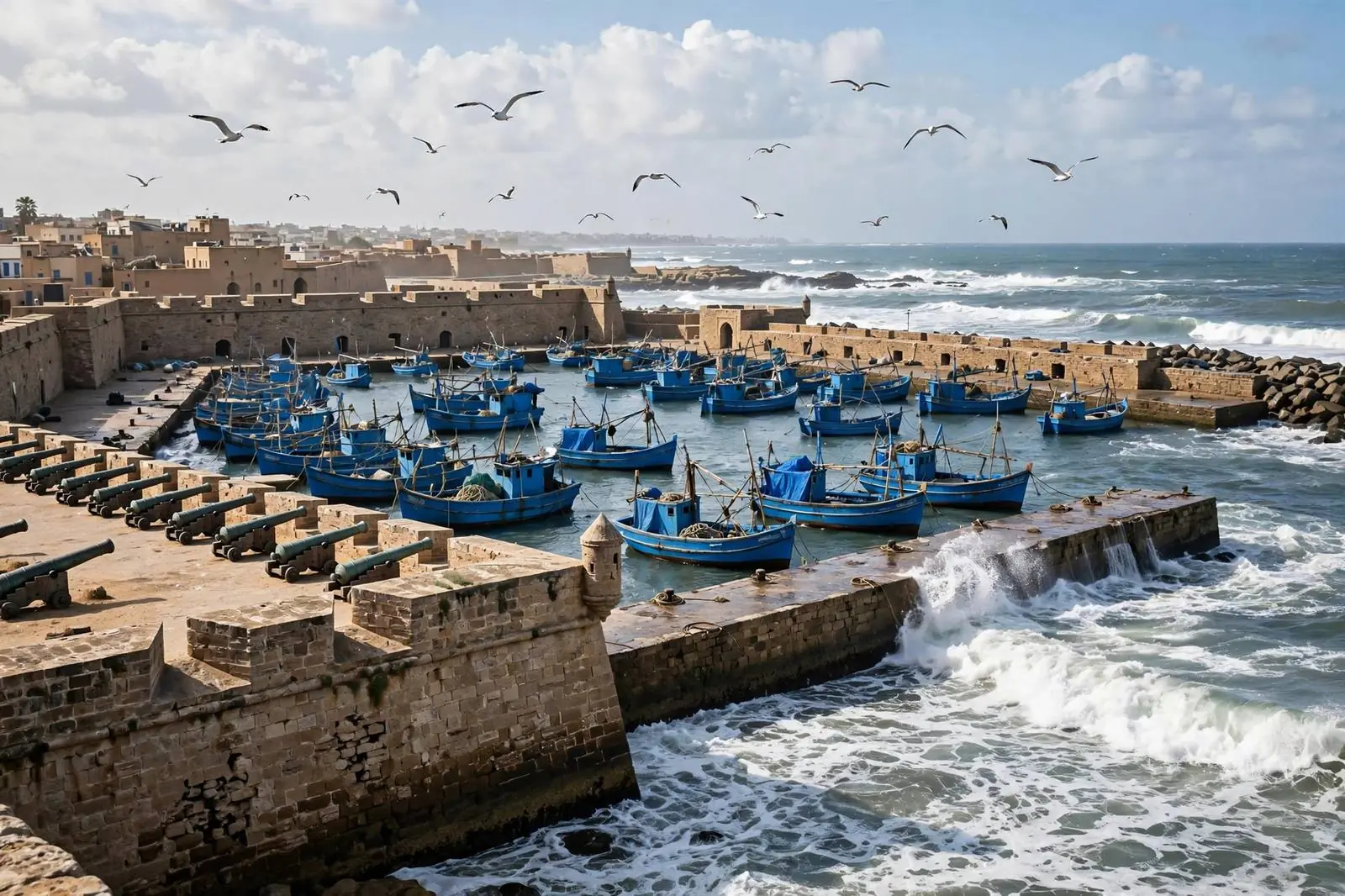
Surfing: The Atlantic swell is most consistent October–April, with the biggest waves December–February. Taghazout and Imsouane are the main spots. Summer waves are smaller and better for beginners.
Atlas trekking: April–June and September–October. Winter is for experienced mountaineers only; summer is fine at altitude but hot in the valleys.
Beach holiday: June–September for the Mediterranean (Saidia, Al Hoceima); year-round for Agadir; Essaouira for wind sports rather than sunbathing.
City sightseeing (Marrakech, Fes): March–May and September–November. Winter works too if you pack layers — the cities are walkable and the light is beautiful.
Budget travel: January–February and November offer the lowest prices. Avoid Easter, Christmas, and festival weeks.
Visit Morocco is the official tourism portal with regional climate info. For getting between cities, ONCF runs the trains — book the high-speed Al Boraq early.
Frequently Asked Questions
What is the absolute best month to visit Morocco?
October, by a small margin over April. You get warm weather without the heat, thin crowds, lower prices, the desert in prime condition, and the date harvest in the southeast. April matches it for weather but comes with peak-season crowds and prices.
Is Morocco too hot in summer?
Inland, yes — Marrakech and Fes regularly exceed 38°C in July and August, which makes daytime sightseeing genuinely unpleasant. On the coast, no — Essaouira stays around 23°C and Agadir is warm but comfortable. Summer is a coastal season in Morocco.
Can you visit the Sahara in winter?
Yes, and many people prefer it — the daytime temperatures are ideal. But go in with open eyes about the nights: temperatures near Merzouga drop to 0–5°C in December and January. A good sleeping bag liner and warm layers are not optional.
When is the cheapest time to go?
January and February (outside New Year), and November. You will find the lowest riad rates, negotiable desert camp prices, and cheap flights. The tradeoff there is cooler weather and the odd rainy day.
How does Ramadan affect tourists?
Restaurants outside tourist zones close during the day, the pace slows, and evenings become the social high point. It is not a reason to avoid Morocco, but it is a reason to adjust expectations — plan bigger breakfasts, carry snacks, and embrace the evening atmosphere.
Is October or April better?
They are the two best months and the choice comes down to tradeoffs. April has wildflowers, green landscapes, and spring energy — plus Easter crowds and peak prices. October has harvest season, thinner crowds, and lower prices — plus a small chance of early rain in the north. For most travelers, October wins on balance.
When should I avoid Morocco entirely?
There is no month to categorically avoid, but late July through August is the hardest sell: extreme inland heat, peak prices, and maximum crowds on the coast. If those are your only available dates, build the trip around the coast and the mountains, not the interior cities.
The bottom line
Morocco rewards travelers who match the month to the itinerary. The shoulder seasons — April–May and September–October — are the safe default, and October is the single best all-round month. Summer belongs to the coast, winter belongs to budget travelers and the Atlas snow, and June belongs to festival-goers willing to book ahead.
Pick your region, pick your priority, and the right month usually picks itself.