By Nicolas · Updated October 2026*
- Marrakech's medina is the main event — the souks, Jemaa el-Fna, and the historic palaces are all within walking distance of each other. Plan 2–3 full days minimum.
- Jardin Majorelle (170 MAD) sells out regularly: book online in advance, go for the first morning slot, and buy only from the official website — there is no onsite ticket counter anymore.
- Haggling is expected in the souks (settle around 40–55% of the opening price) but rude at food stalls and fixed-price shops.
Carry small bills — cash is king in the medina.
- The classic scams are predictable: "it's closed," fake guides, henna ambushes, and photo fees. A calm "la, shukran" and steady walking defeats most of them.
- The best day trips are the Atlas Mountains (Imlil), Essaouira, and the Agafay Desert — the Sahara is too far for a day trip despite what some tours claim.
---
Marrakech is the most intense city in Morocco, and that is both the selling point and the warning. The medina is a sensory assault in the best way — spice pyramids, hammered lanterns, the call to prayer echoing off the Koutoubia minaret — but it is also where every tout, fake guide, and henna ambusher in the country concentrates.
Go in prepared and it is one of the great urban experiences in the world. Go in naive and you will spend the trip annoyed.
This guide covers the things genuinely worth your time, with the practical details that determine whether each one is a highlight or a hassle: what it costs, when to go, and what to watch out for.
1. Get lost in the souks (then find your way out)
The souks are the largest traditional market in Morocco — a maze of covered alleys organized by craft: dyers' souk, blacksmiths' souk, the kissaria for textiles, Rahba Kedima (the old spice square). You could spend a full day here and not see it all.
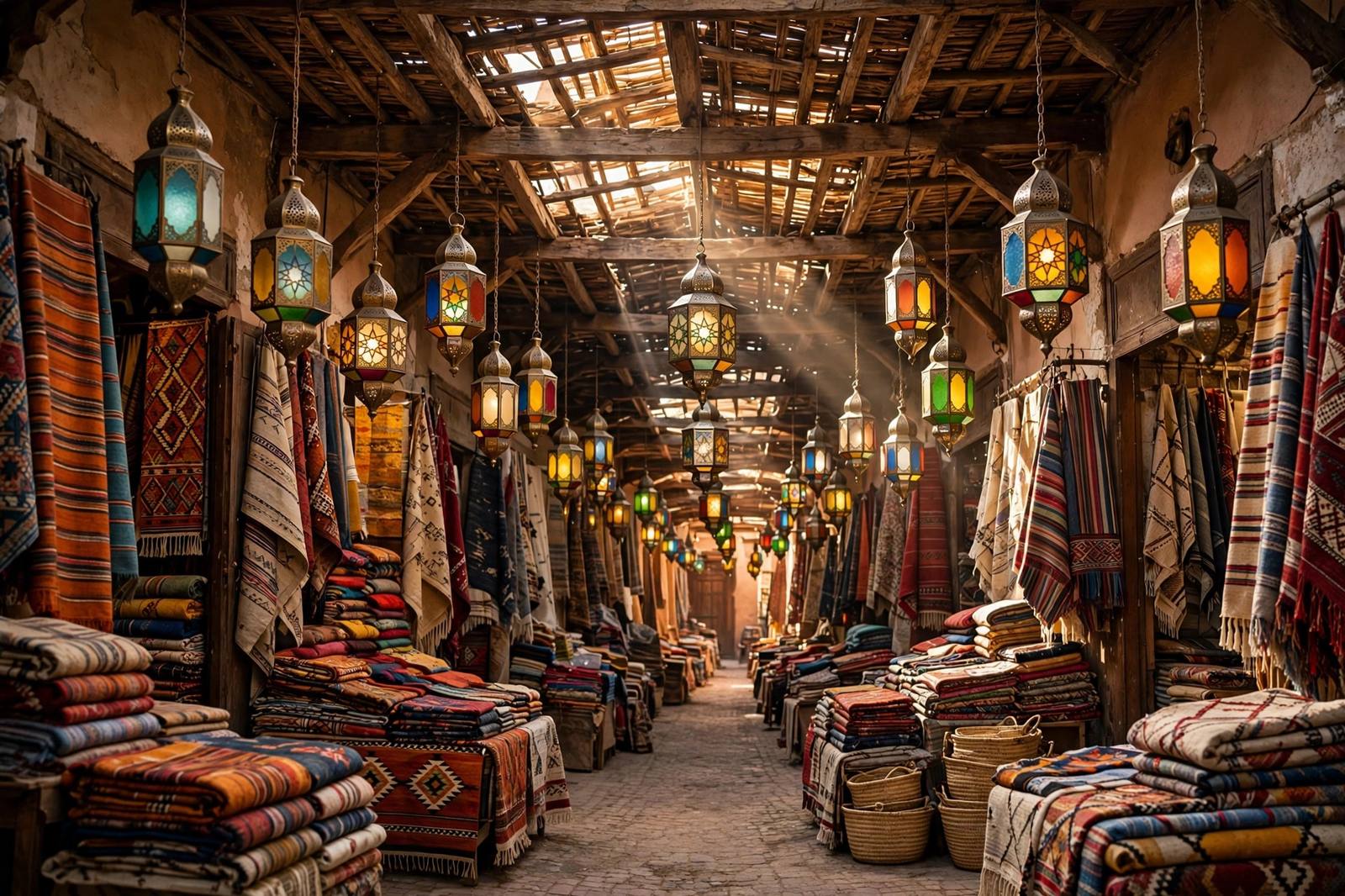
The honest version: the first hour is magical, the third hour is exhausting, and by the fifth you will pay someone just to point you toward the exit. That is normal. Go in the morning when the light is good and the crowds are thinner, and accept that getting lost is the activity — the medina is walled, so you literally cannot get dangerously lost.
Haggling rules that actually work: ask the price, look unhurried, offer about a third, and be genuinely willing to walk away. Settled prices usually land at 40–55% of the opening quote.
Never haggle at food stalls or pharmacies — fixed prices there, and trying marks you as clueless. Carry small notes; flashing a 200-dirham bill for an 80-dirham item tells the seller everything about your afternoon.
2. Jemaa el-Fna at sunset
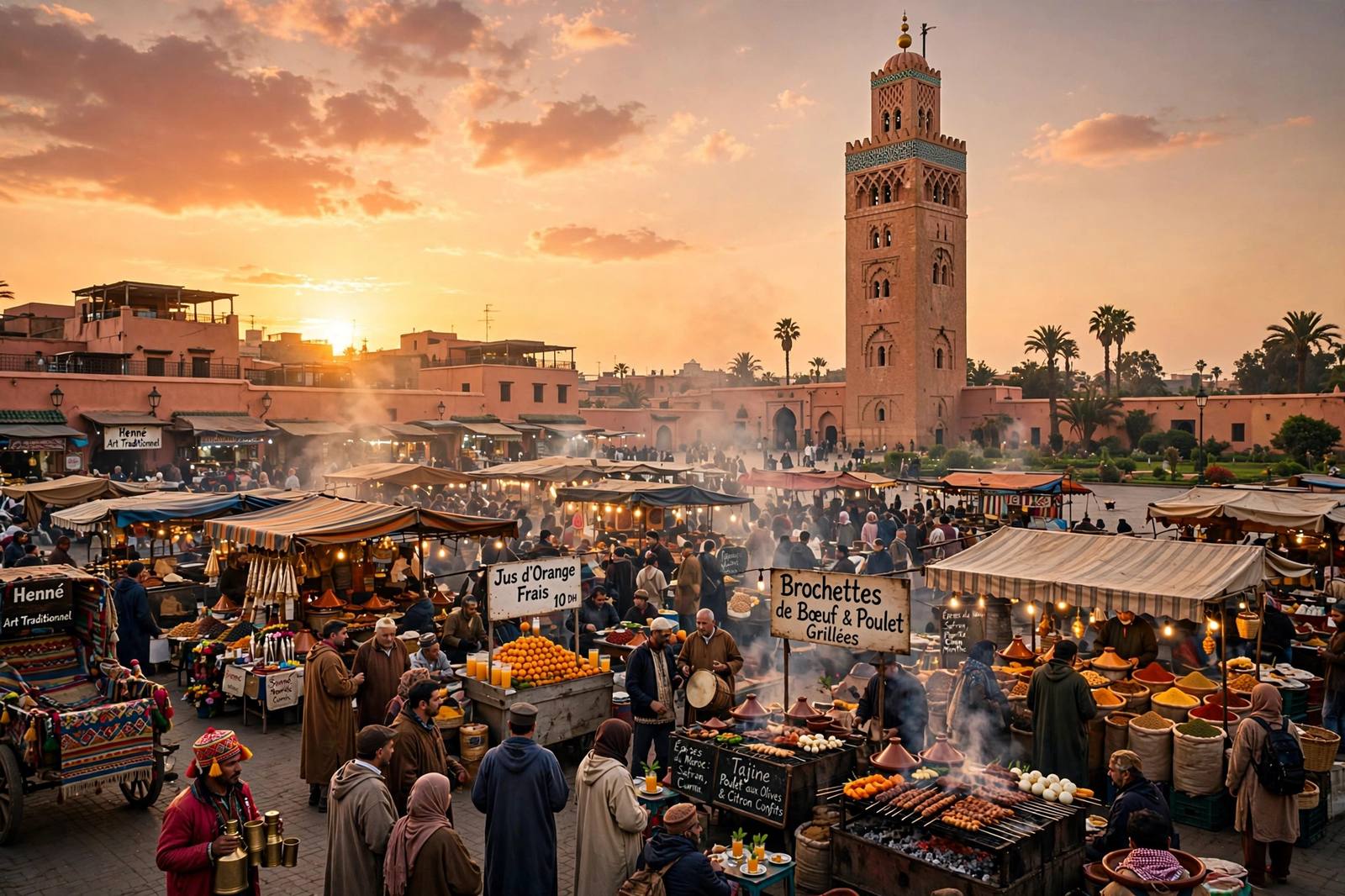
The main square is two different places depending on the hour. By day it is performers, orange juice carts, and a manageable chaos. At sunset it transforms: hundreds of food stalls fire up their grills, the smoke rises, the drummers start, and the whole square becomes the largest open-air restaurant in Africa.
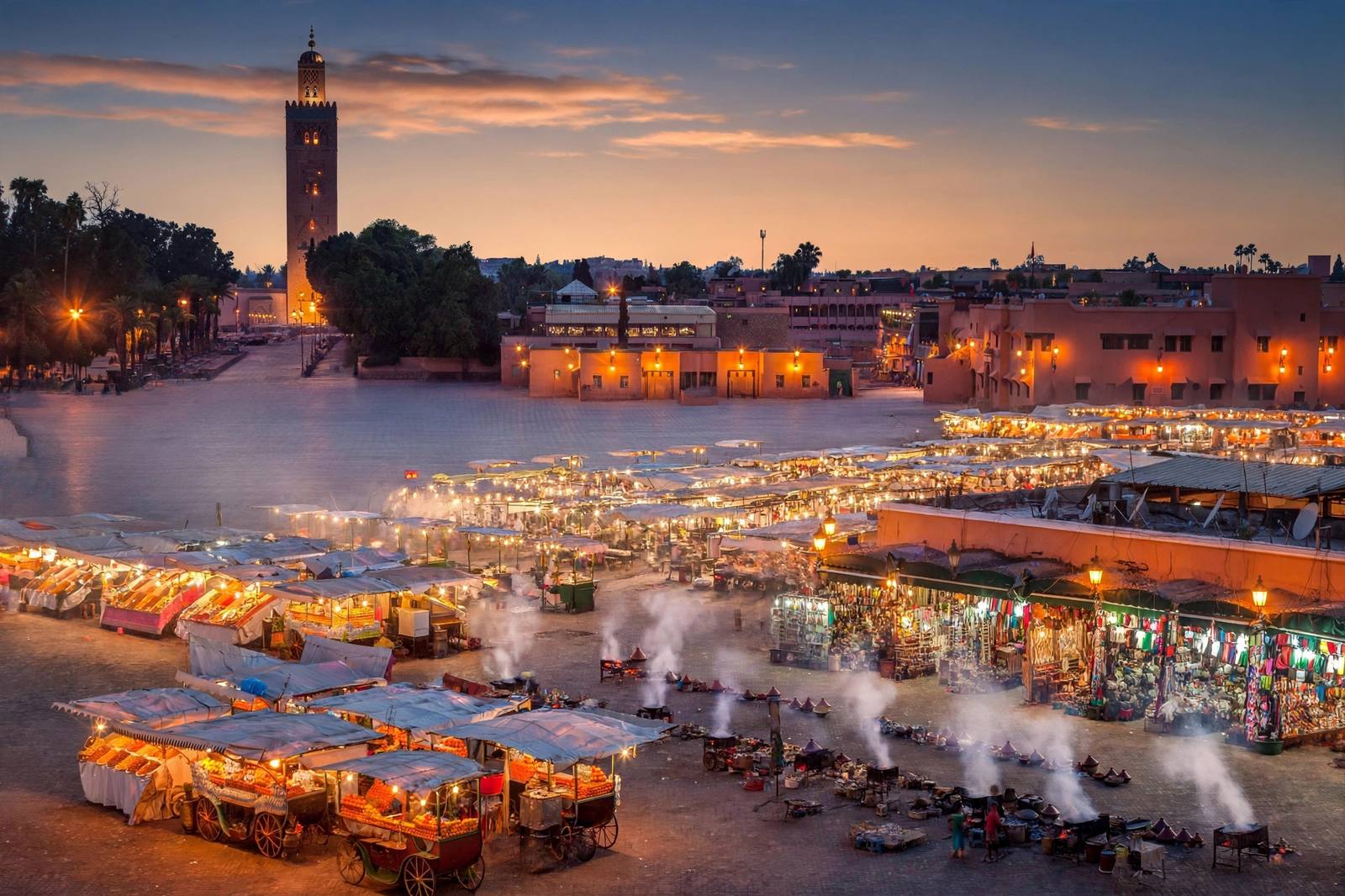
Go up to a rooftop café (there are several on the square's edge) around 6pm to watch the transformation, then come down and eat. The grill stalls are numbered — 31 is the longstanding local favorite, but honestly the quality is consistent across the reputable ones. Expect to pay 60–100 MAD for a full grilled dinner.
Watch out for: snake charmers and monkey handlers expect 10–20 MAD if you take a photo — agree nothing, pay if you shoot. The "it's closed" guys work the square's edges. And keep a hand on your bag; pickpockets love crowds.
3. Jardin Majorelle: book ahead or skip it
The cobalt-blue villa and botanical garden created by Jacques Majorelle and later owned by Yves Saint Laurent is the most visited attraction in Marrakech (700,000+ visitors a year). It is genuinely beautiful — cacti, bamboo, and that impossible blue — but it is also the most logistically annoying sight in the city.
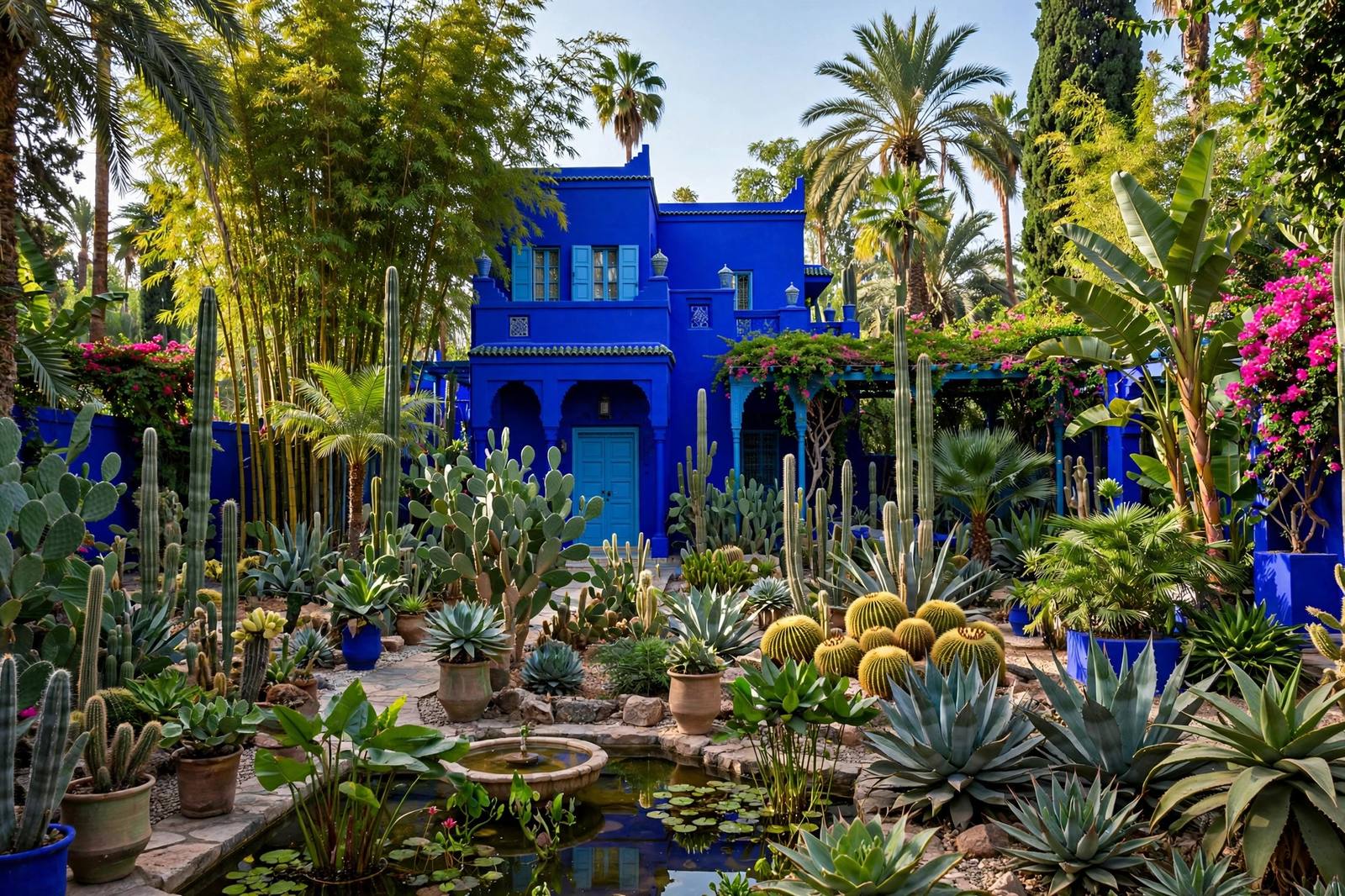
The rules have changed: there is no ticket counter anymore. You must book online in advance through the official website, and slots sell out — even in low season, even on weekdays.
Tickets are 170 MAD for adults, 95 MAD for students and kids 10+, free under 10. Book the first slot of the day (8 or 8:30am) and arrive early; everyone has the same idea, so there will still be a queue, but it is shortest at opening. Beware of third-party sellers with "skip the line" claims — the only valid QR codes come from the official site.
Is it worth it? If you love gardens and design, yes. If you are lukewarm, the crowds-to-beauty ratio may not justify the hassle — the Jardin Secret (below) is calmer, cheaper, and honestly? I liked it more.
4. Bahia Palace
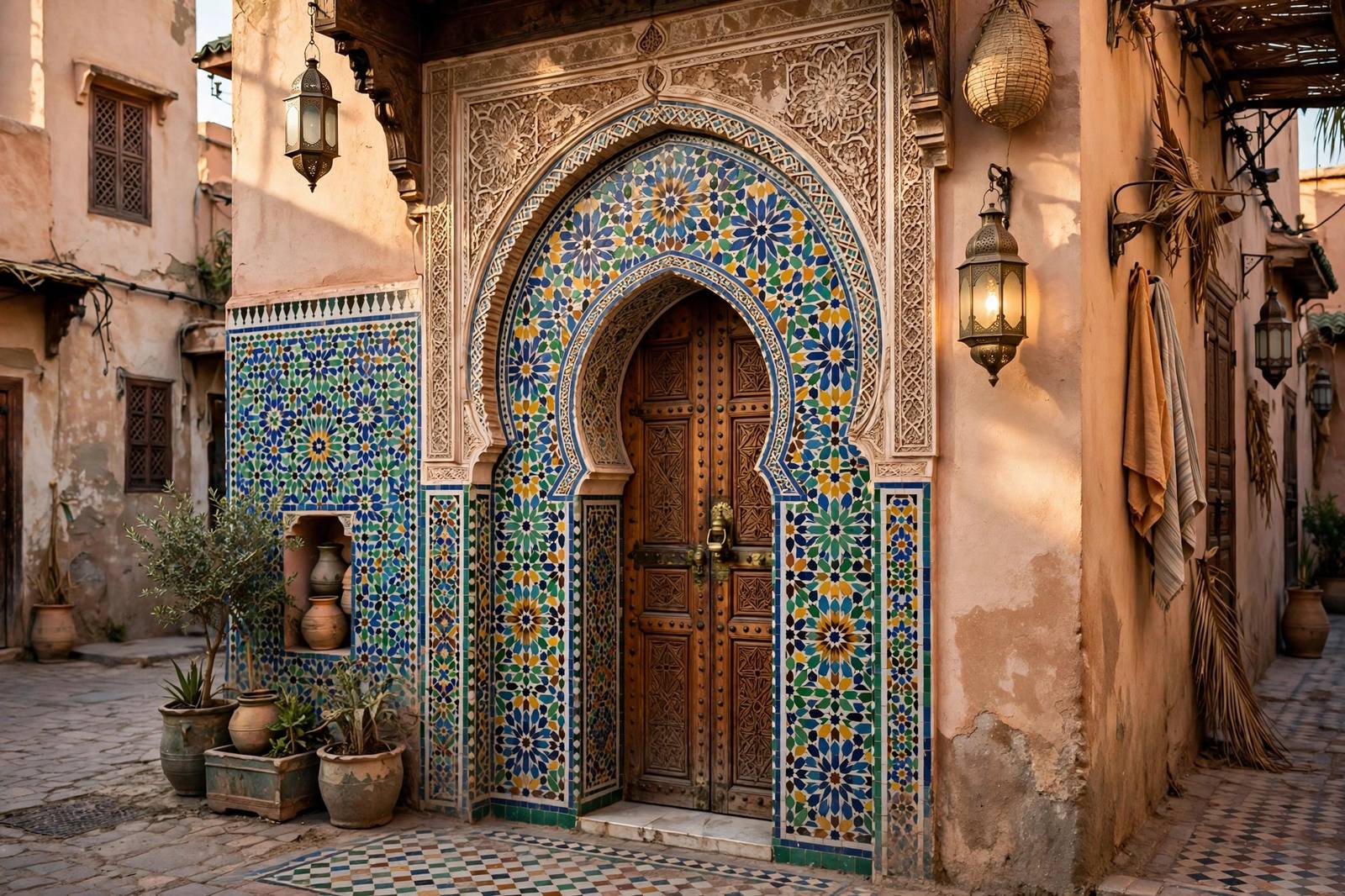
A 19th-century palace built for a grand vizier, and the best-preserved slice of Moroccan aristocratic life in the city. The courtyards, zellige tilework, painted cedar ceilings, and stained glass are extraordinary — this is where you go to understand what Moroccan craftsmanship looks like at its peak.
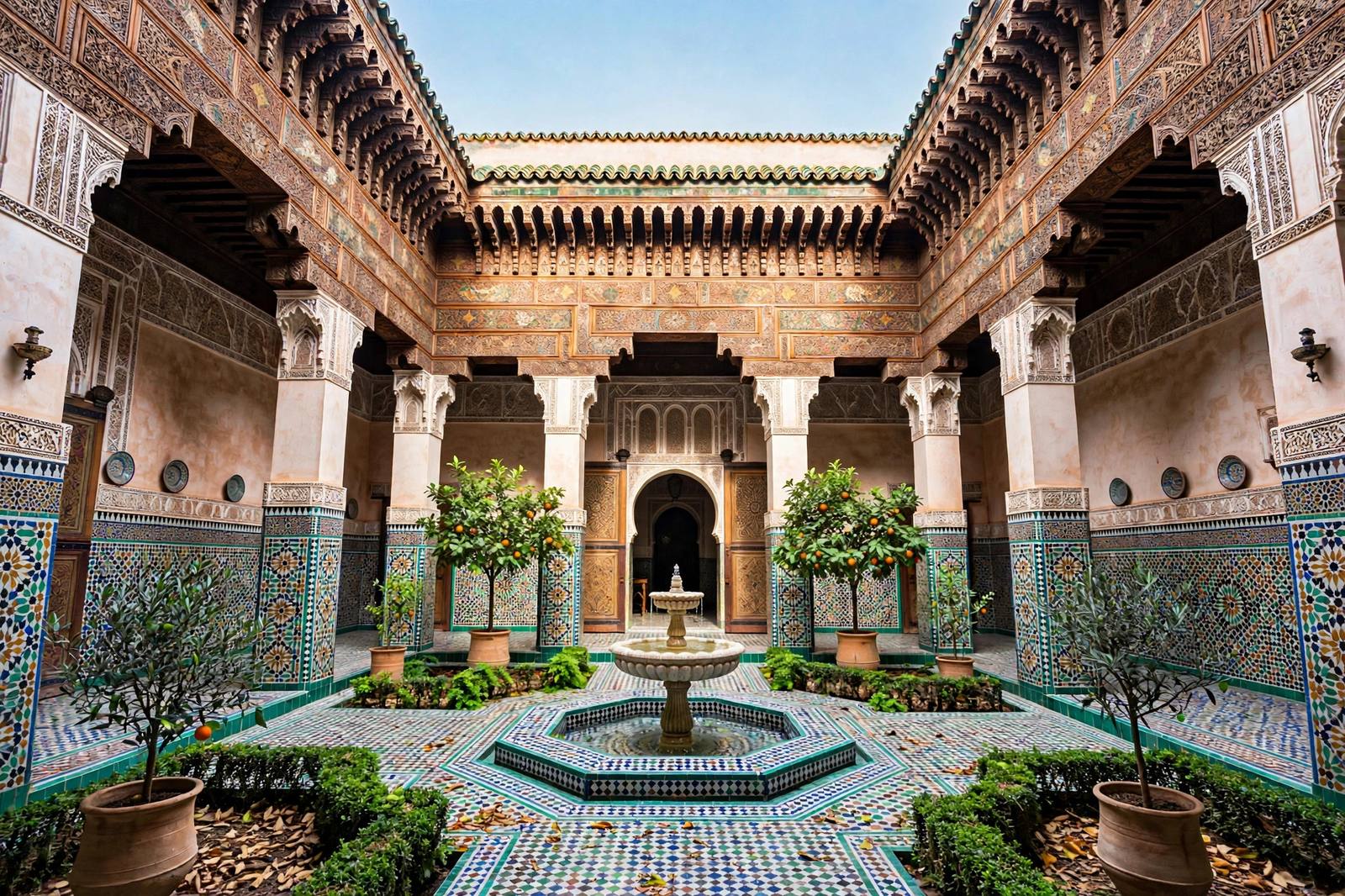
It gets crowded by midday (tour groups move through in waves), so go early. Entry is around 70 MAD. An hour is enough; ninety minutes if you are into the details. The palace is mostly empty of furniture, which some visitors find underwhelming — come for the architecture, not the interiors.
5. Ben Youssef Madrasa
The 16th-century Quranic school is arguably the single most beautiful building in Marrakech. The central courtyard — marble pool, carved stucco, zellige, cedar mashrabiya — is a masterpiece of Saadian architecture, and the tiny student cells upstairs give you a sense of the scholarly life that filled it.
It reopened after a long restoration and now manages entry in timed slots. Go early or late in the day to avoid the worst crowds. Combine it with the nearby Marrakech Museum (in the former Dar Menebhi palace) if you want the full historic quarter.
6. Saadian Tombs
Sealed for centuries and rediscovered by the French in 1917, the tombs hold the remains of Saadian dynasty sultans in a chamber of Carrara marble and gilded honeycomb vaulting. The Chamber of the Twelve Columns is stunning.
It is small — thirty minutes, tops — and the queue to enter the main chamber can be longer than the visit itself. Go first thing in the morning. Entry around 70 MAD. Worth combining with El Badi Palace next door, which is a two-minute walk and makes for a good one-two punch of Saadian history.
7. Koutoubia Mosque and gardens
The 77-meter minaret is Marrakech's landmark — visible from almost everywhere, and the reference point for navigating the medina. Non-Muslims cannot enter the mosque itself, but the gardens around it are a pleasant breather, and the exterior at sunset (when the stone glows) is worth the walk.
The gardens behind the mosque are where locals come in the evening. It is one of the few green, calm spaces near the medina center. Free, no time pressure, good for an hour's rest between sights.
8. El Badi Palace: the beautiful ruin
Sultan Ahmed al-Mansur built it in the 16th century to be the most magnificent palace in Morocco. A later sultan stripped the marble and gold, and what remains is arguably more evocative than what was taken: a vast sunken courtyard of orange trees, reflecting pools, and storks nesting on the walls.
It is quieter than the other palaces (tour groups tend to skip it), which makes it a good midday refuge. The views from the ramparts stretch over the medina to the Atlas. Entry is modest; an hour is plenty.
9. Le Jardin Secret
Halfway between the souks and the museum quarter, the Secret Garden is exactly what Majorelle is not: calm, uncrowded, and contemplative. Two walled gardens (one Islamic, one exotic) inside a restored 19th-century palace, with a café tower that has one of the best medina views for the price of a mint tea.
If Majorelle's booking hassle puts you off, come here instead. You will not regret the trade.
10. Take a hammam
The traditional Moroccan bathhouse is not a spa treatment — it is a scrubbing. You go into a steam room, get exfoliated with a kessa glove until you are slightly alarmed at what comes off, then washed and rinsed. You come out feeling like a new person.
Two options: the local public hammams (10–30 MAD, bring your own supplies, sex-segregated, no English spoken — an adventure) or the tourist/private hammams attached to riads and spas (200–600 MAD, towels provided, English-speaking attendants, much gentler introduction). First-timers should do the private version. It is one of the most Moroccan things you can do in Marrakech, and most visitors skip it, which is a shame.
11. Rooftop dinner over the medina
Marrakech at rooftop level is a different city: the chaos drops away, the Koutoubia minaret and the Atlas frame the horizon, and the call to prayer rolls over the rooftops at dusk. Dozens of restaurants offer rooftop terraces — the ones on and around Jemaa el-Fna have the best square views, the ones deeper in the medina are quieter.
Book for sunset. Order the tagine (the rooftop grills are generally better than the square stalls for a sit-down meal), and linger. This is the Marrakech that justifies the trip.
12. The tanneries
Marrakech has working tanneries (in the Sidi Youssef Ben Ali quarter, across the river from the main medina) where leather is still dyed in stone vats much as it has been for centuries. It is rawer and less touristed than the famous Fes tanneries — which is both the appeal and the caveat: the smell is formidable, and the "guides" who attach themselves to you at the entrance expect payment.
Mint sprigs are traditionally offered against the smell. Take one. The leather shops around the tanneries sell good-quality goods cheaper than the souks — this is where the stuff is actually made.
13. Day trip: Atlas Mountains and Imlil
Ninety minutes from the medina, the air cools and the Atlas foothills begin. Imlil village (1,740m) is the trailhead for Toubkal and the start of endless valley walks — waterfalls, walnut groves, Berber villages, mule tracks. You don't need to summit anything; a guided half-day walk through the Ait Mizane valley with lunch in a village guesthouse is the classic version.
Book through your riad or a reputable operator (expect 300–500 MAD per person including transport and lunch). Go on a weekday if you can — weekends bring Casablanca day-trippers. Bring layers; it is noticeably cooler at altitude even when Marrakech is baking.
14. Day trip: Essaouira
190 km and about 2.5–3 hours each way, Essaouira is the classic Marrakech escape: ocean breeze, walled medina, blue fishing boats, grilled sardines at the port. It is the anti-Marrakech — relaxed where Marrakech is intense, breezy where Marrakech is hot.
It works as a (long) day trip, but it is better as an overnight — the drive back in the dark after a full day is draining, and Essaouira's evenings (live music, calm medina) are half the charm. If you only do one coastal day trip from Marrakech, this is it.
15. Sunset in the Agafay Desert
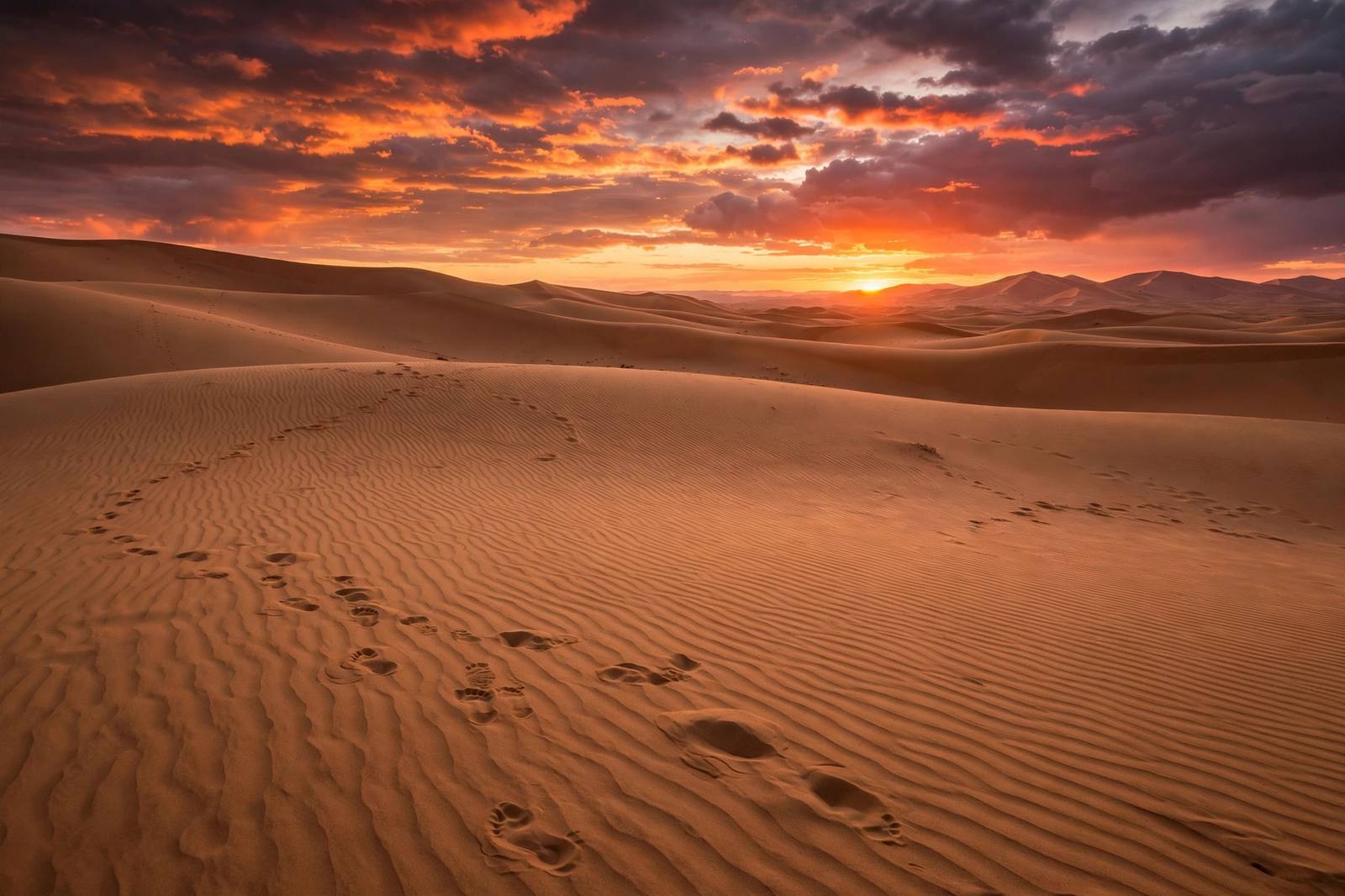
The Agafay is not the Sahara — it is a rocky desert plateau 40 minutes from Marrakech, with no dunes. But several luxury camps there do the desert-night experience (sunset camel ride, dinner under the stars, music) without the 8-hour drive to Merzouga. It is unapologetically set up for tourists, and it is genuinely enjoyable if you accept that.
Book a camp with dinner included (expect 600–1,200 MAD per person depending on luxury level). This is the right call if the Sahara doesn't fit your itinerary but you want the desert-evening feeling.
16. Hot air balloon at sunrise
One of those experiences that sounds touristy and turns out to be worth it. You float over the palmeraie and the Atlas foothills as the sun comes up, with the snow-capped peaks turning pink on the horizon. Flights run around 2,000 MAD per person including breakfast and transport — not cheap, but the operators are professional and the safety record is solid.
Book for your first or second morning (flights cancel in high wind, so you want a buffer day to reschedule). The 4:30am pickup is brutal; the sunrise is worth it.
17. Menara Gardens
The large 12th-century garden with its iconic pavilion reflected in the basin is a classic Marrakech postcard — and these days, mostly a local park. It is a 15-minute taxi from the medina, free to enter, and good for an unhurried hour: families picnic, couples stroll, and the Atlas view on a clear day is superb.
Don't make a special trip across the city for it, but if you are nearby (or want a calm morning), it delivers exactly what the photos promise. I'd rank it below the Jardin Secret for the "quiet garden" slot, but it's free and the Atlas view is hard to beat.
18. Eat your way through the medina
Marrakech is one of the great food cities of North Africa, and the medina rewards grazing:
- Mechoui Alley (near Jemaa el-Fna): whole slow-roasted lamb, sold by weight, eaten with bread and salt. Go for lunch when it is freshest.
- The square's grill stalls (evening): numbered stalls, skewers, harira soup, snail soup for the brave. Stall 31 has the local reputation; the standard is high everywhere.
- Bissara (fava bean soup) from a street cart in the morning — a few dirhams, deeply satisfying.
- Chez Ali-style tourist restaurants exist and are fine for what they are, but the real food is in the alleys: look for the places full of Moroccan families, not the ones with touts outside.
One rule: eat where it is busy. Turnover is the only food safety system that matters in the medina.
Practical tips
Taxis: petit taxis in Marrakech famously "don't have meters" for tourists. Agree the price before getting in — Jemaa el-Fna to the Majorelle area should be 50–80 MAD. Ask your riad what a ride should cost; that number is your anchor.
Cash: the medina runs on cash. ATMs are plentiful around the square and the Ville Nouvelle, but break large bills early — nobody in the souks wants your 200-dirham note for a 40-dirham purchase.
Guides: if you want a medina guide, book through your riad or the official tourist office, and check for the official badge. The "guide" who attaches himself to you in the street works on shop commissions (20–40% baked into whatever you buy) — the economics are never in your favor.
Timing your days: sights open around 9am; the sweet spot is 9–11am before tour groups peak. The medina's energy shifts after dark — the square is the evening's center of gravity. Midday heat (especially May–September) is real; plan indoor sights or a riad rest for 1–4pm.
Dress: Marrakech is used to tourists, but modest dress (covered shoulders and knees) earns warmer interactions, especially in the medina and around religious sites. It also reduces hassle measurably.
For official info, Visit Marrakech covers events and practicalities. The Moroccan railways site handles train bookings to and from the city — and Visit Morocco is the national tourism portal.
Frequently Asked Questions
How many days do you need in Marrakech?
Three full days is the sweet spot: one for the medina and square, one for the palaces and gardens, one for a day trip (Atlas or Essaouira). Two days works if you skip the day trip. Less than two and you are speedrunning.
Is Marrakech safe for tourists?
Violent crime against visitors is rare. The real risks are petty: pickpockets in crowds, taxi overcharging, and persistent touts. The medina's quieter alleys can feel deserted after 10–11pm — stick to lit main routes late at night. Emergency numbers: 19 for police, 15 for ambulance.
Is [Jardin Majorelle](https://www.jardinmajorelle.com/en/) worth the hassle?
If you love gardens and design, yes — it is beautiful. But go in with open eyes: mandatory online booking, no onsite tickets, queues even with a reservation. The Jardin Secret is the calmer alternative if the logistics put you off.
Can you do the Sahara as a day trip from Marrakech?
No — and distrust any tour that implies otherwise. Merzouga is 8–10 hours each way. The minimum honest Sahara trip is 3 days/2 nights. For a single evening, the Agafay Desert (40 minutes away) is the realistic alternative.
How much should I budget per day in Marrakech?
Budget travelers manage on 300–500 MAD ($30–50) per day; mid-range comfort runs 800–1,500 MAD ($80–150) including a decent riad, restaurant meals, and sights. Majorelle (170 MAD) and a hammam (200–600 MAD) are the biggest single expenses.
Is Marrakech too touristy?
The central medina and Jemaa el-Fna are unambiguously touristy — that is not a secret. But walk ten minutes in any direction and you are in working neighborhoods where daily life continues uninterrupted. The touristy core and the real city coexist; you just have to leave the square.
What's the biggest mistake first-timers make?
Trying to see everything on foot in one day without planning around the heat, then overpaying for taxis between sights. Cluster your sights by area (medina cluster, Majorelle/Ville Nouvelle cluster), rest midday, and let the evenings belong to the square.
The bottom line
Marrakech rewards preparation and punishes winging it. Book Majorelle ahead, learn the haggling basics, agree taxi prices before the doors close, and give the city three days.
Do that, and the chaos becomes the charm — the square at sunset, the souks at opening time, the Atlas turning pink at dawn from a rooftop. That is the Marrakech people fall for, and it is all here if you know where to look.